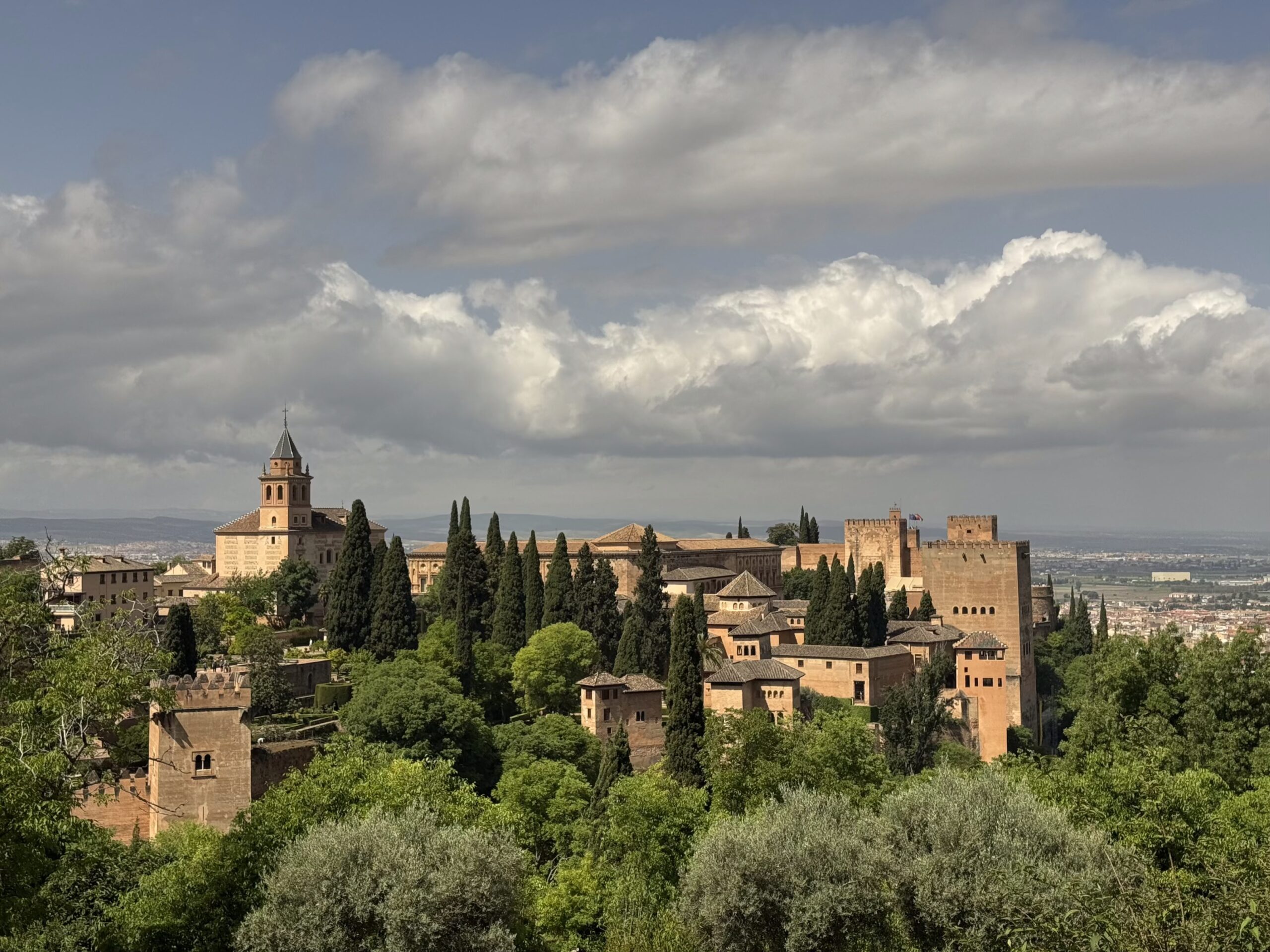
The Alhambra, “The Red Fortress” – Granada’s famous palace and fortress complex sits boldly above the city. It’s one of the best preserved examples of Islamic Architecture, built by the Nasrid Dynasty in the 13th-14th centuries. It’s bold, functional, and geometric, and a stunning contrast to the blue sky, lush green forest below, and the white Granada buildings below.
It’s the second most visited tourist site in Spain, with about 2.7 million visitors each year. It’s my second visit in 18 months and while this time we didn’t explore the history as deeply, it still left me with so many ‘Wow!’ moments.
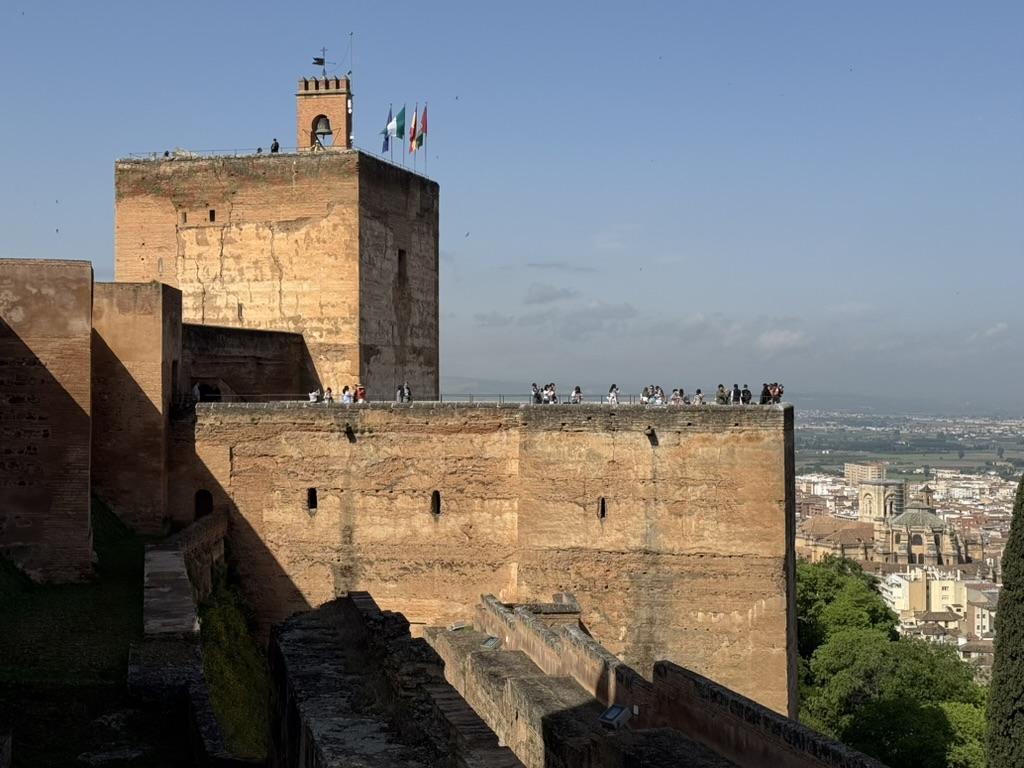
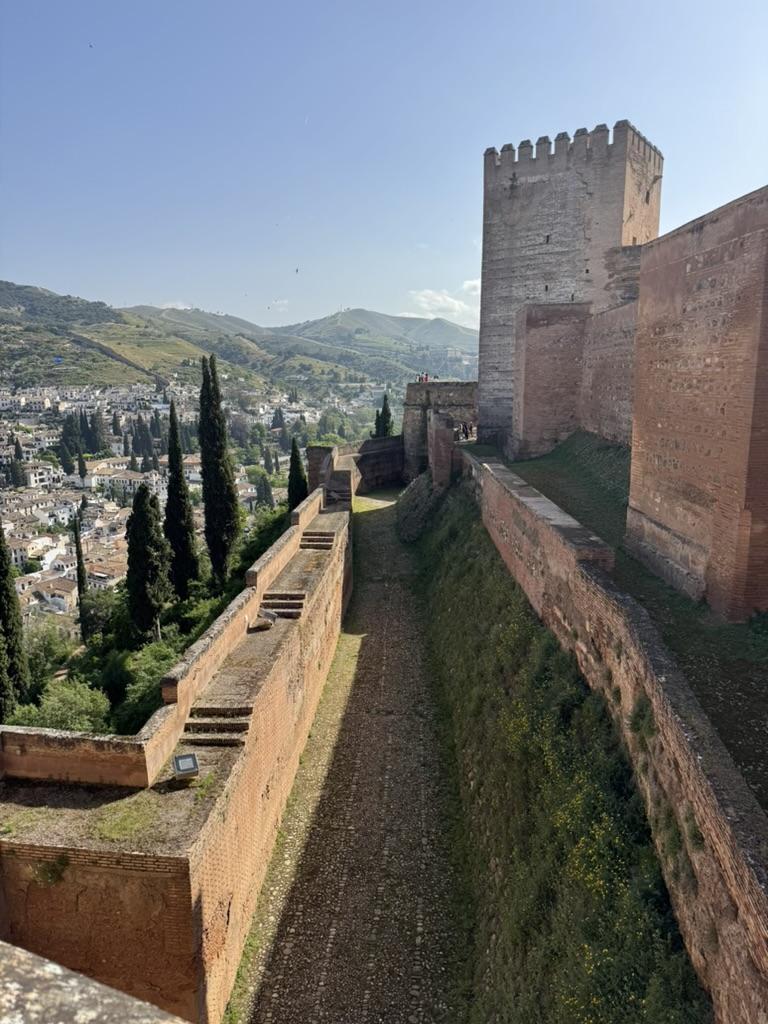
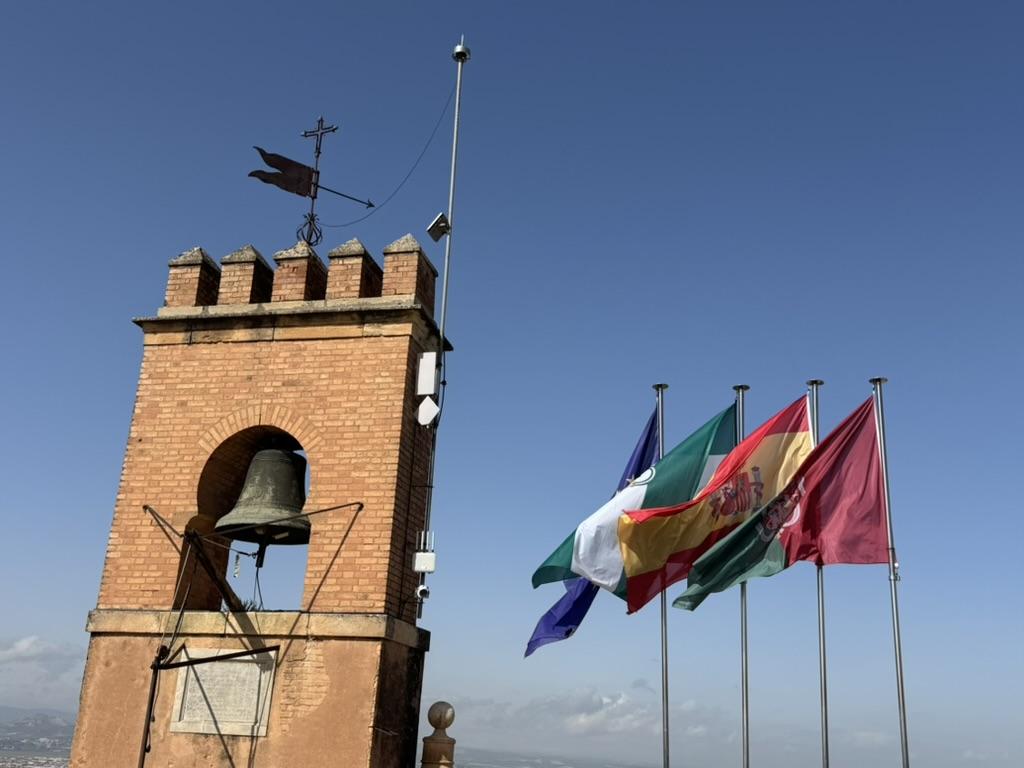
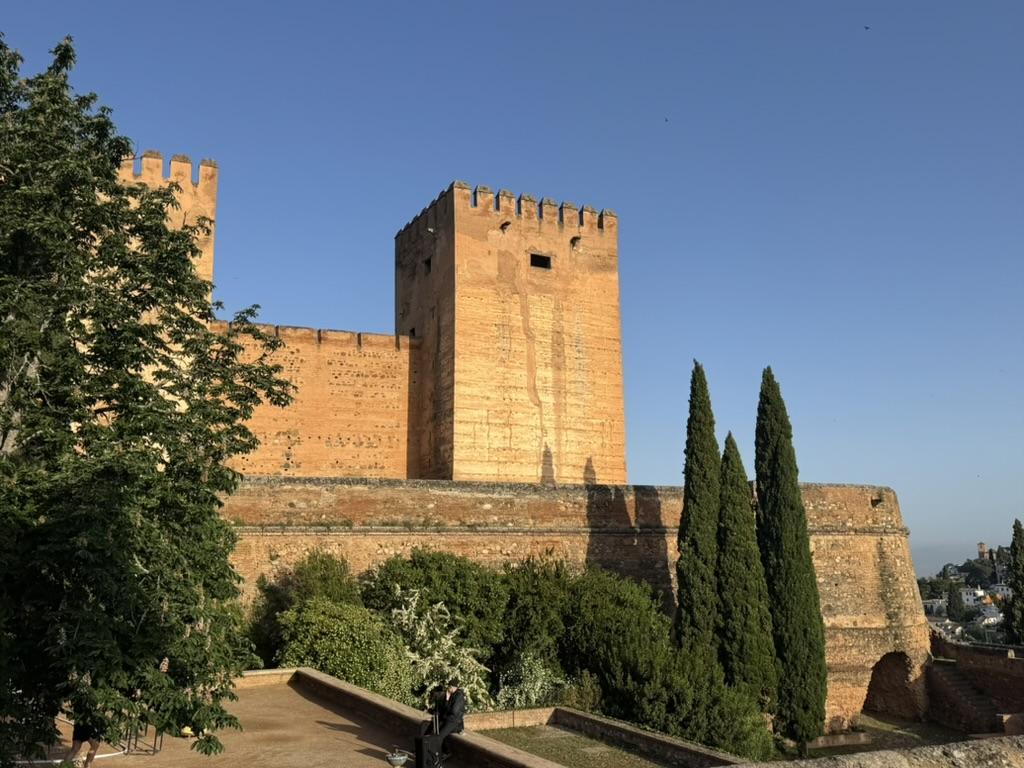
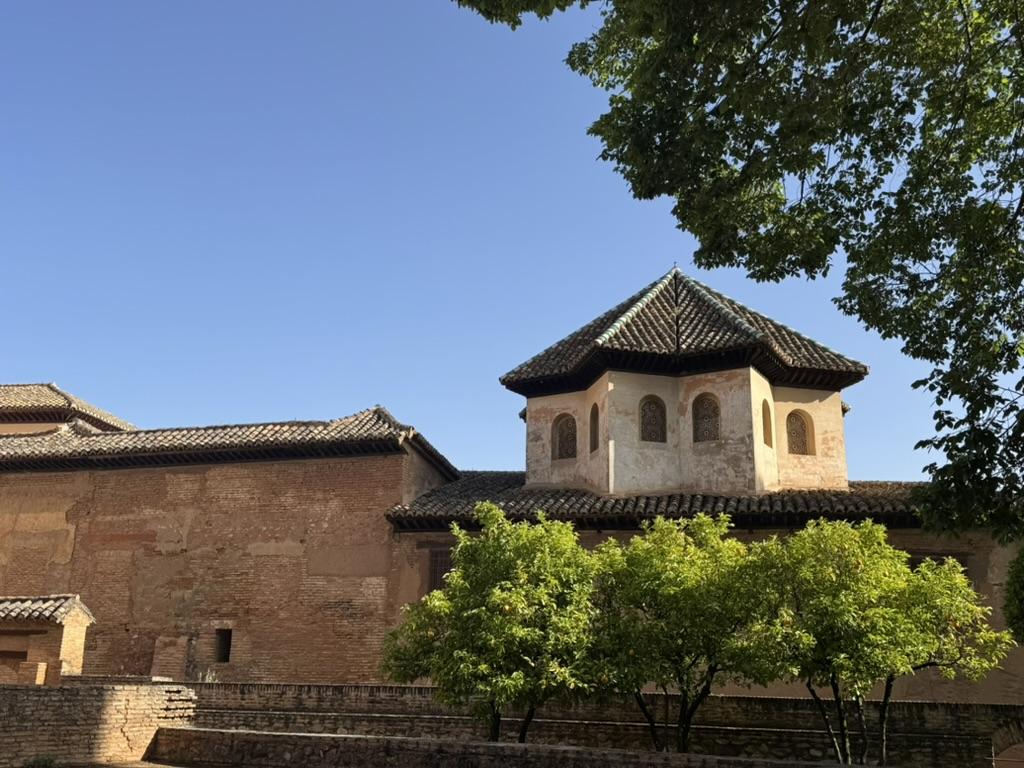
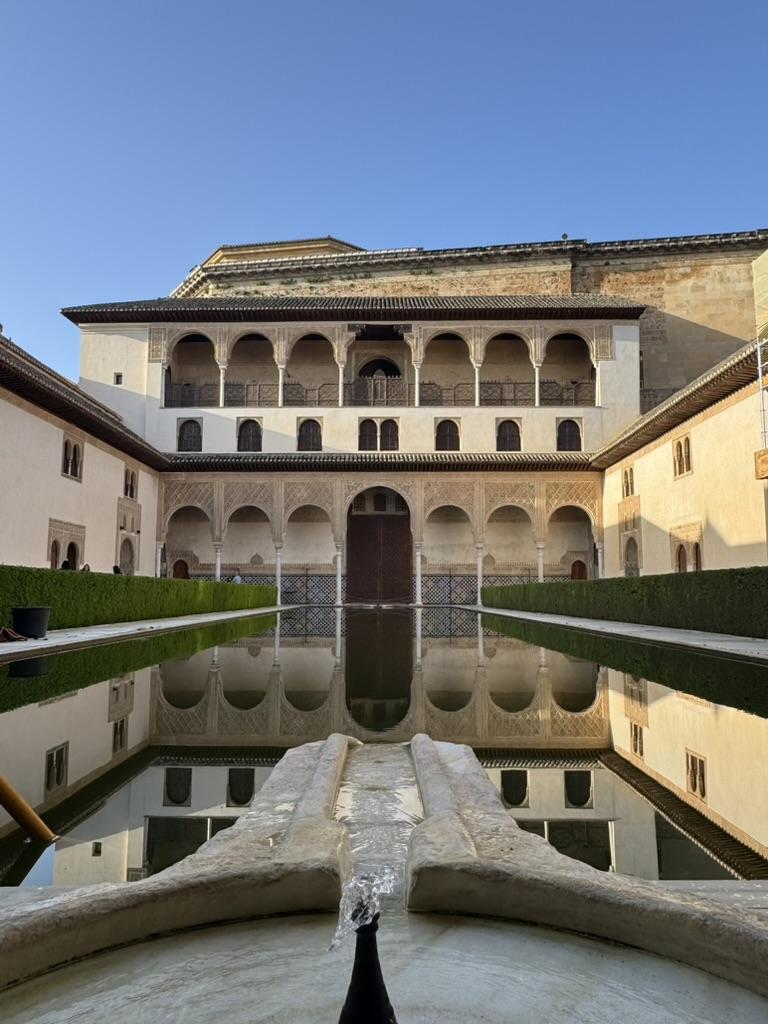
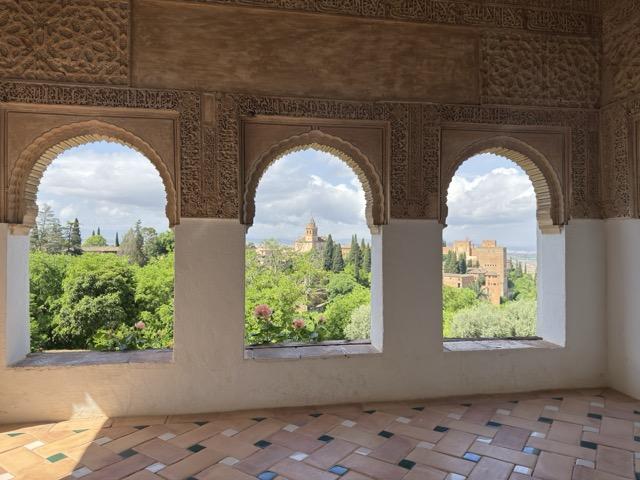
Islamic buildings often have a plain and uniform exterior, in contrast to highly decorative interior spaces. The craftsmanship throughout the Nasrid Palance is so incredibly ornate and detailed. Simple colours and shapes are brought together to create stunning patterns that must have been painstakingly created and since have been preserved and restored.
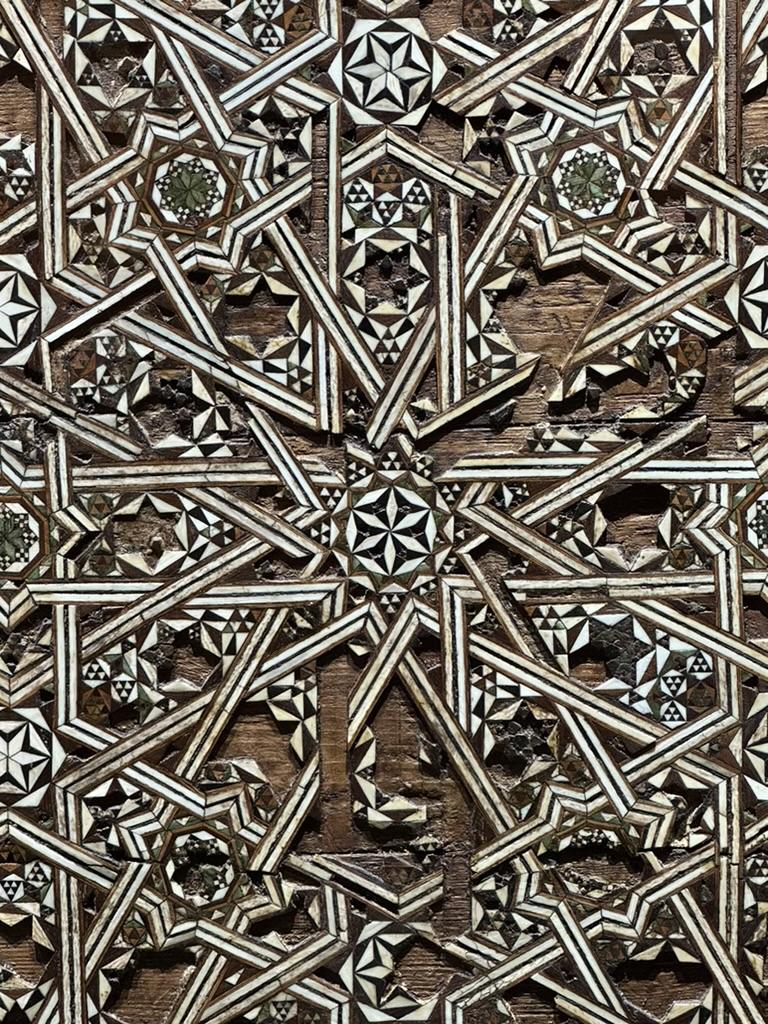
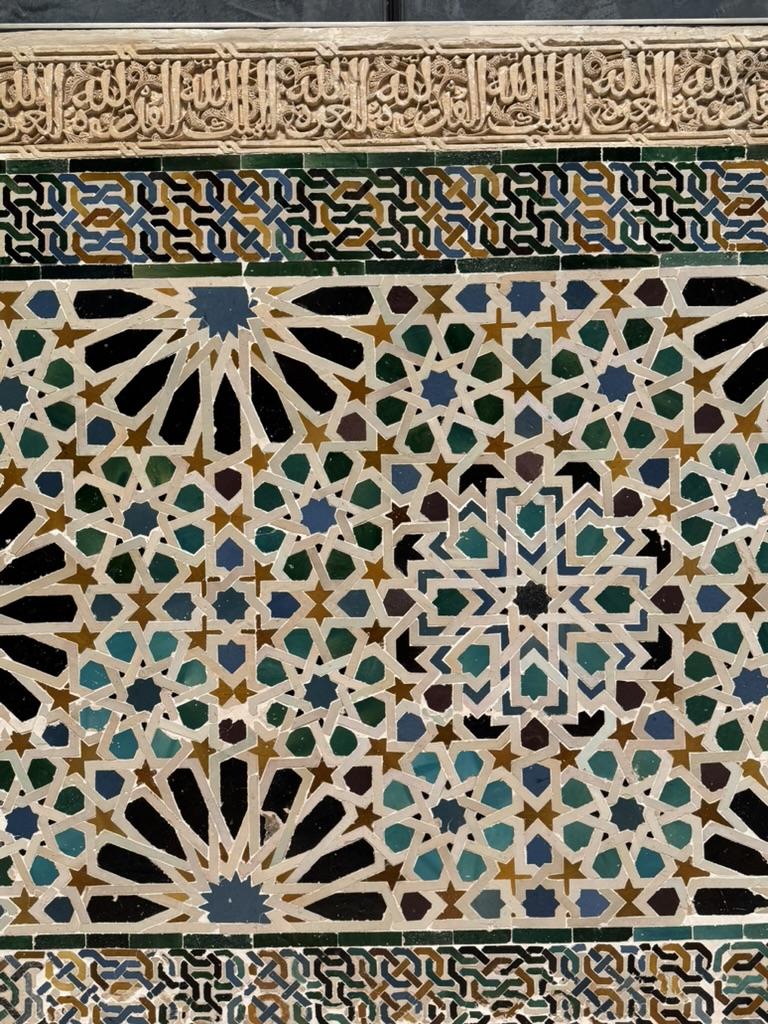
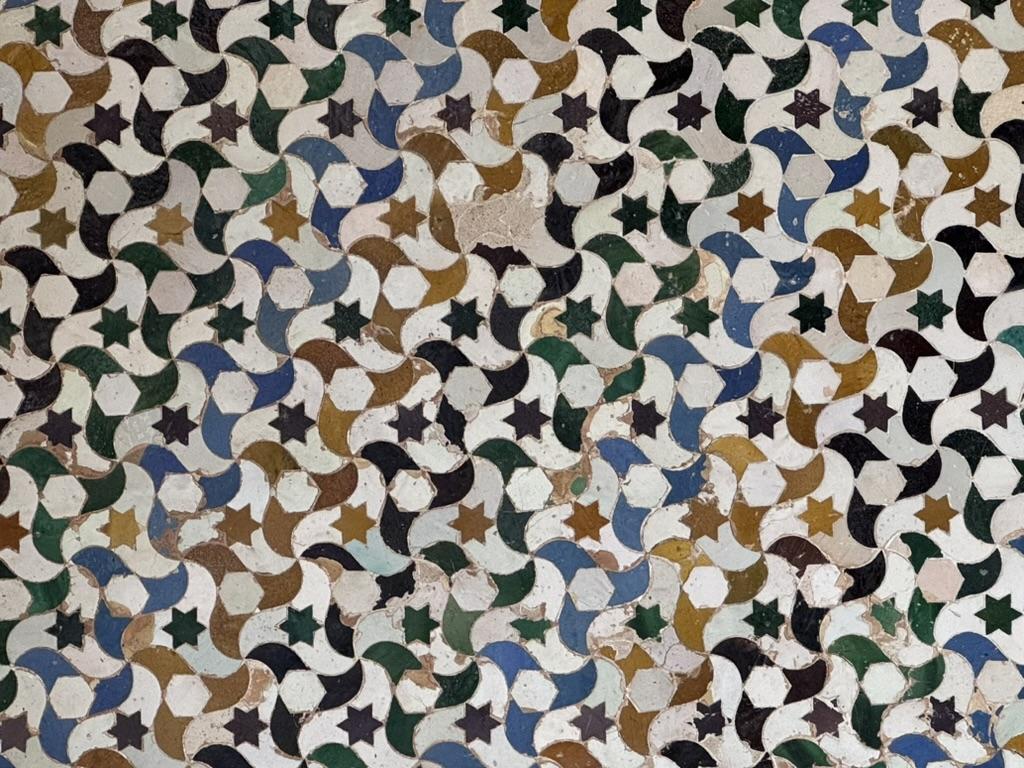
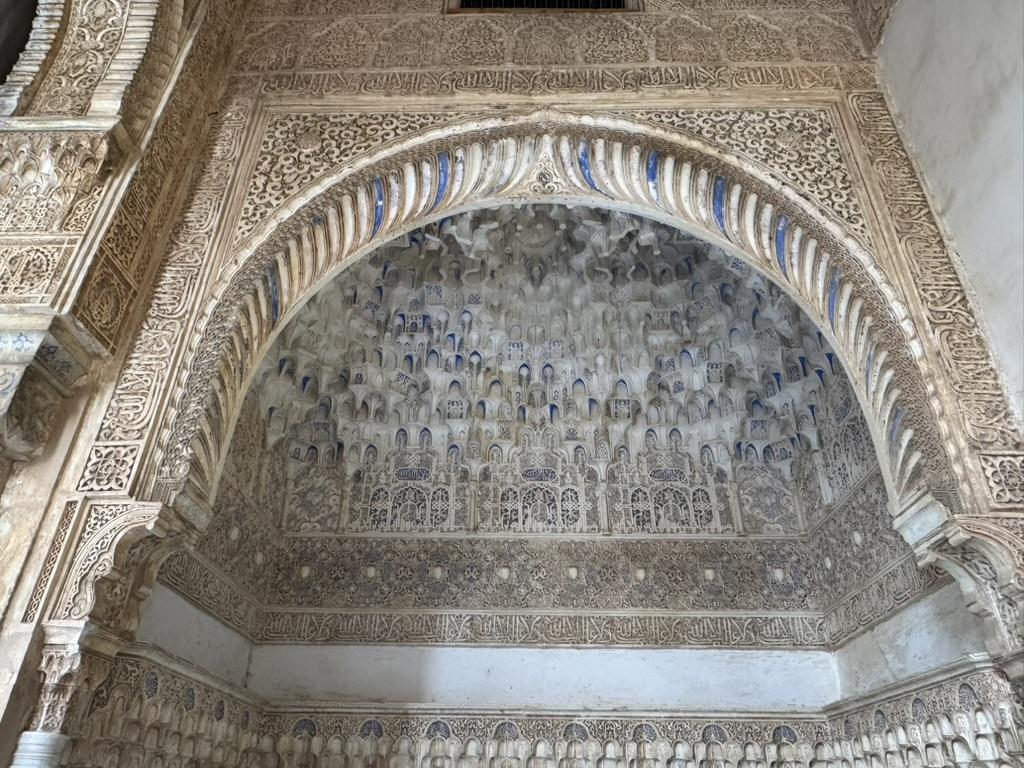
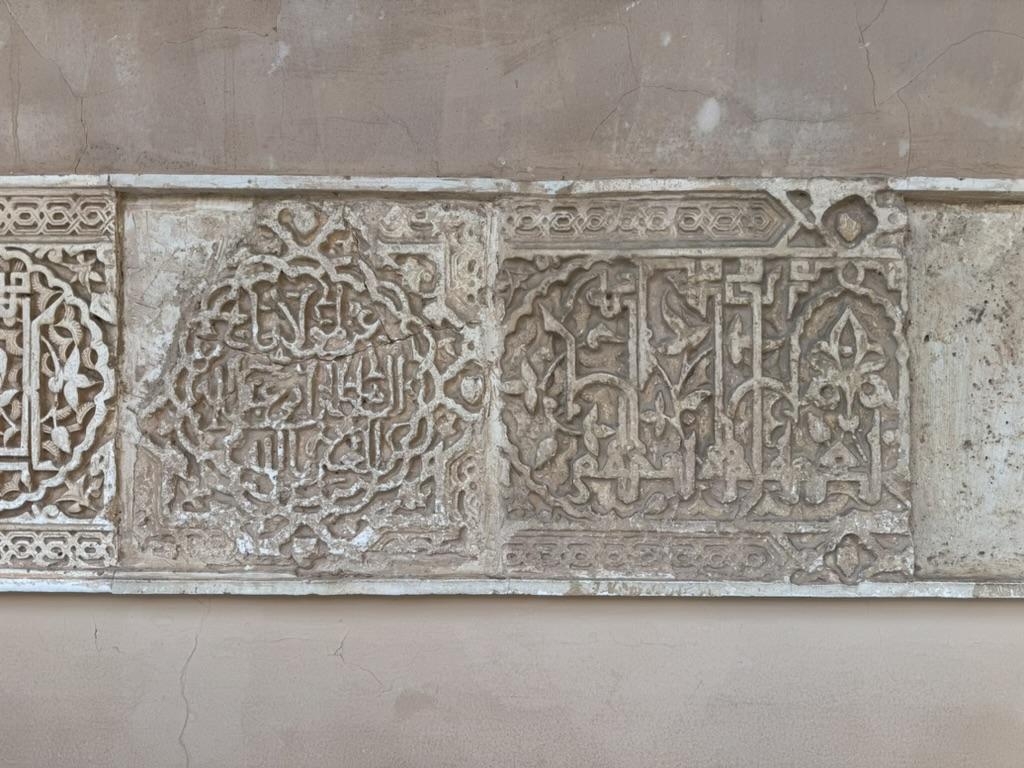
Tiles are often based on the concept of tessellation, where the surface is covered with geometric figures without leaving any space, or overlap. The accuracy required for this style of work is incredible, even more so considering the tools available at the time this work was created.
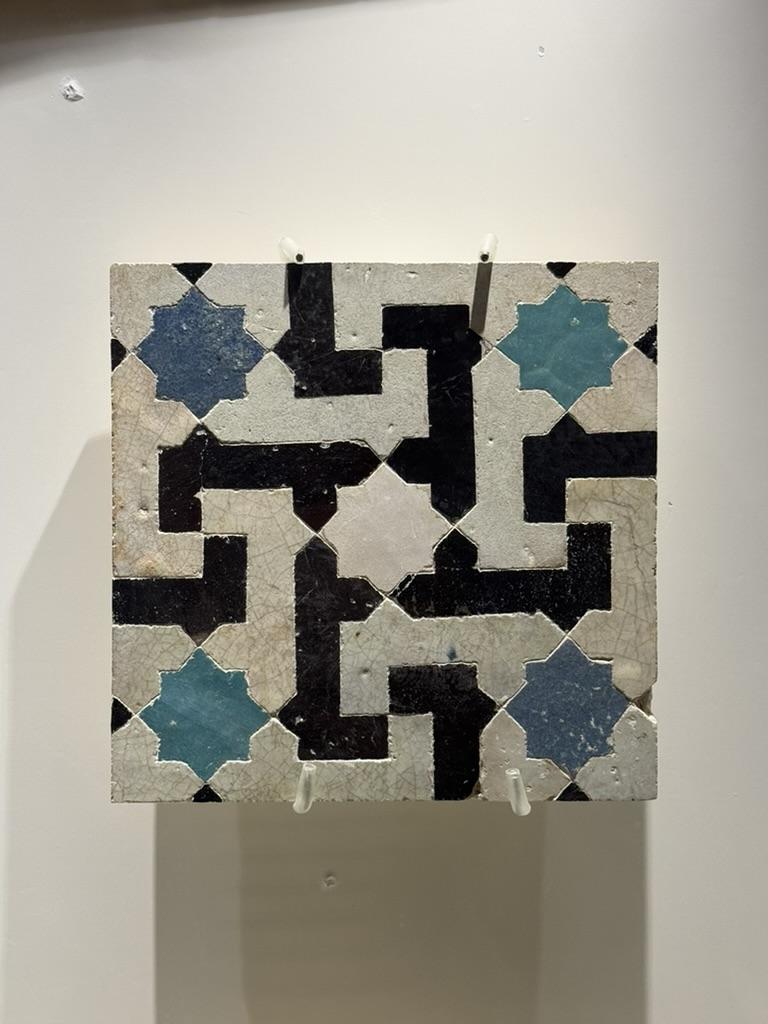
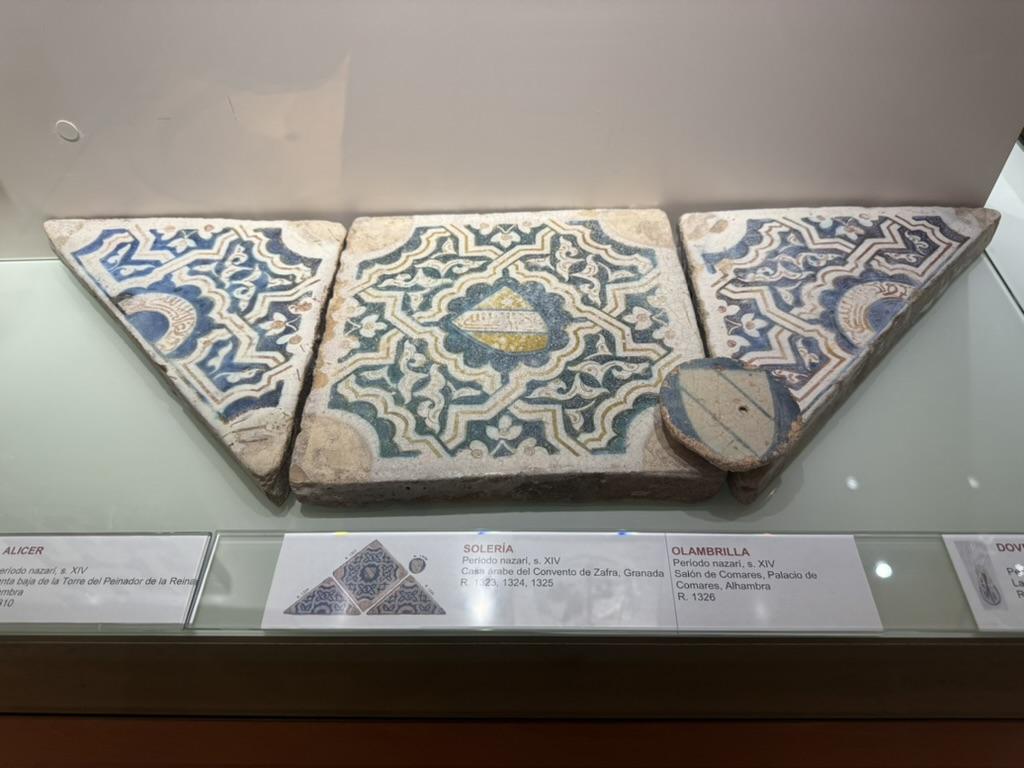
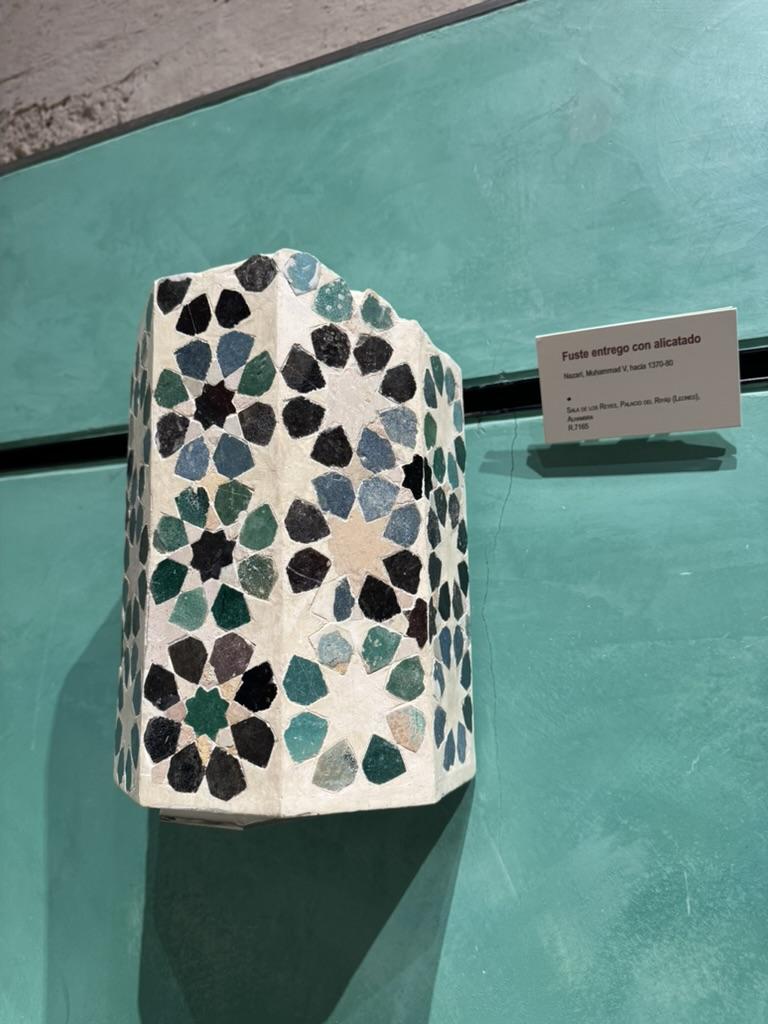
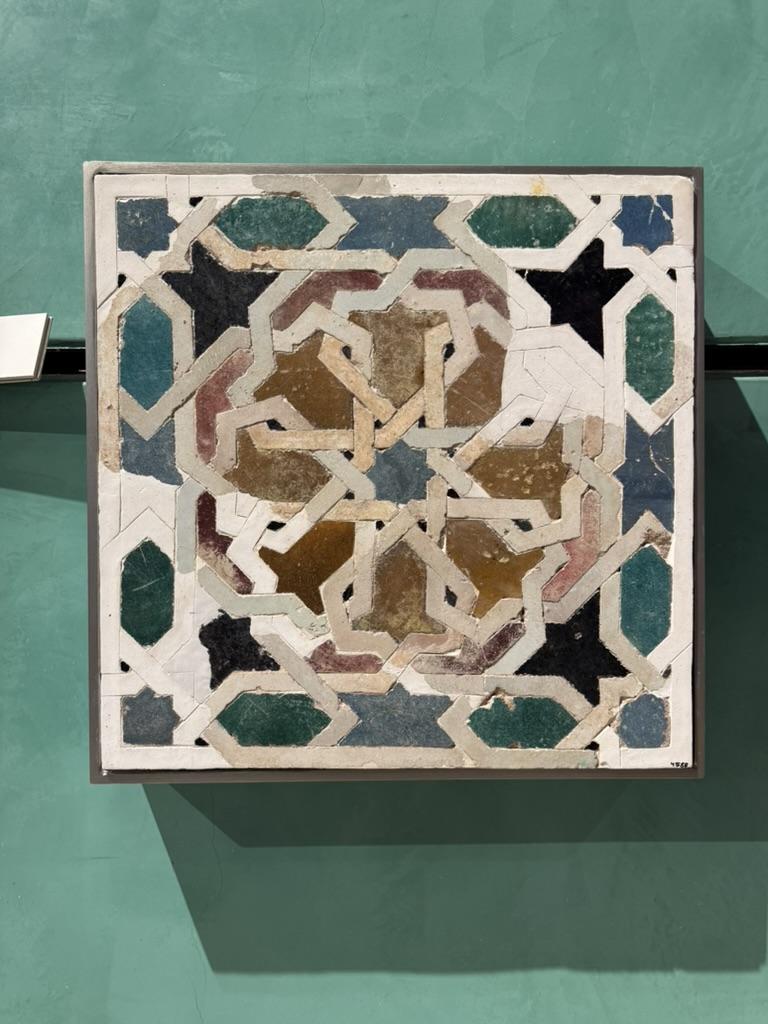
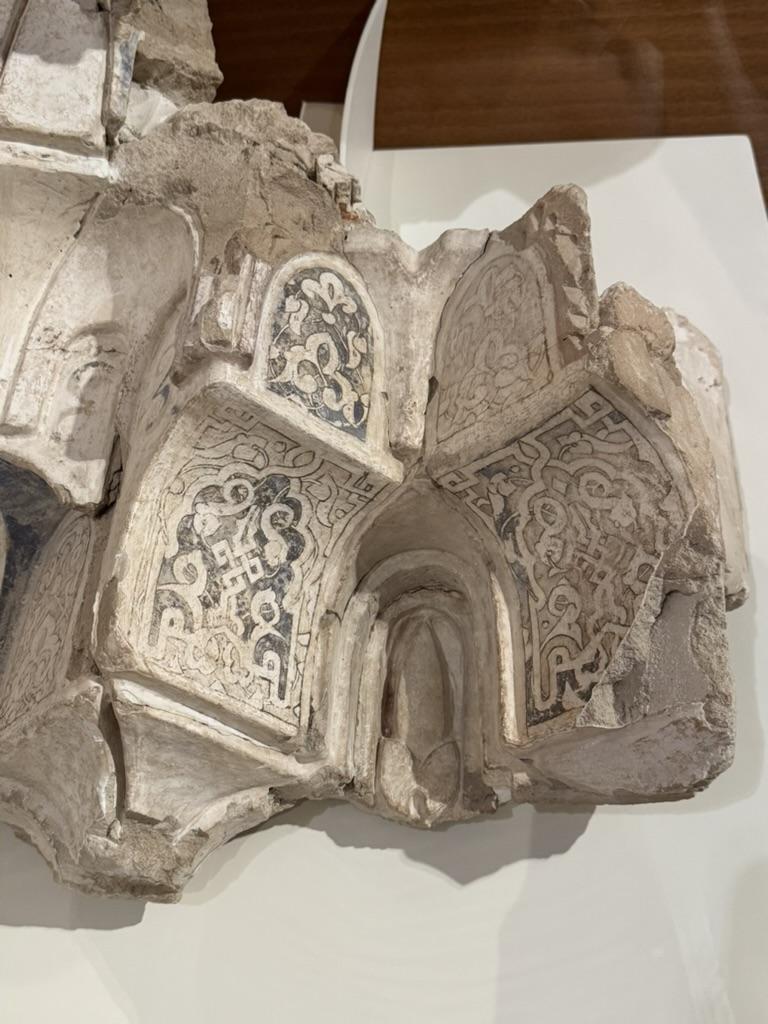
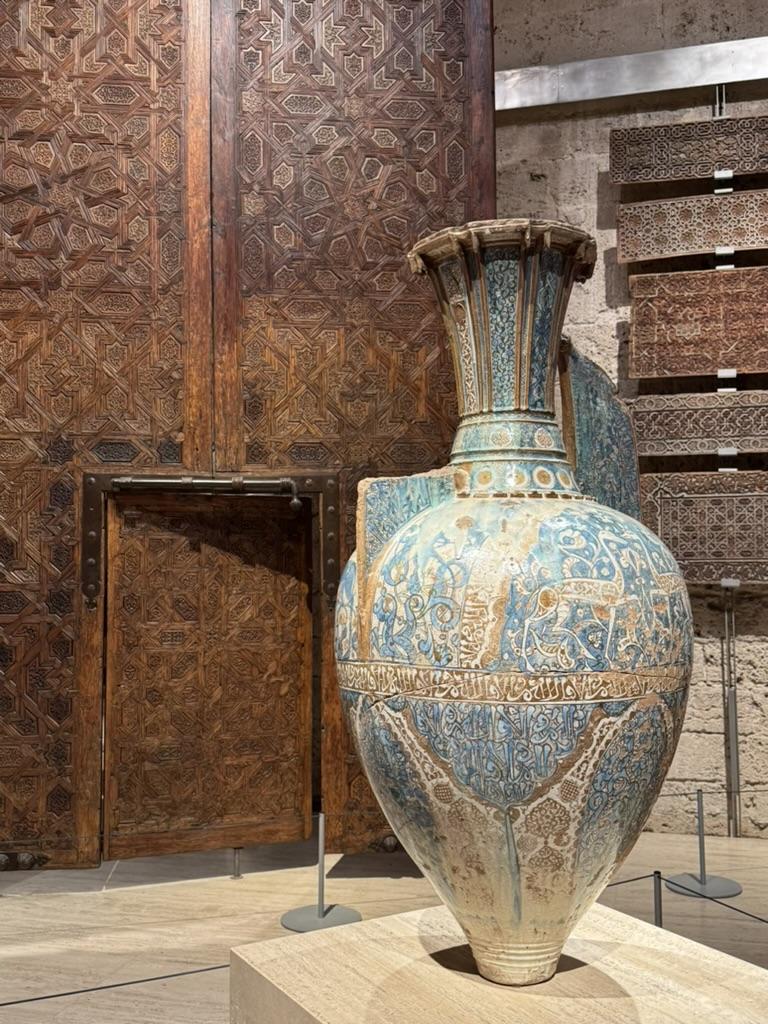
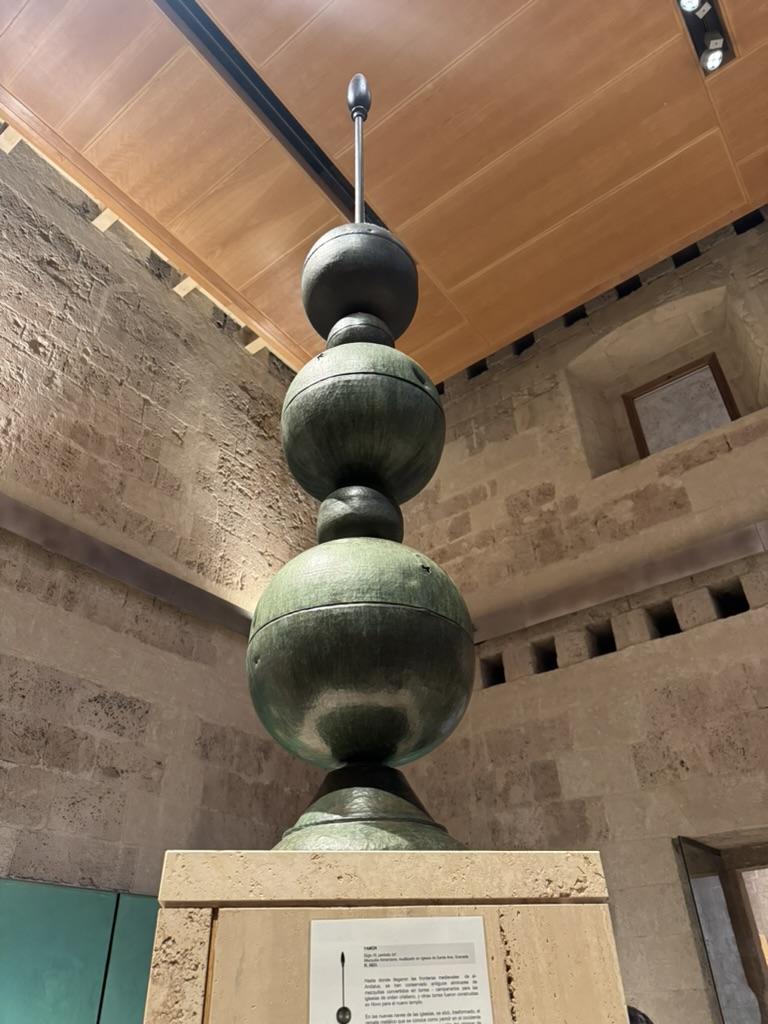
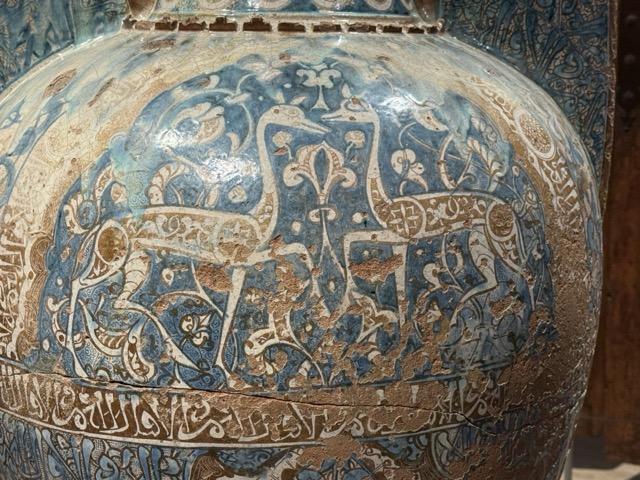
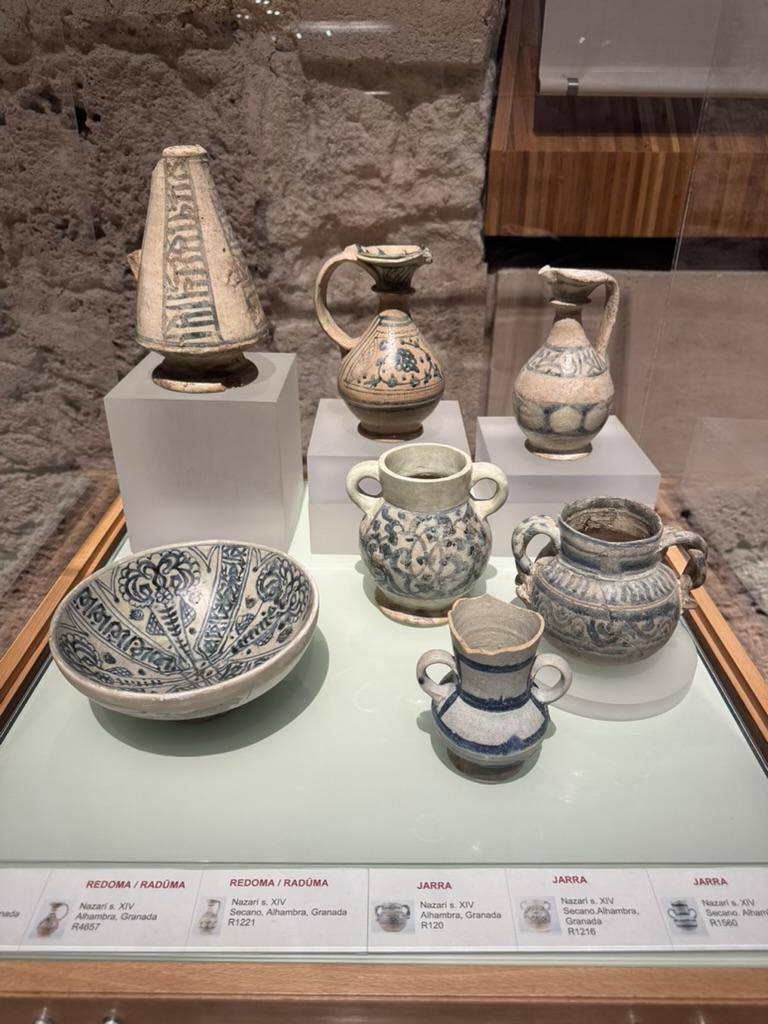
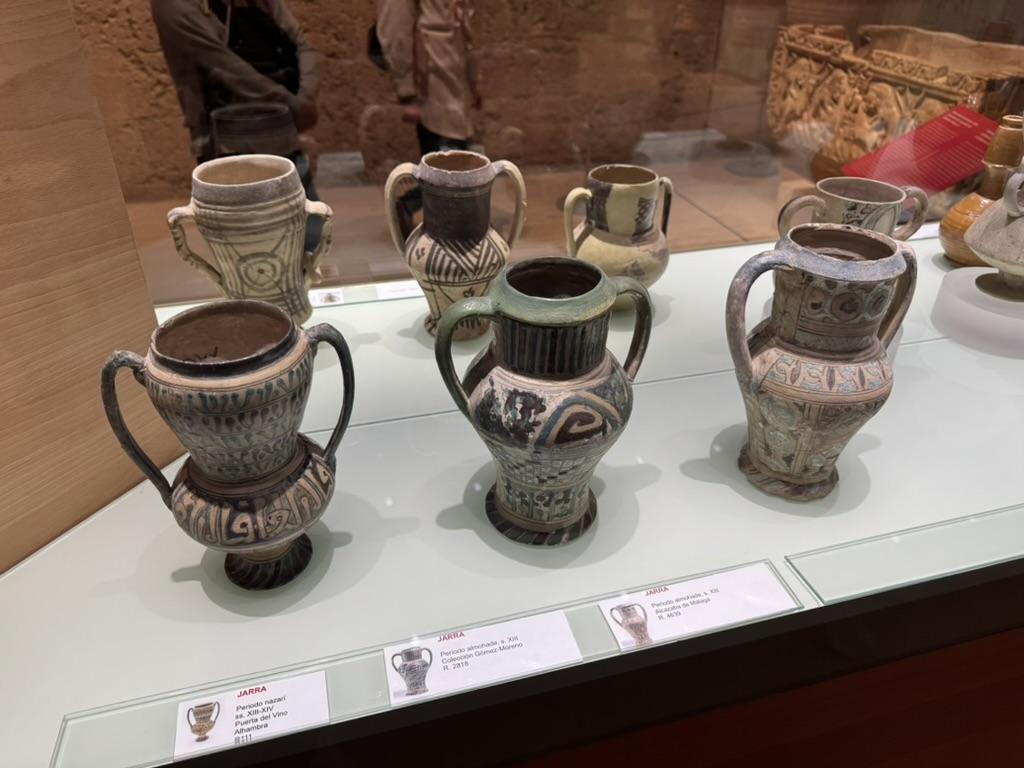
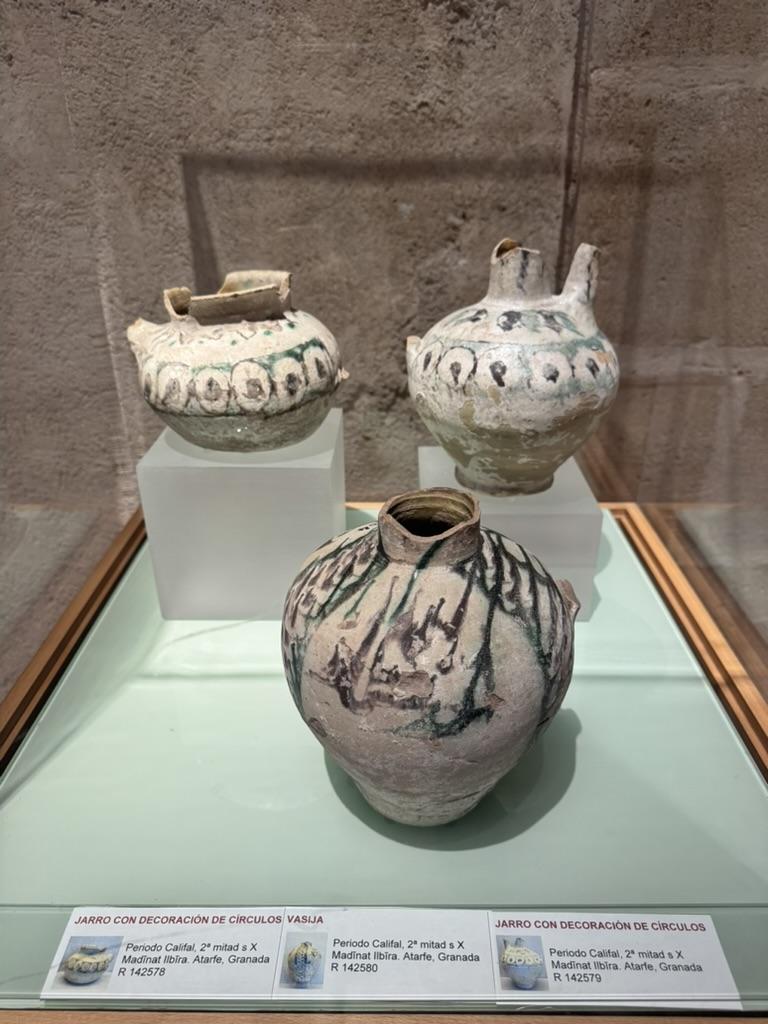
In addition to the art that is embedded in the architecture, there are many items found during the restoration. The museum holds a collection of pottery that seems to be incredibly well preserved, sharing the similar patterns of blues and earthy tones found throughout the buildings.
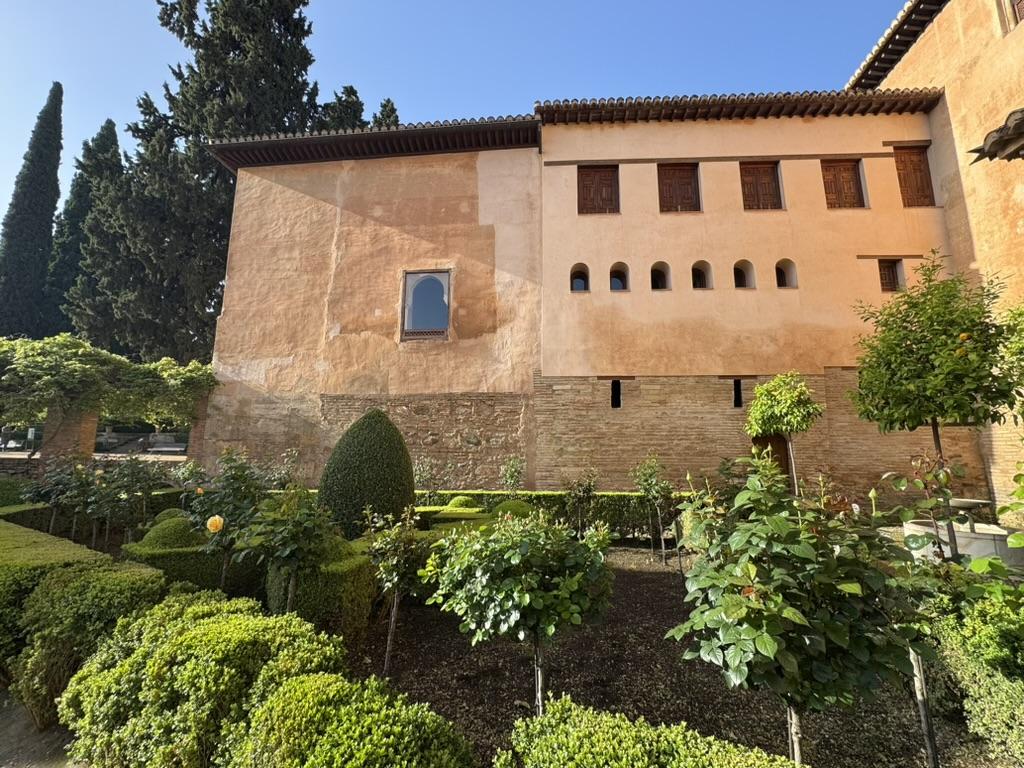
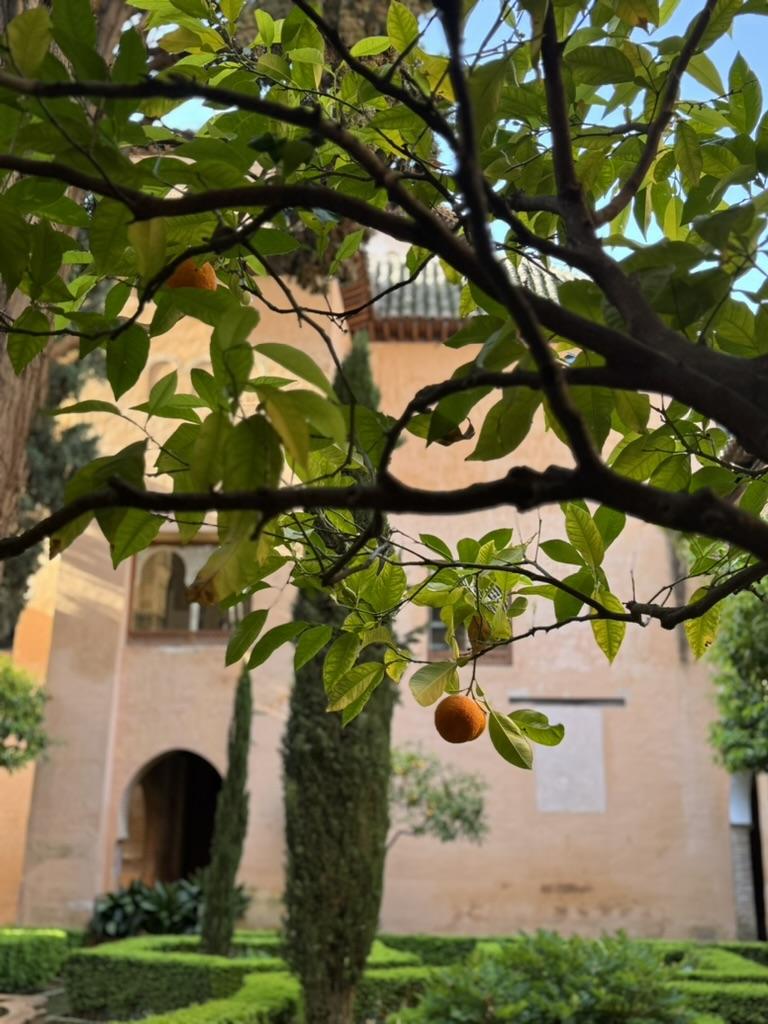
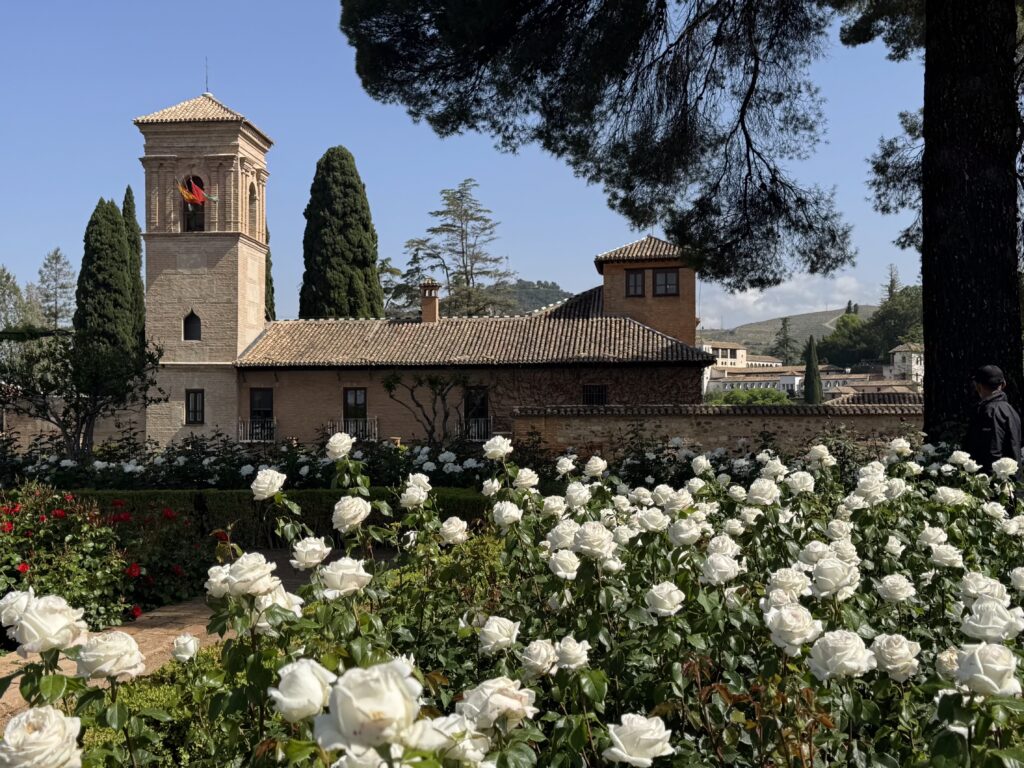
The gardens are a unique part of the Alhambra. They were considered ‘paradise-gardens’ designed for relaxation, agricultural production and aesthetic beauty. They are carefully designed and maintained, featuring a similar geometric theme to the rest of the complex. Love the orange trees in fruit!
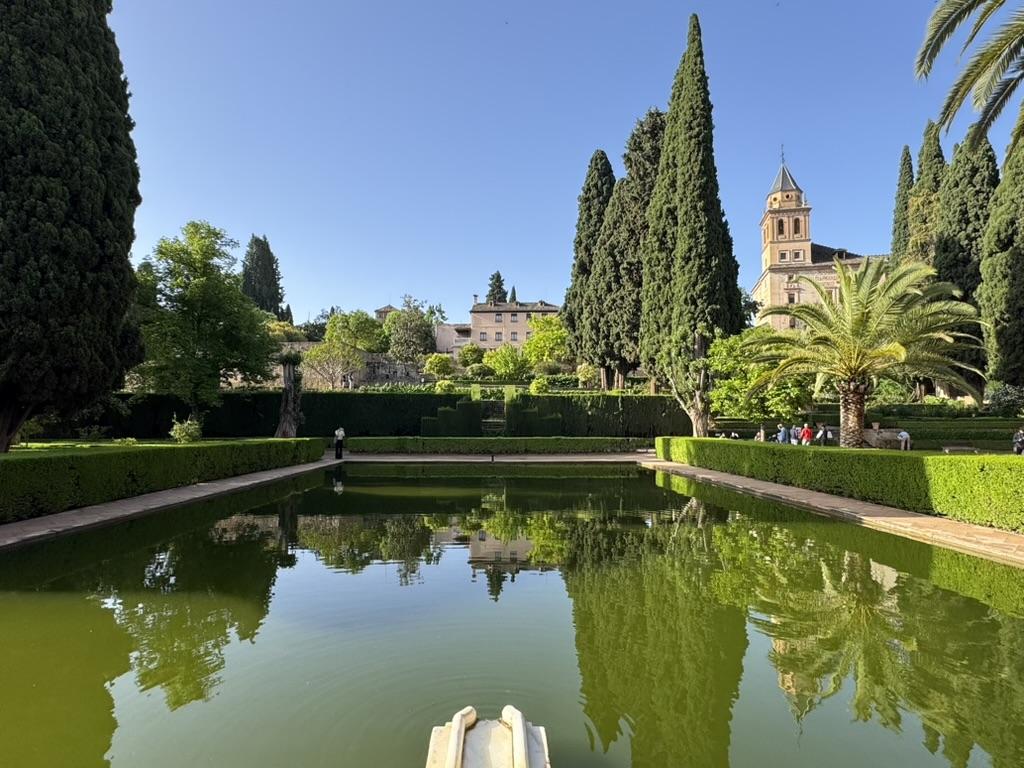
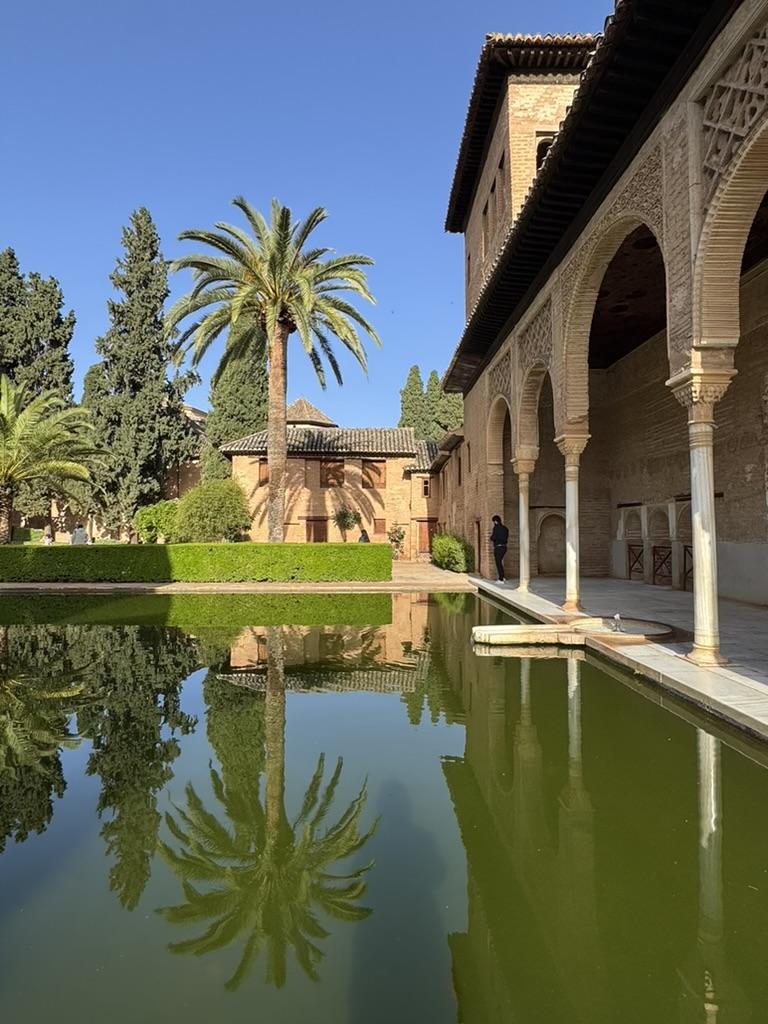
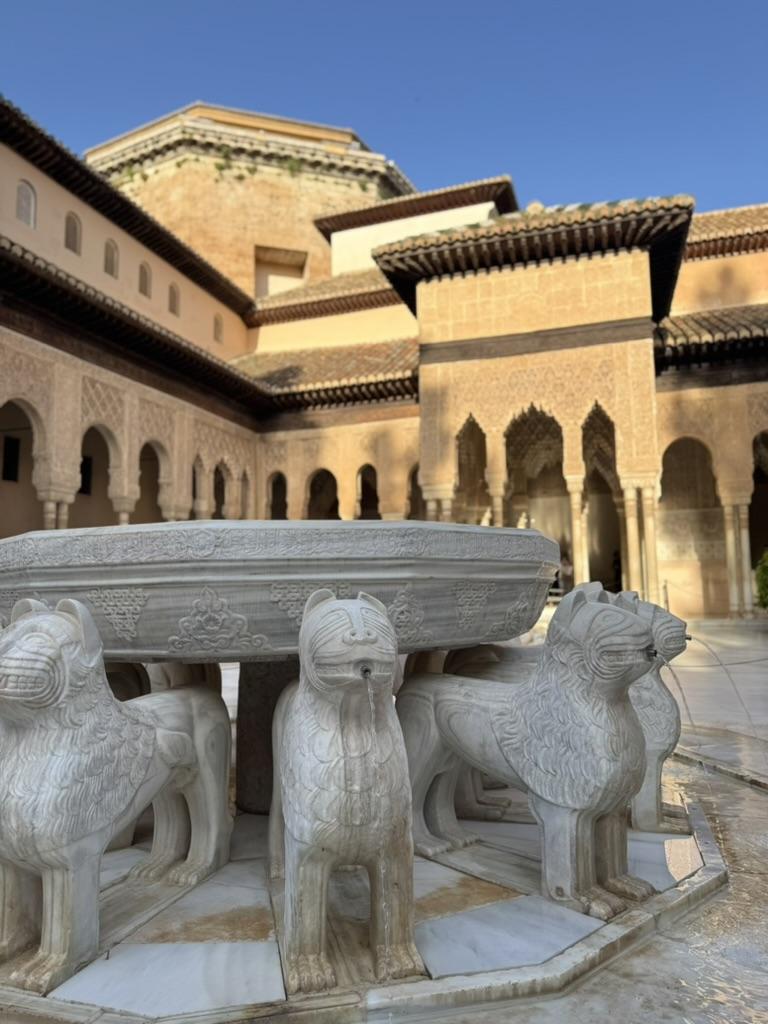
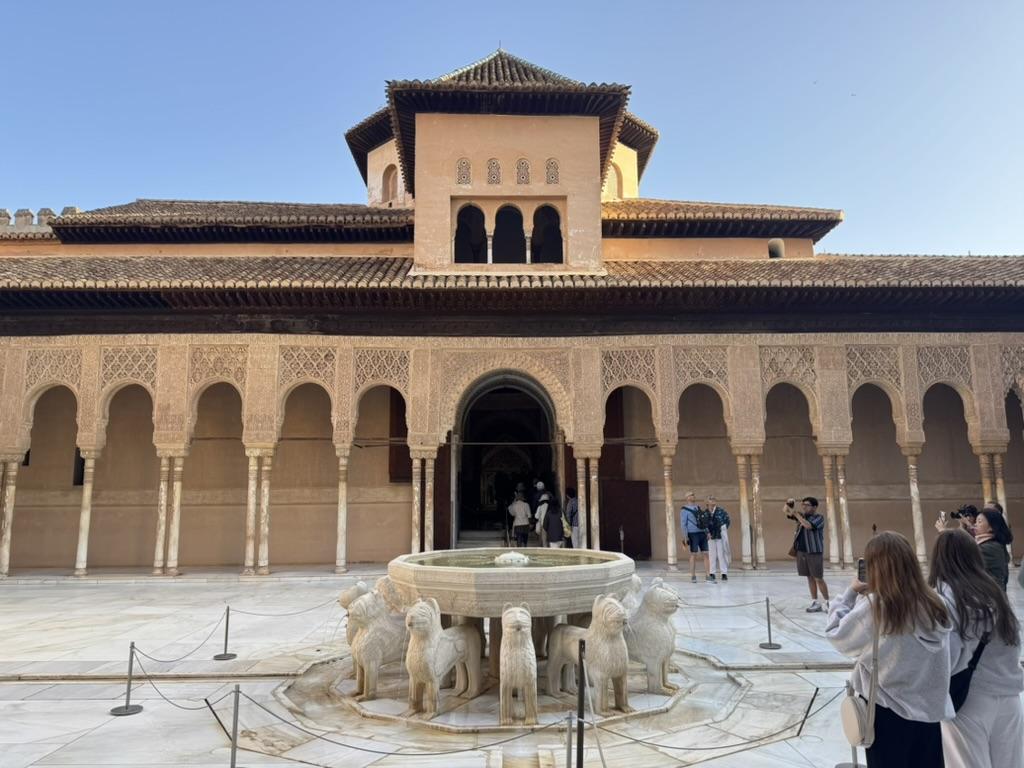
Water features such as the ‘Court of the Lions’, with it’s 12 marble scuplted lions add to the calm. The Palace of the Lions is one of the most famous places on the site, with four buildings around the central courtyard featuring 128 ornate columns. Rectangular courtyards with central water features appear throughout the space – stunning on a clear spring day!
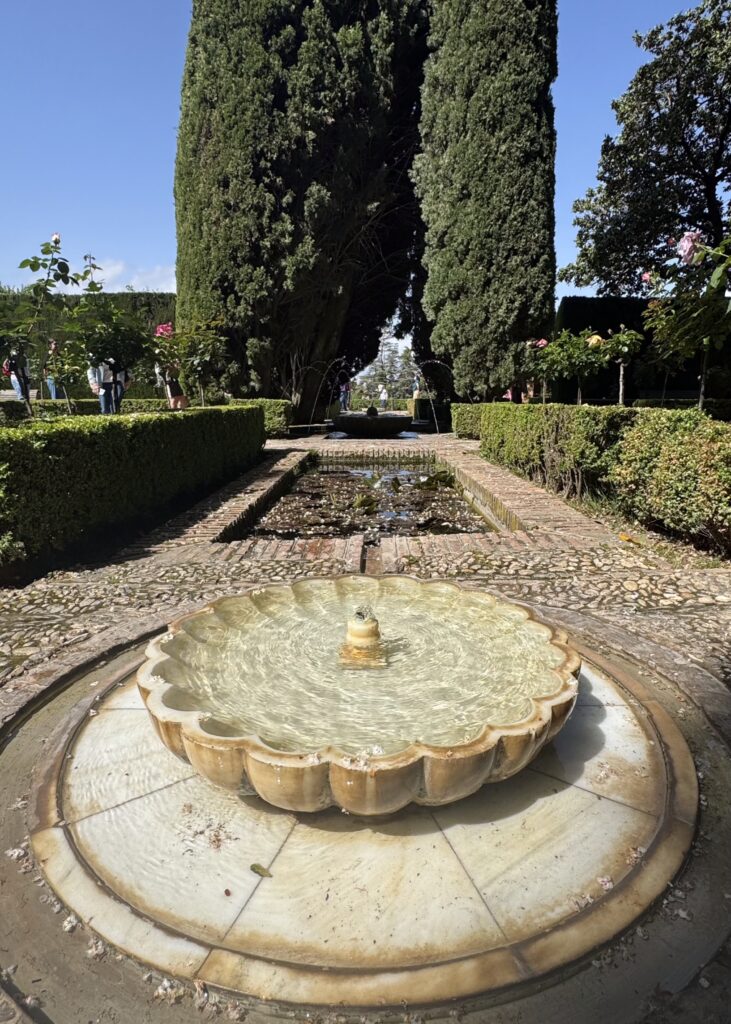
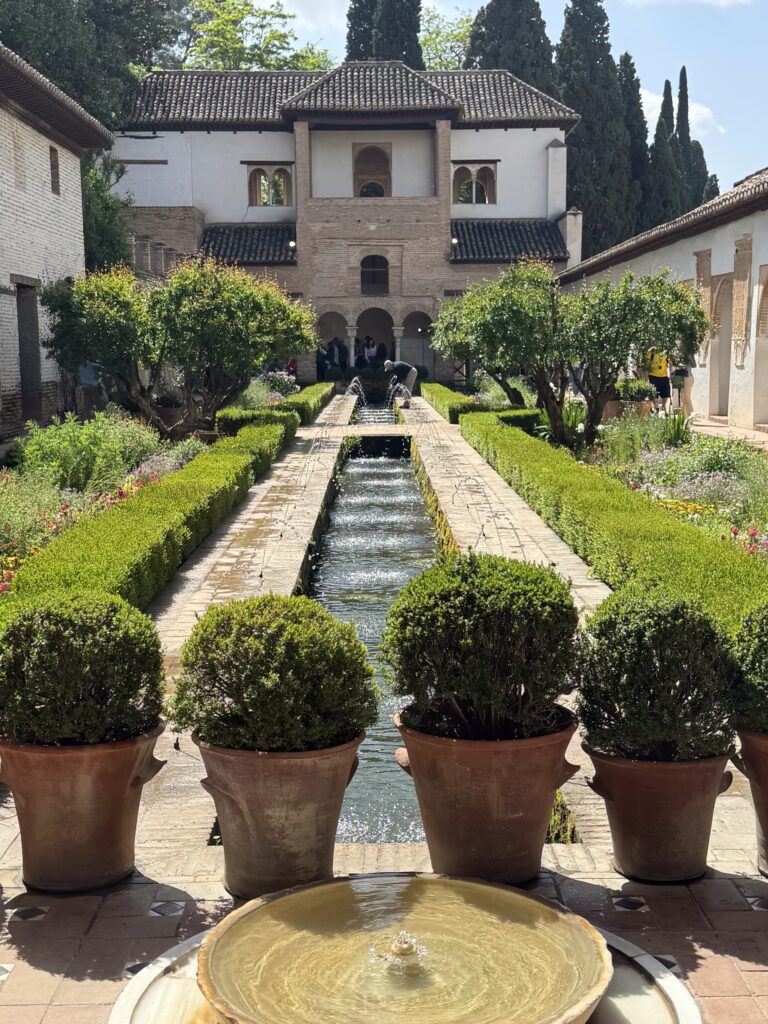
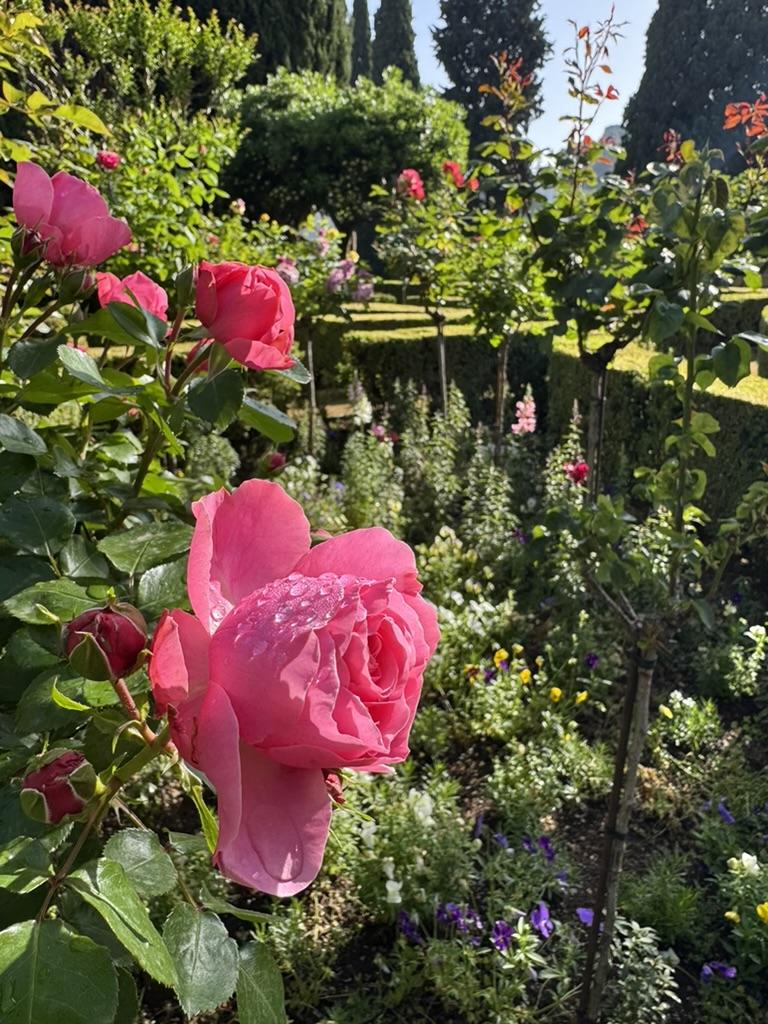
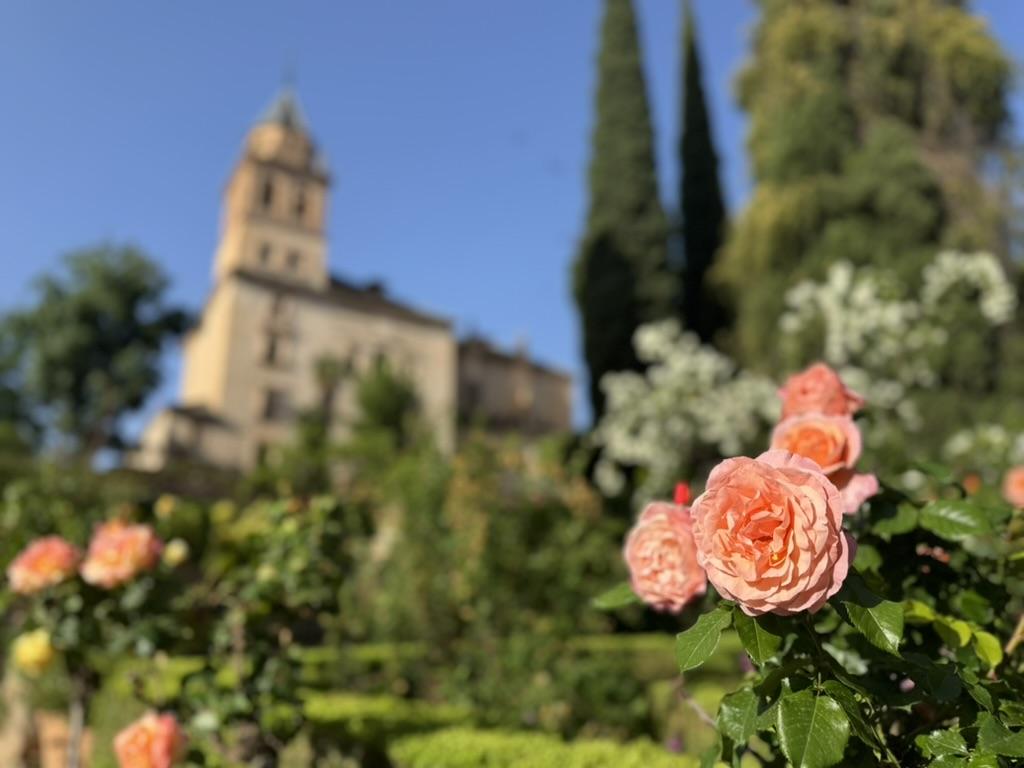
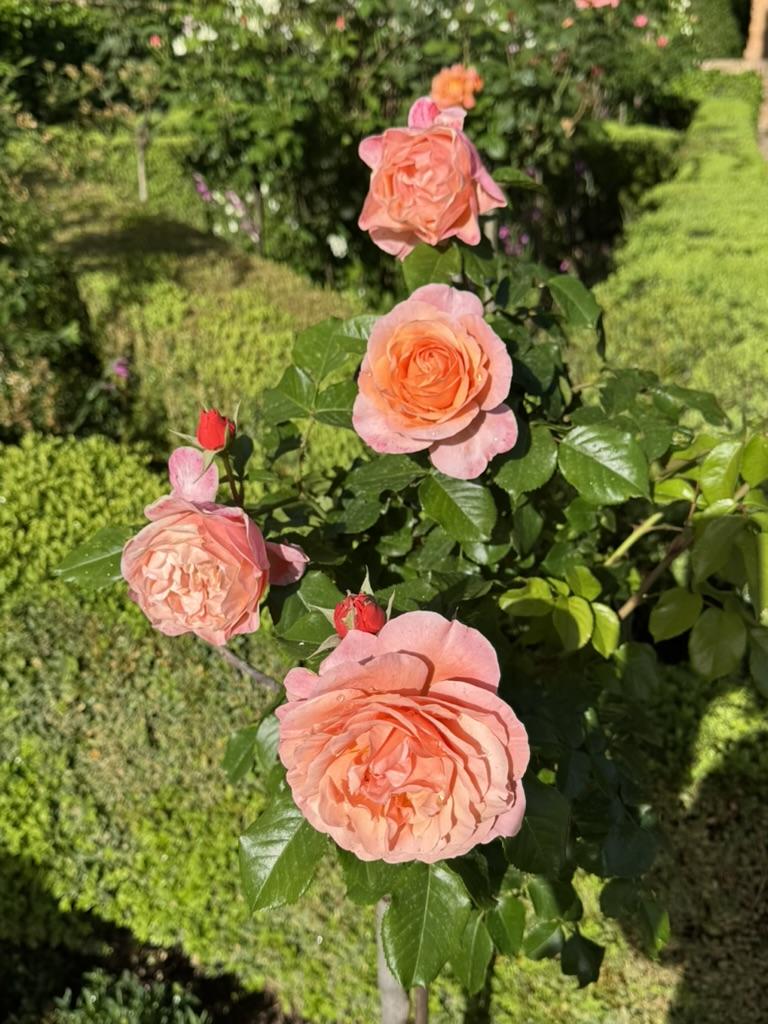
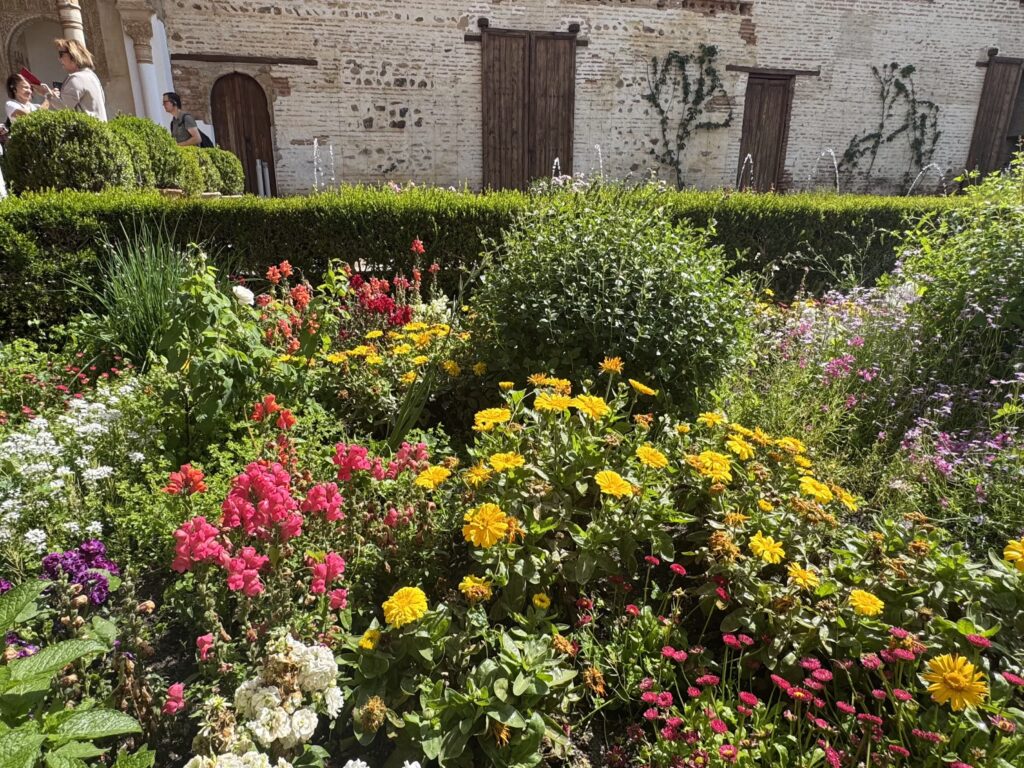
As we’ve seen so many times on this trip, travelling in Spring gives the opportunity to see places at their best with so many flowers blooming. The gardens at the Alhambra are filled with roses and wildflowers, bringing so much colour and scent throughout the complex.
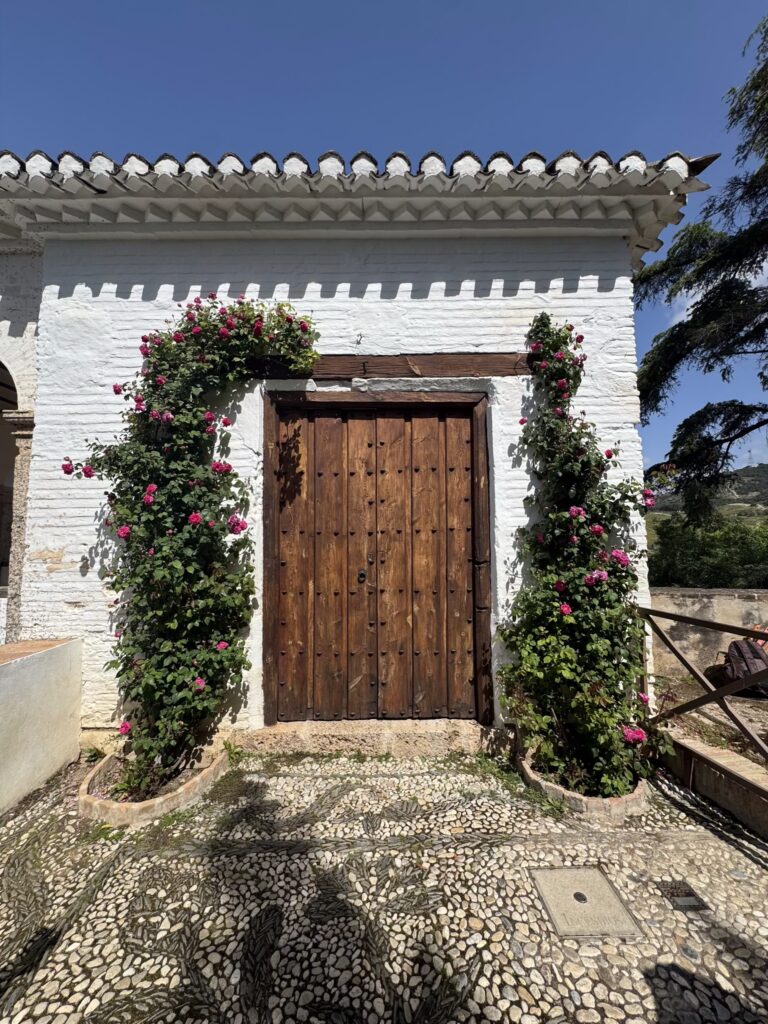
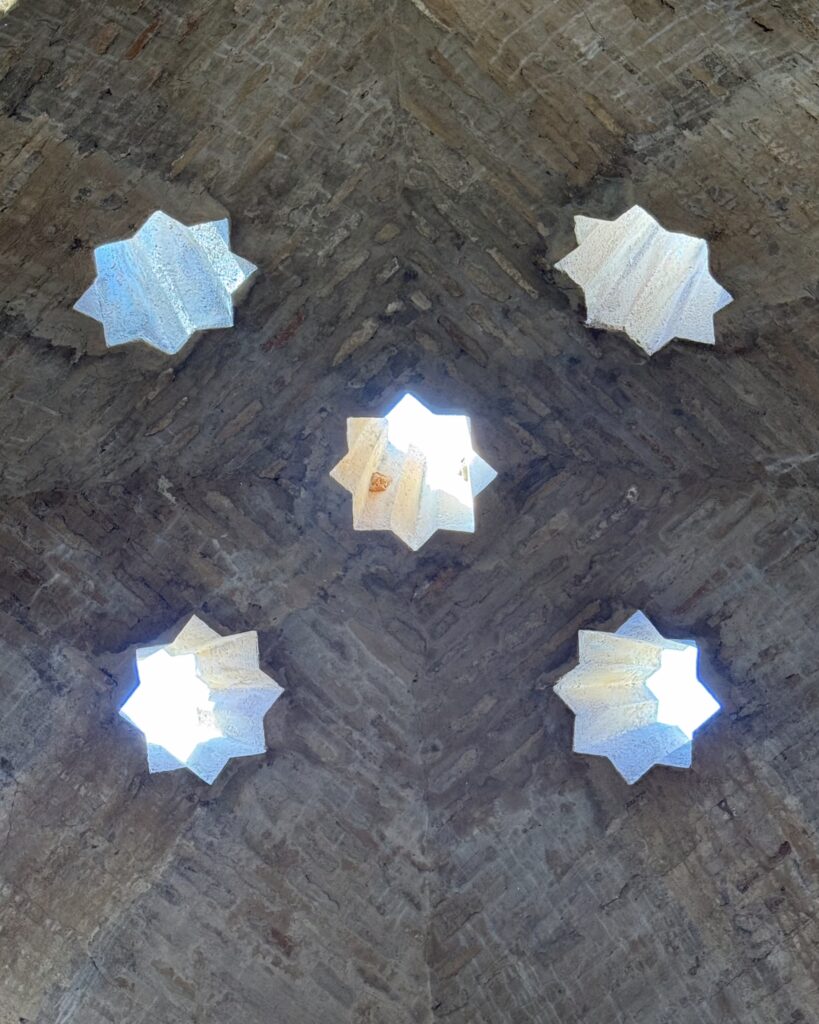
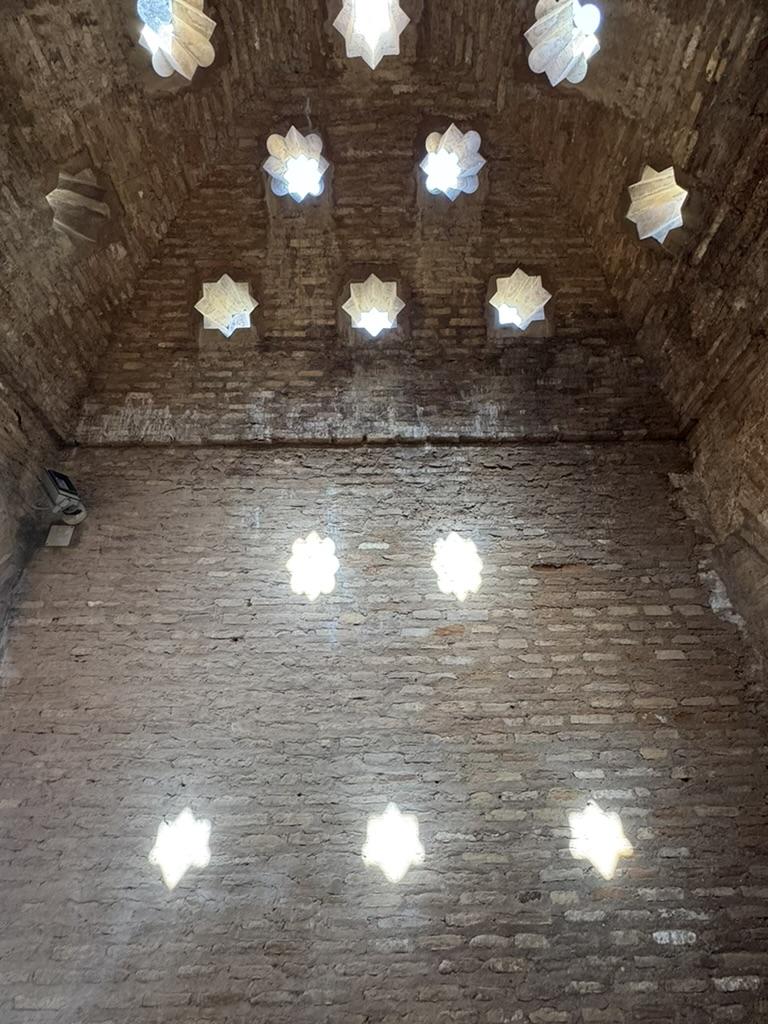
In many places windows and doors are purely functional. Here, they’re an opportunity to add texture and light to the building. They’re a unique feature throughout the palaces.
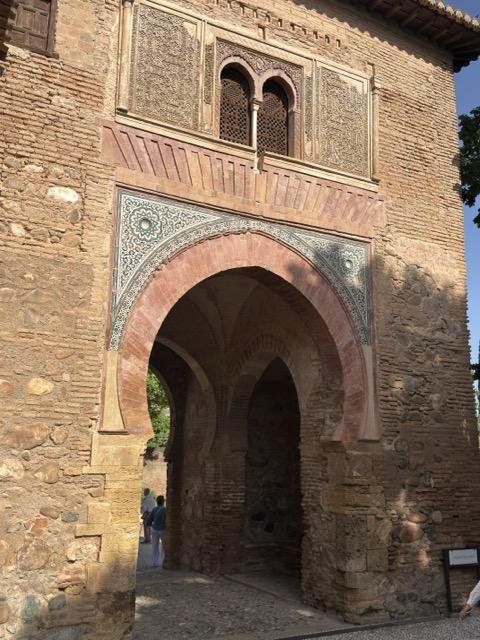
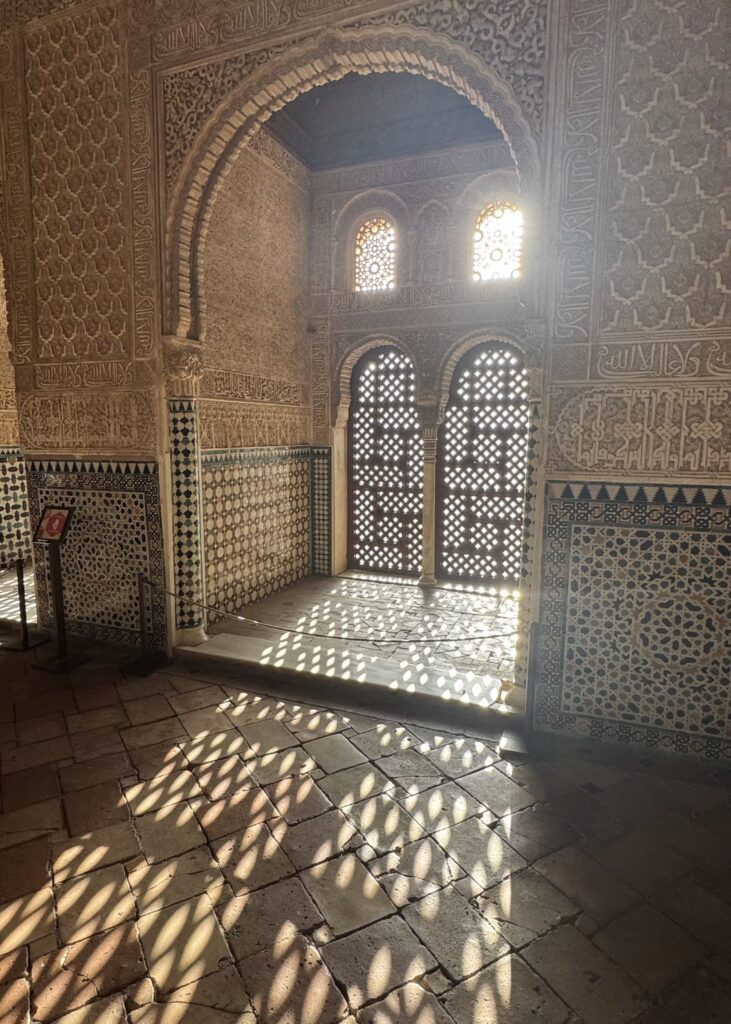
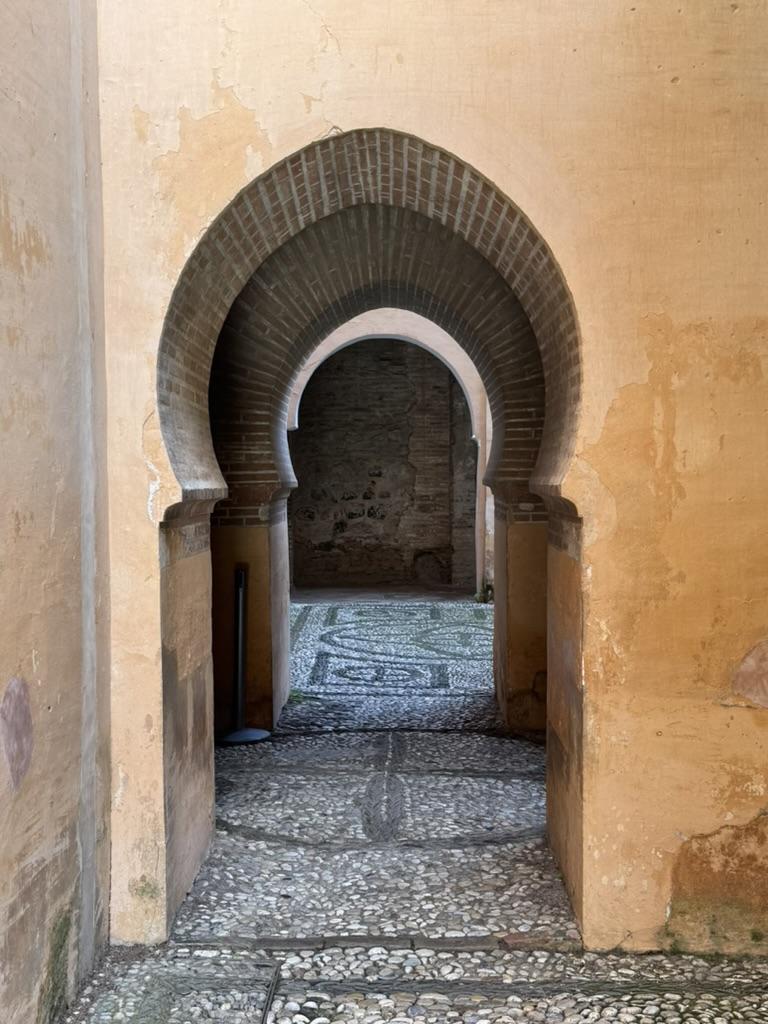
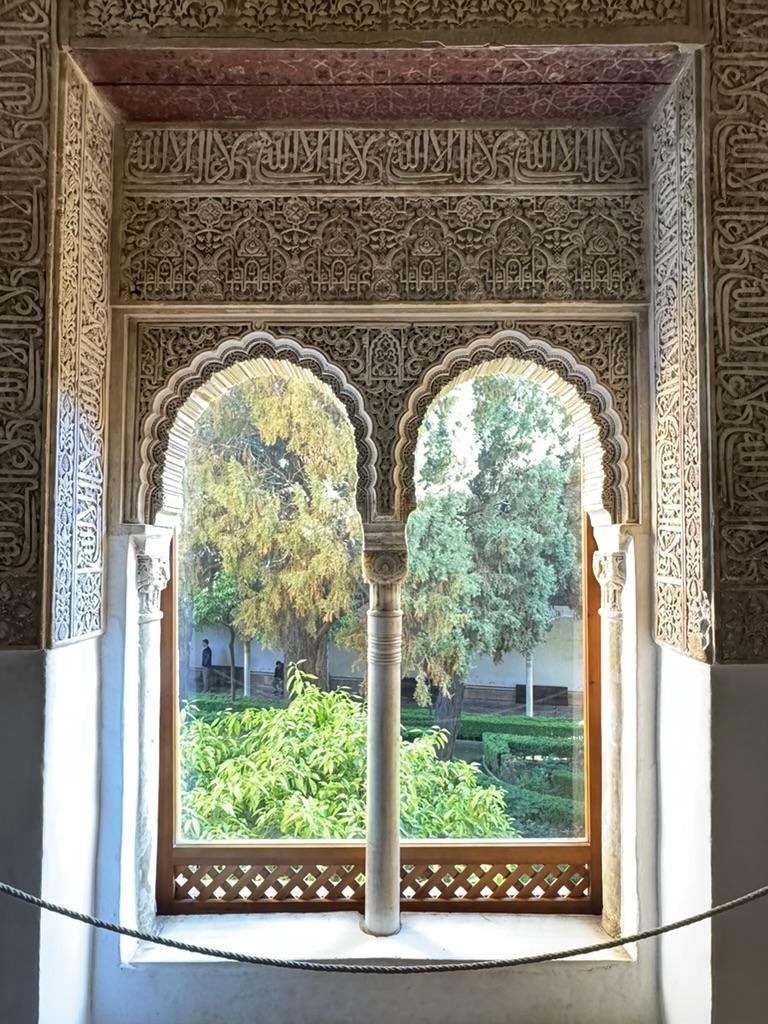
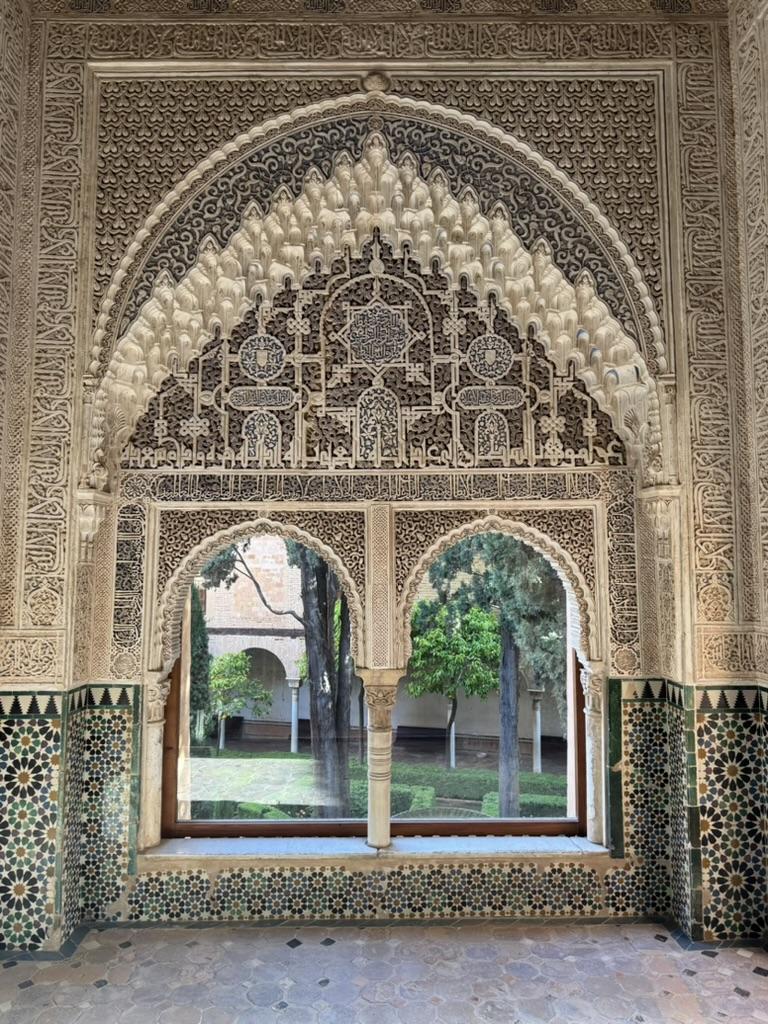
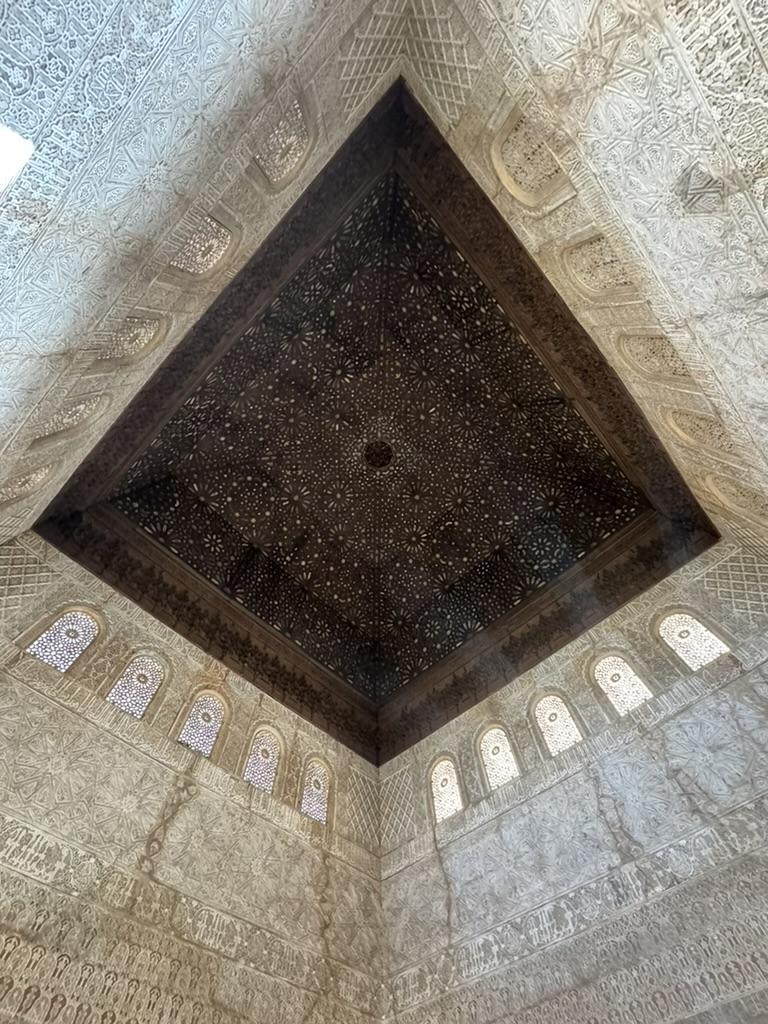
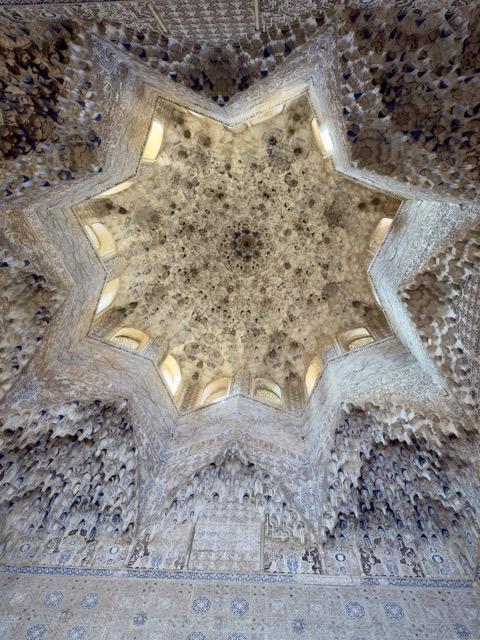
Door, windows… ceilings. Every part of a space is an opportunity for expression, craftsmanship, and a connection between the natural beauty outside, with the detail inside. It’s astounding that people came up with the design, and even more so that they were able to execute on it so elegantly.
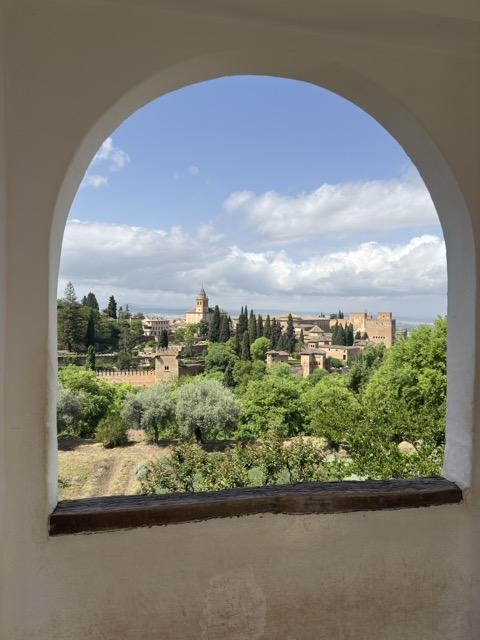
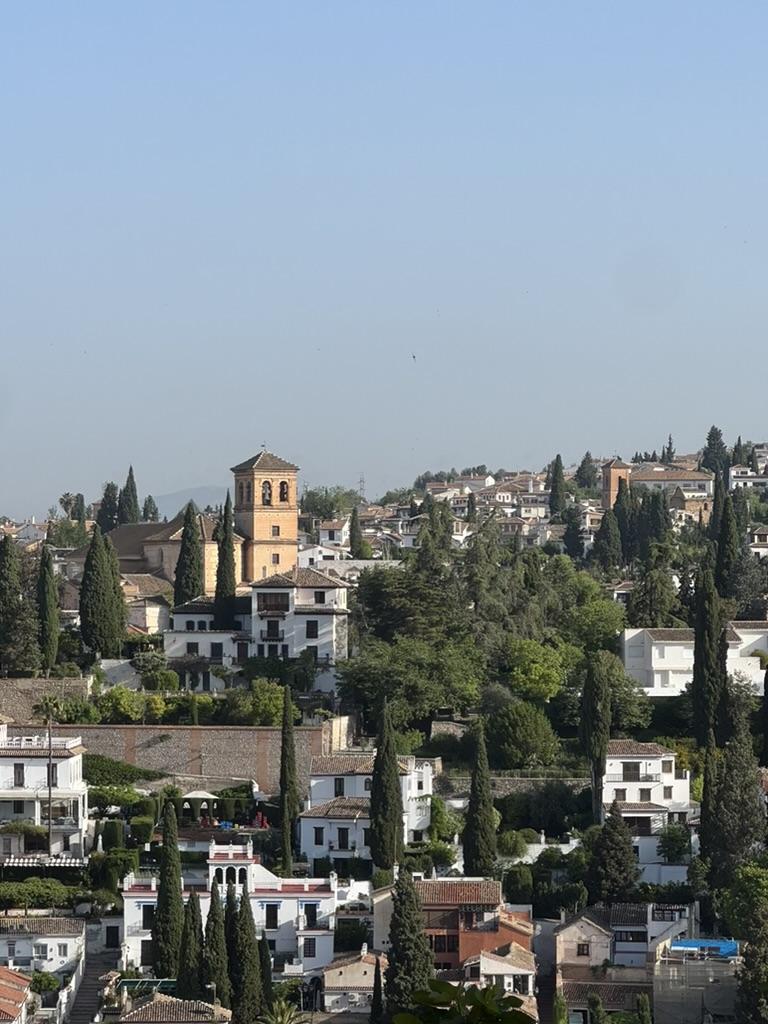
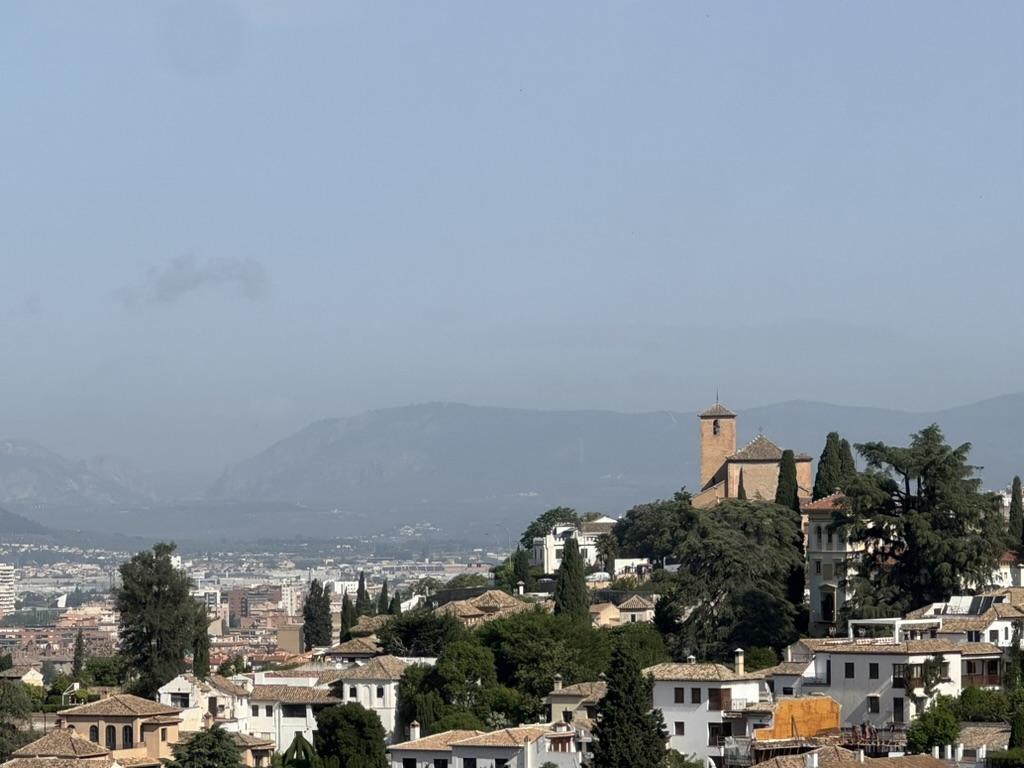
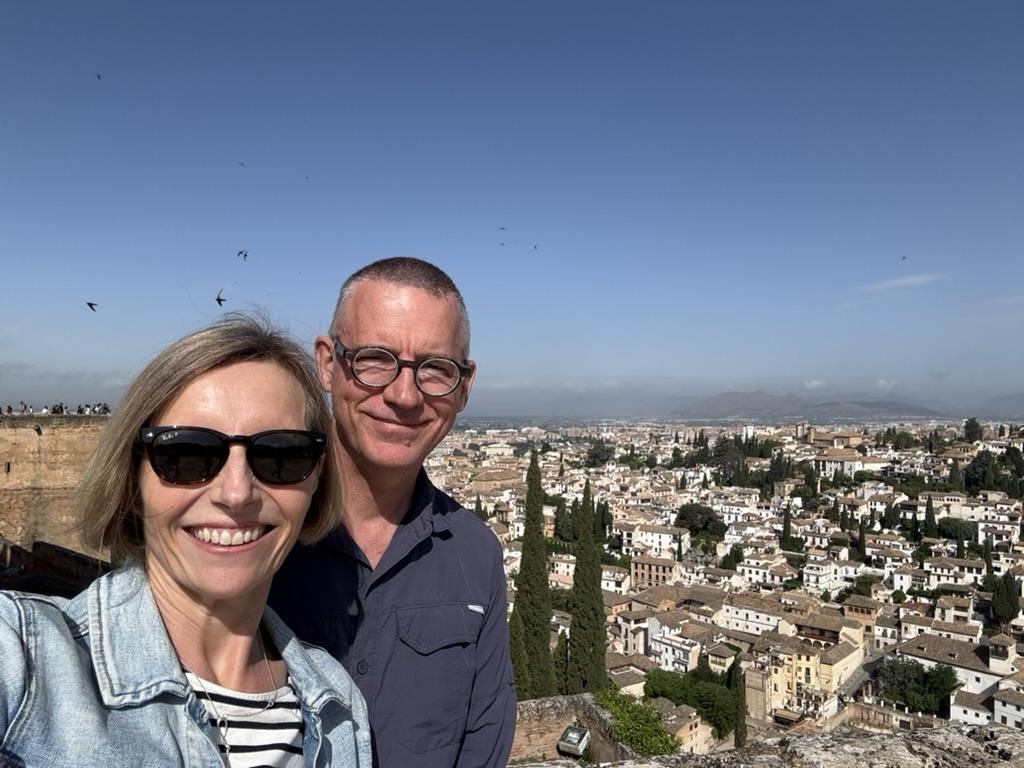
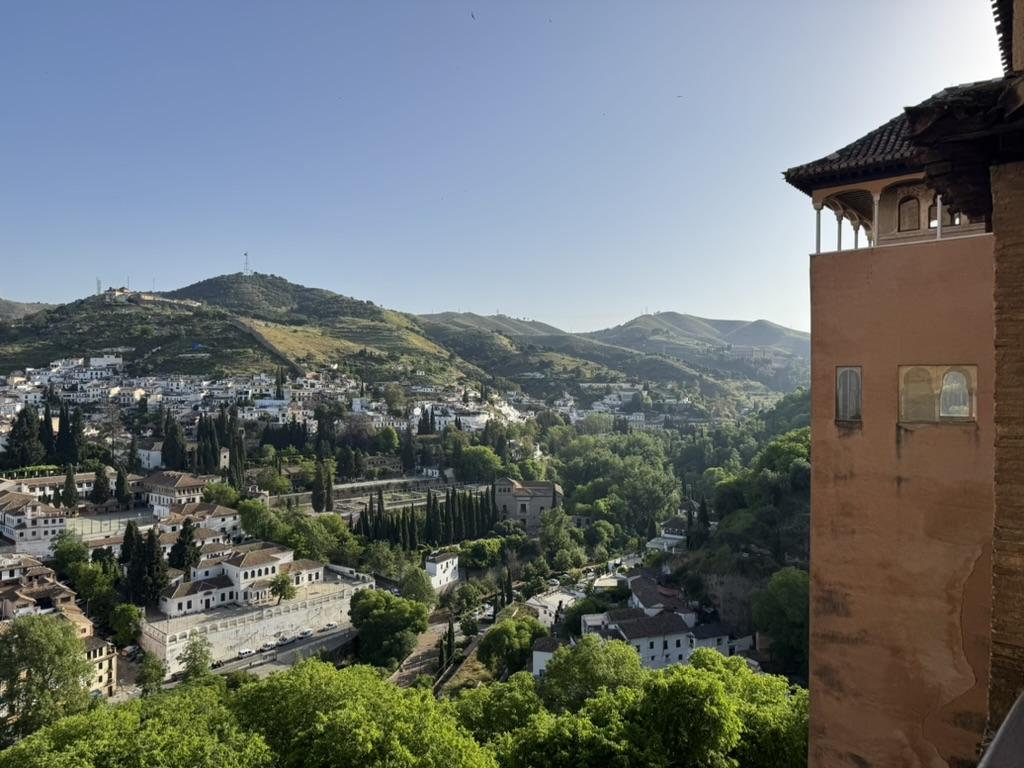
The Alhambra place on top of the hill in Granada means that it has fabulous views over the town. The old ‘Albaicin’ area sits on the hill opposite, and features white houses along narrow streets. From the Generalife section of the Alhambra site there are great views back to the palaces and fortress. They knew how to maximise a view!!!
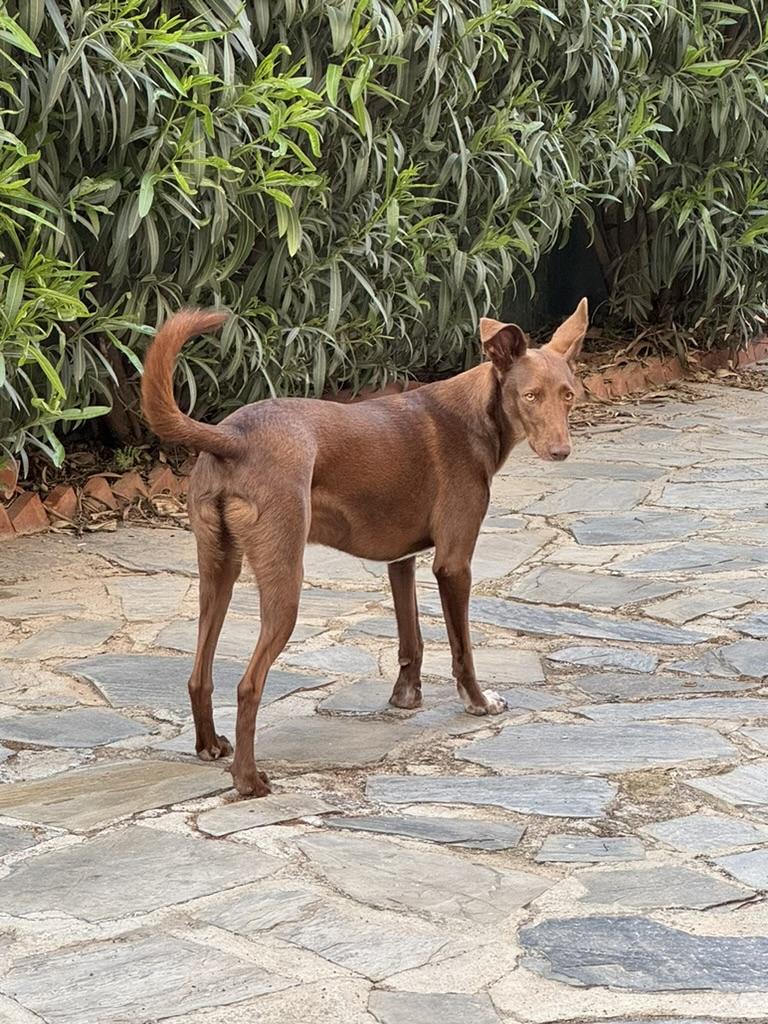
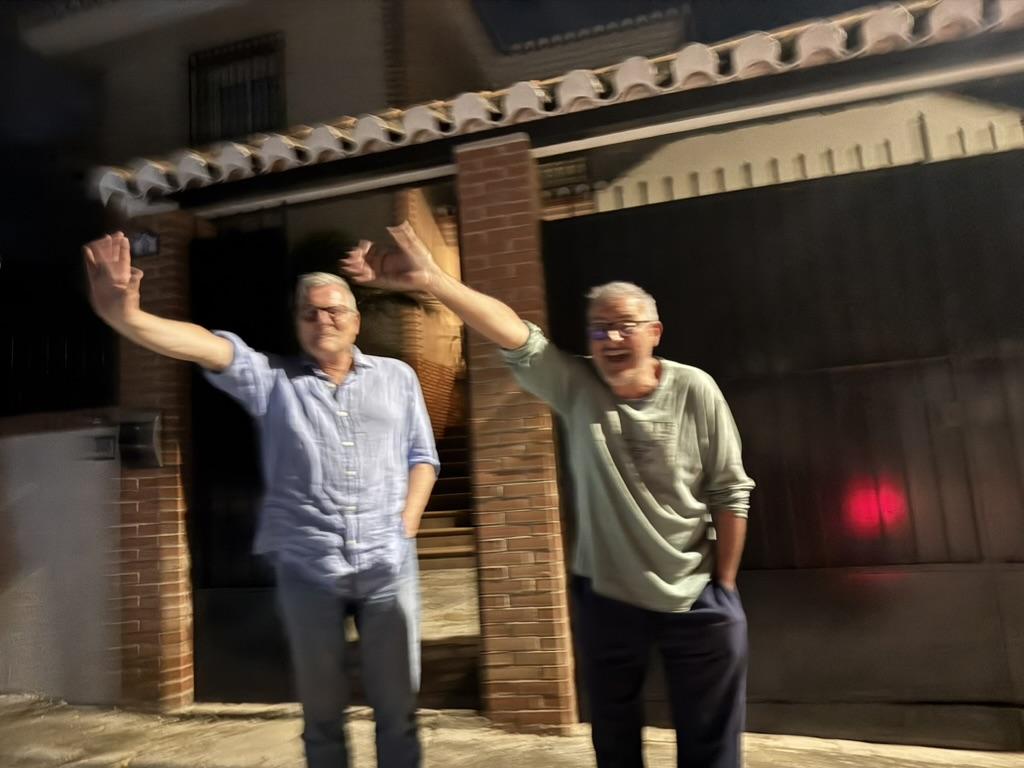
We finished the day reflecting on Rachel… she deeply loved Granada and the Alhambra, and people who live here. I’m so glad that she will be forever connected to it… dinner with Eric and Pascal, and their two dogs Milan and Pepe was filled with asparagus and the warmth and love of ‘home’.




Love M & A x
Comments are closed