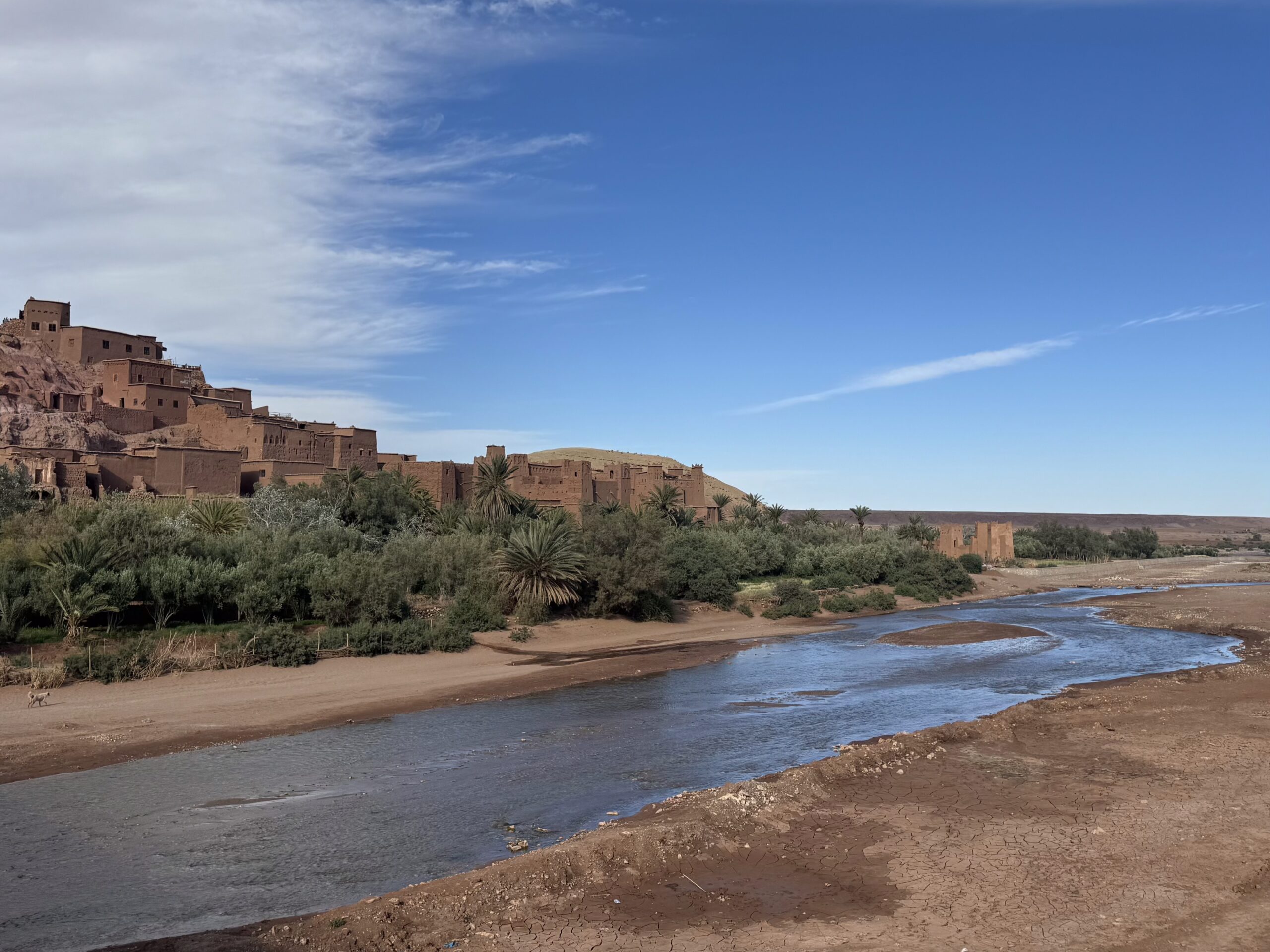
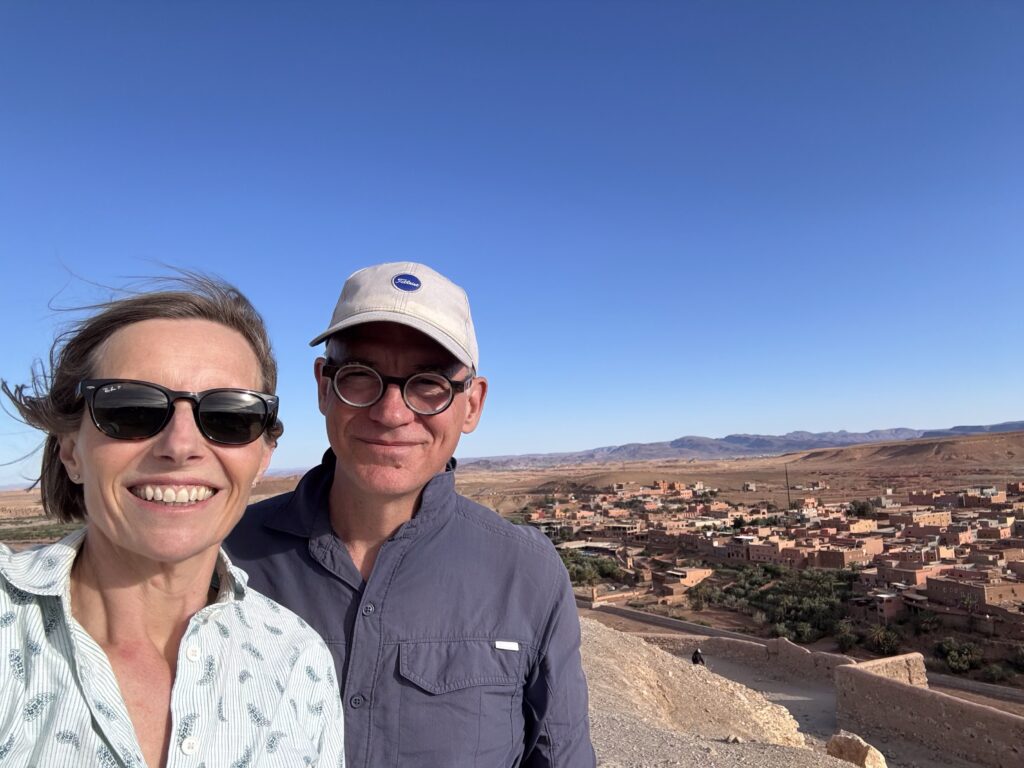
We bid farewell to Todra Gorge with a final view over the oasis. It’s remarkable in every way.
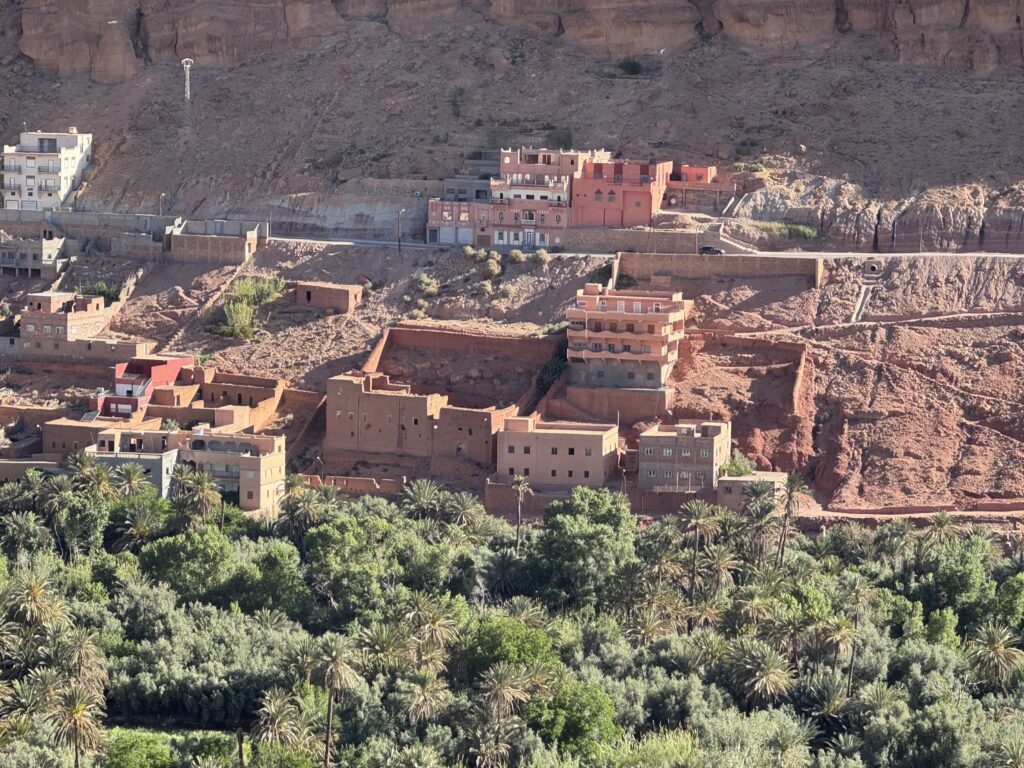
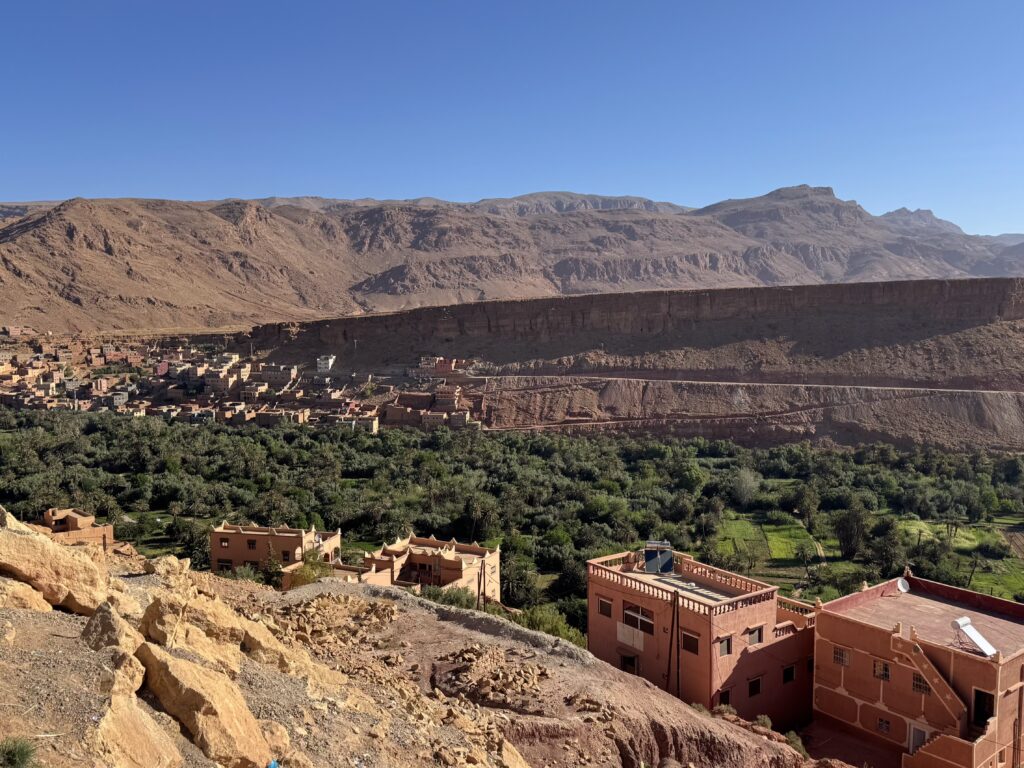
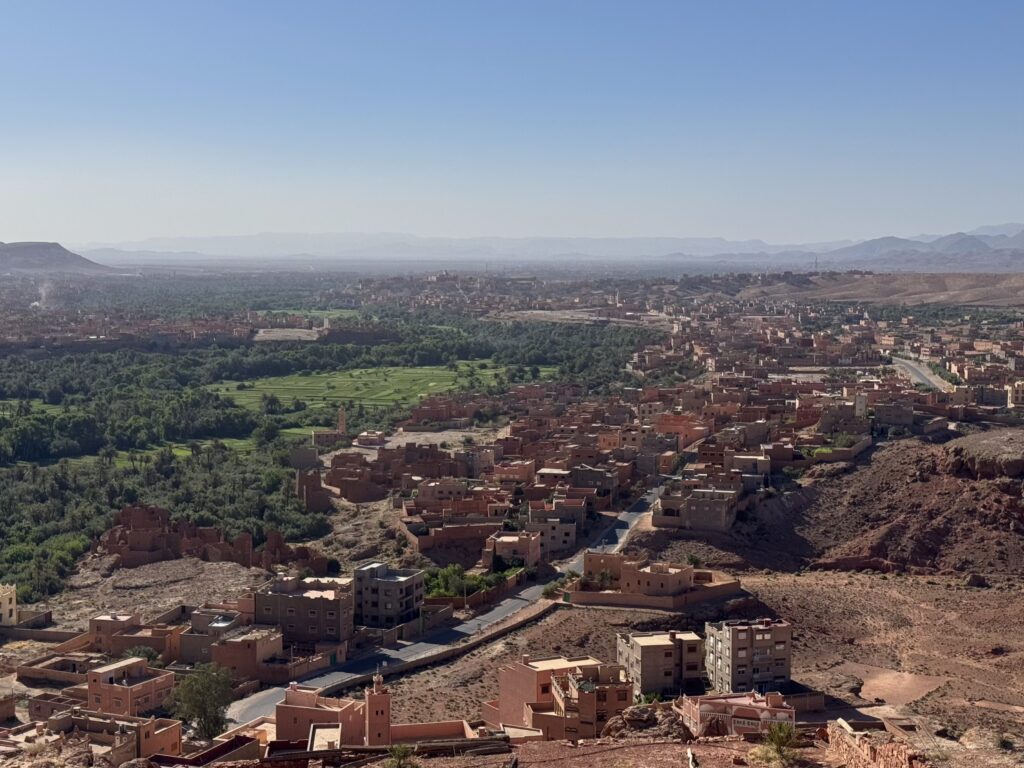
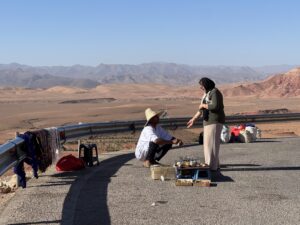
Every ‘Panoramic Stop’ attracts locals to set up shop with various small handmade souvenirs. As Australian’s we’re rarely exposed to price negotiations on small items – the price is the price, and it’s awkward to suggest otherwise. Amina from our group grew up in Pakistan and is a master-negotiator. It’s been such a delight to watch her in action – everyone seems to have fun and walk away happy!
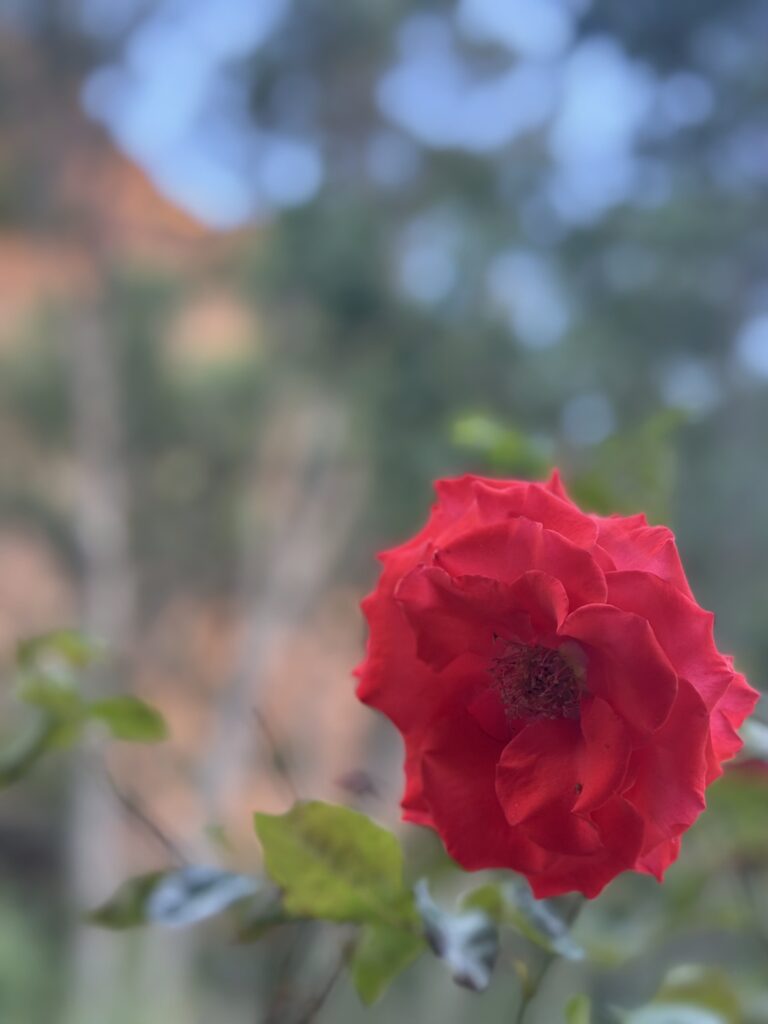
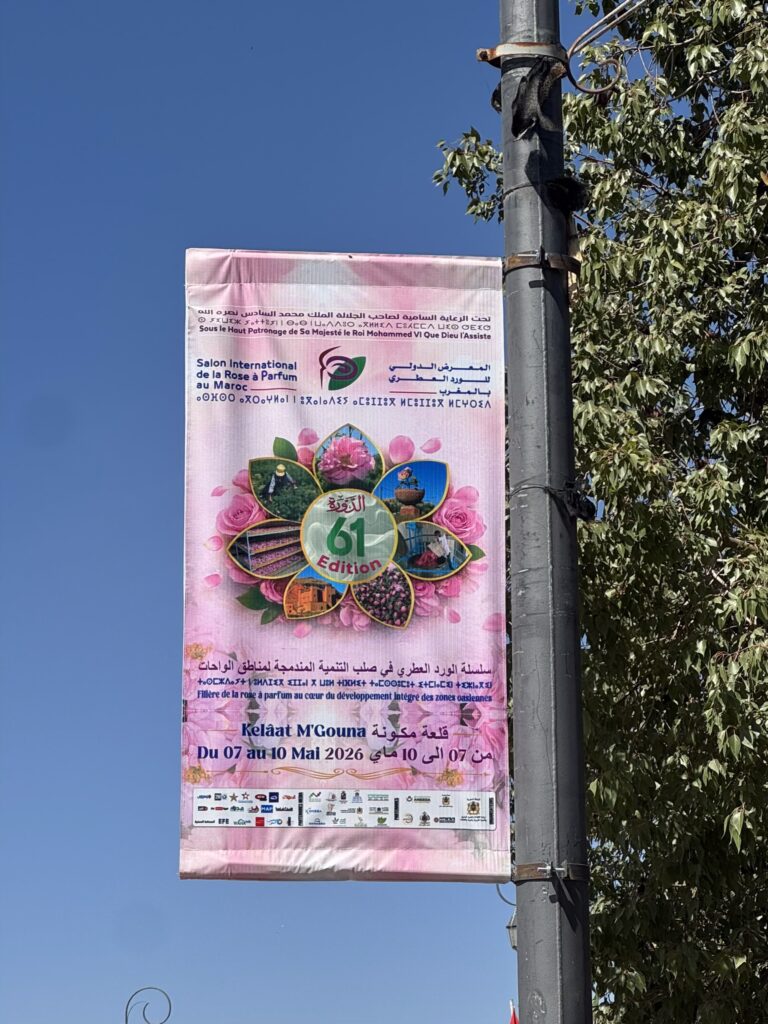
Our jam-packed day yesterday made way for a stop at the 61st annual International Rose Festival in Kelaat M’Gouna. Roses are clearly a significant part of the agricultural industry in the region – they featured at our hotel and plenty of shops and signs celebrate them all year round. The roses that are grown and harvested here seem to be a smaller variety of pink and white that are harvested as buds.
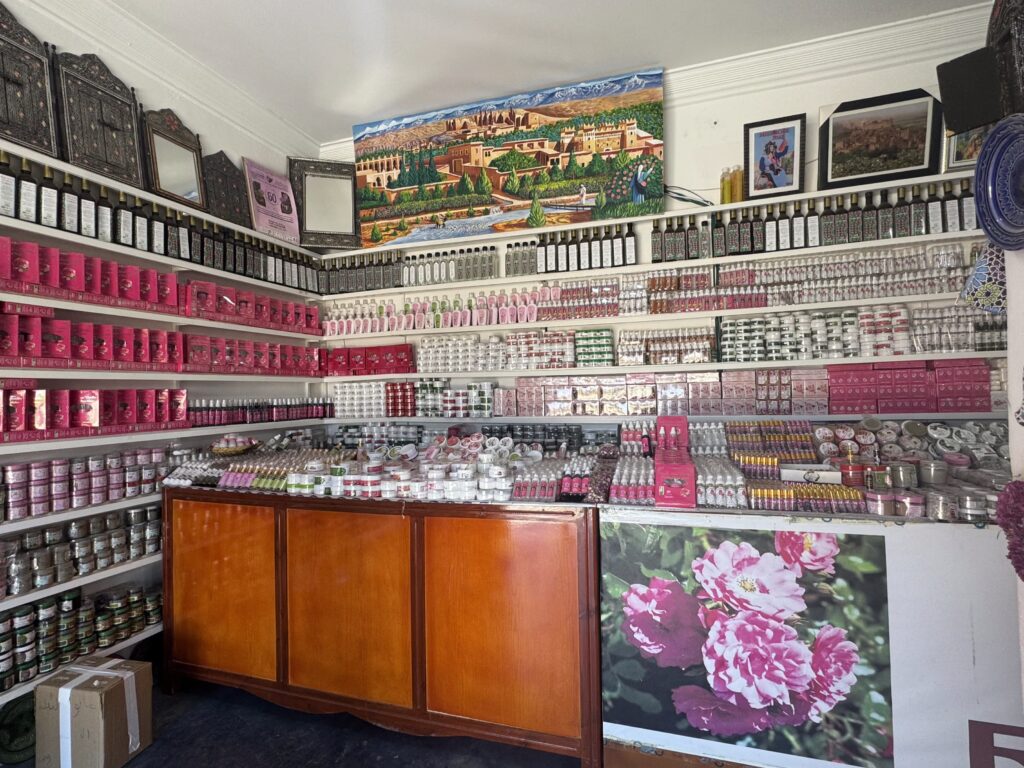
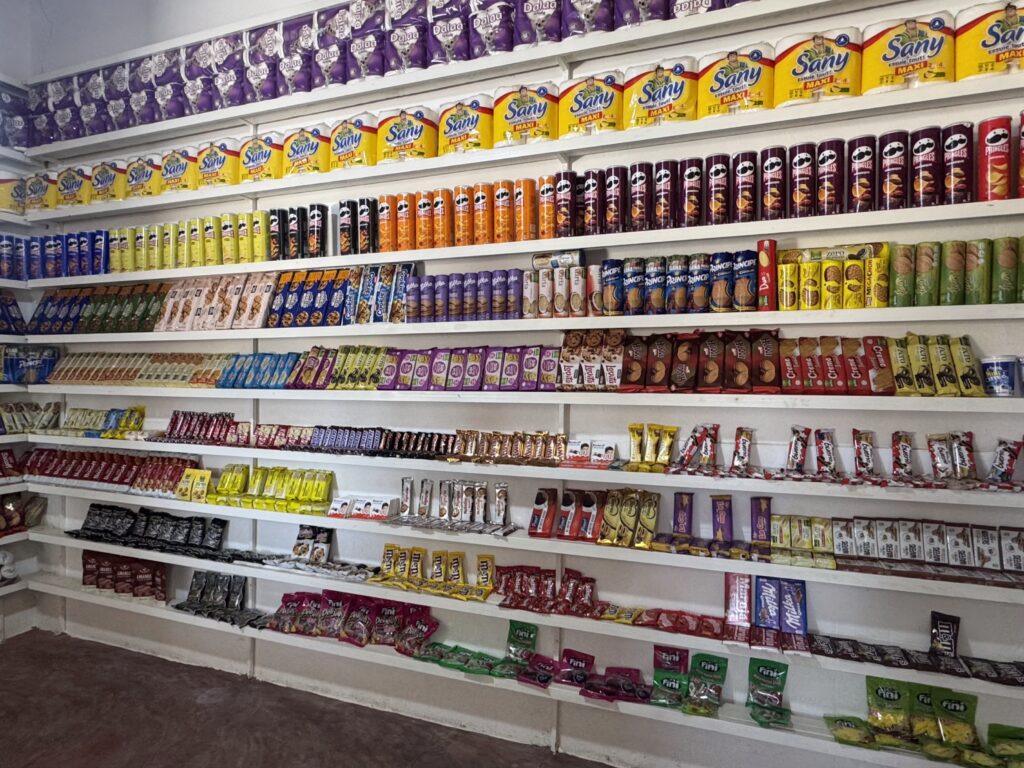
Unfortunately when we arrived our rose festival visit was thwarted by the Minister attending the opening ceremony. Kudos to our guide for a) knowing about it, and b) wrangling 14 tired tourists to get there. A stop at a local rose product stores was a decent trade off, with my inner retailer marvelling at the immaculate shelf presentation!
Passing through Tinghir city we learned about the cultural shift in the way that mosques are built and funded. Like any operation, each mosque has a range of costs that they have to meet – 3 employees, power, water, maintenance. Previously mosques were funded by the Ministry of Islamic, or the local community. In recent years it’s been decided that mosques must have a commercial project such as a shopping mall that will help with ongoing costs. It’s a smart way to ensure the mosque is sustainable, and also provide jobs and services to a town.
This opened a conversation about the concept of charity and ‘good and bad’ within the Islamic faith, with the idea that while doing good and giving is a core part of the faith, ‘durable charity’ (giving for long term benefit) is viewed even more positively. Each person gives within their means – from smiles and helpful gestures to financial donations.
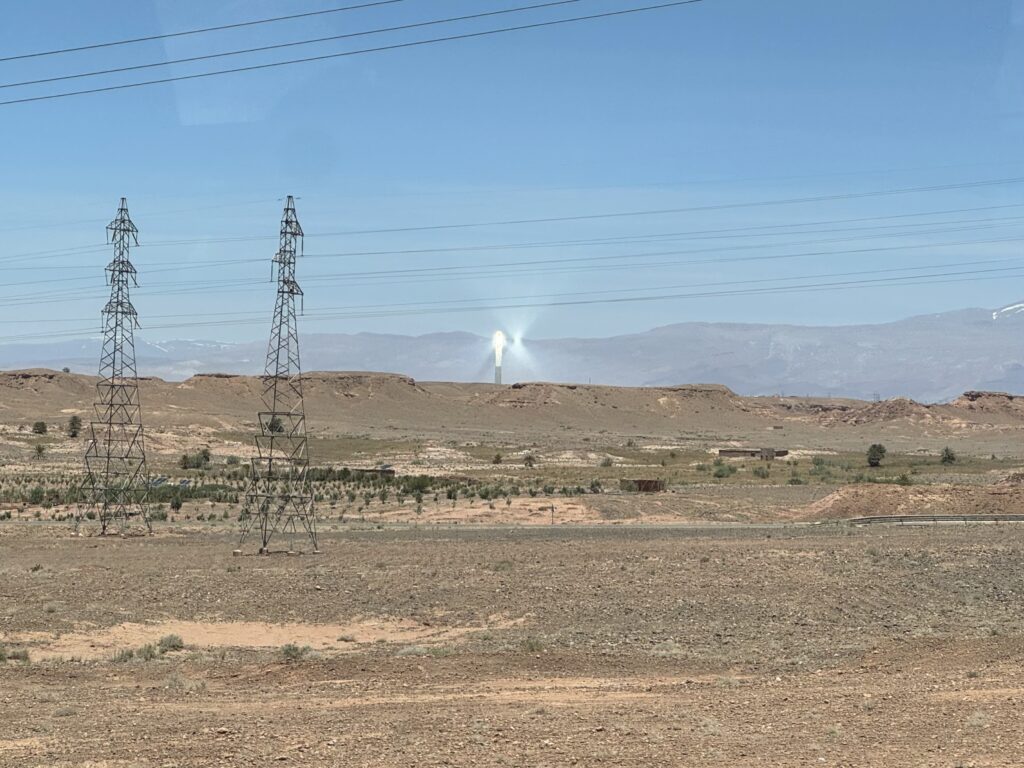
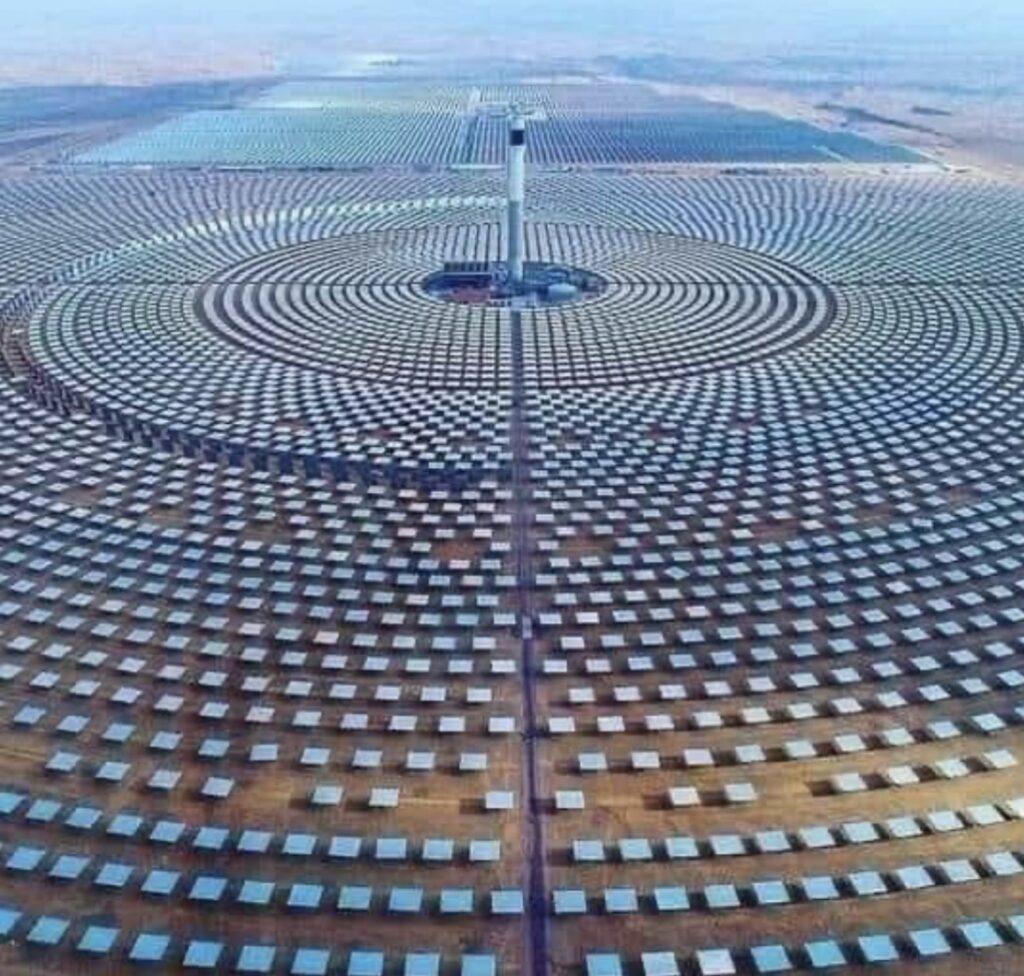
As we continued our way through the flat plains of the region, a bright light appeared on the distant horizon – too bright to be a service station, too low and stable to be an aircraft. It turned out to be the $9 billion Noor (Arabic for light) Power Station. It’s the world’s largest concentrated solar power plant complex just outside of Ouarzazate town. A field of 2 million giant mirrors are positioned to reflect the sun that’s available 300 days a year to the tower, and somehow the light is harnessed and converted to energy. It’s another example that we’ve seen of Morocco’s progress and desire to be a world leader.
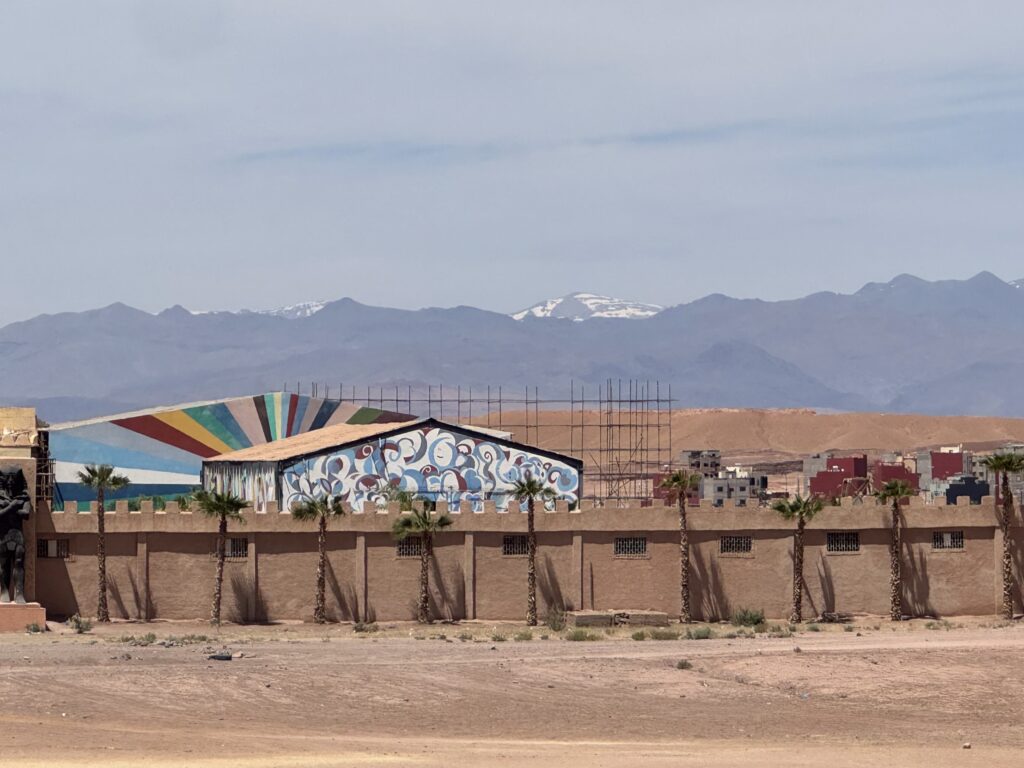
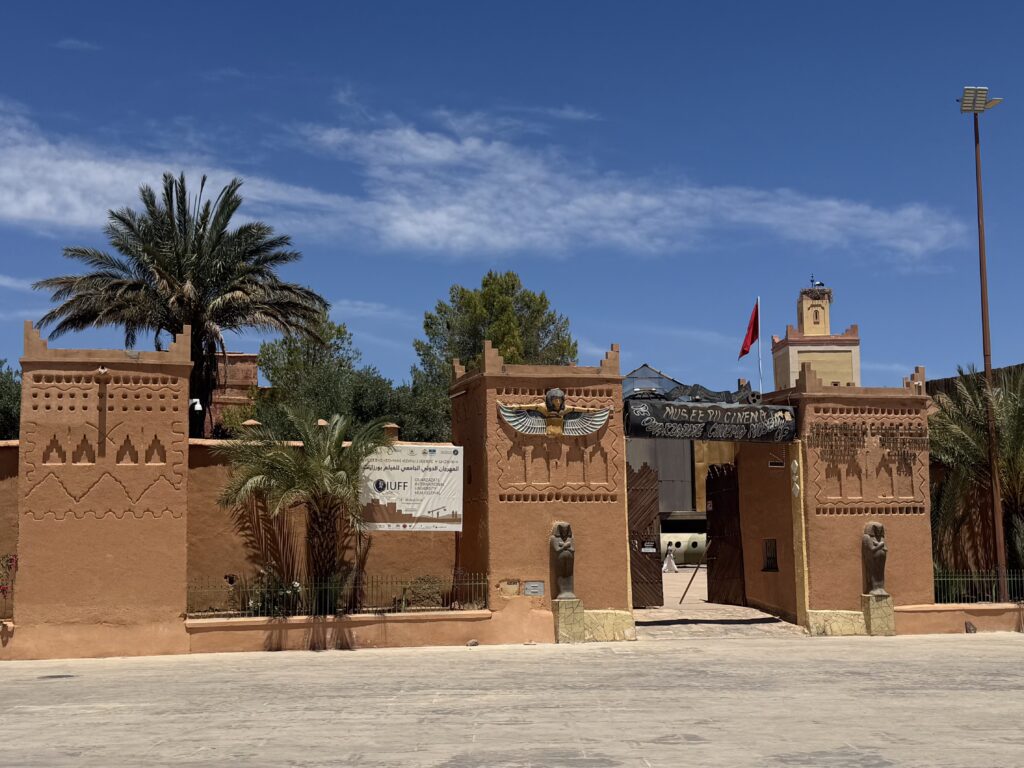
Ouarzazate town is the home to Morocco’s film industry with a major studio complex in the area. The local Museum of Cinema is one of the few places in the world you’ll find a mosque, a synagogue and a church side-by-side… non-operational of course.
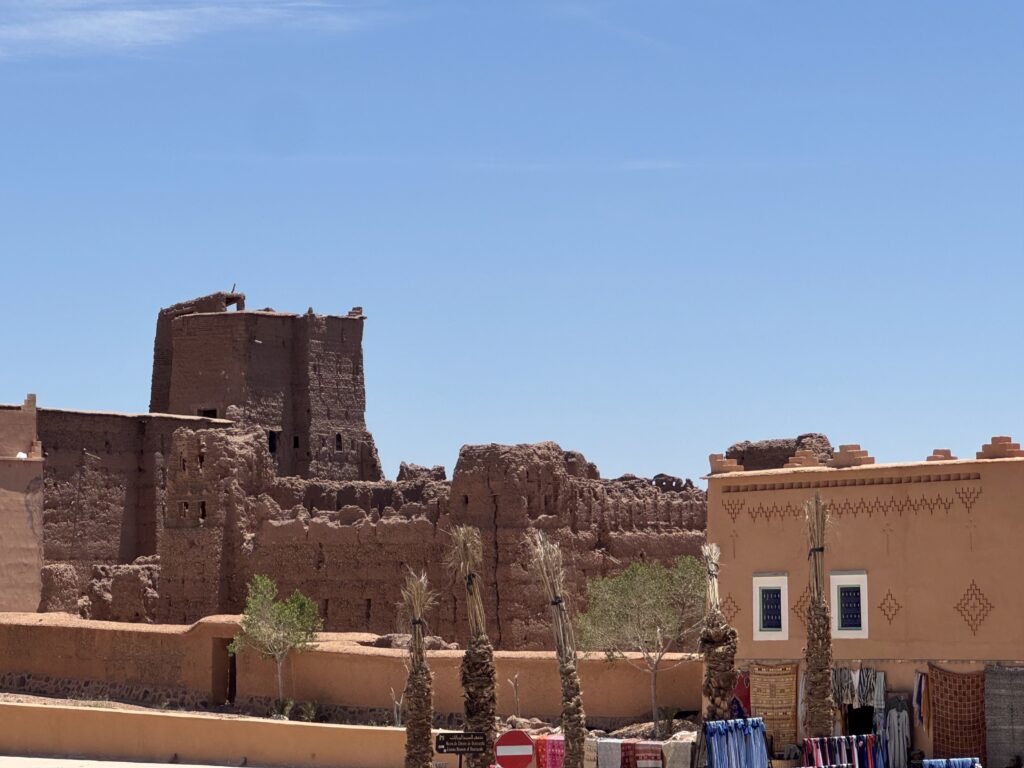
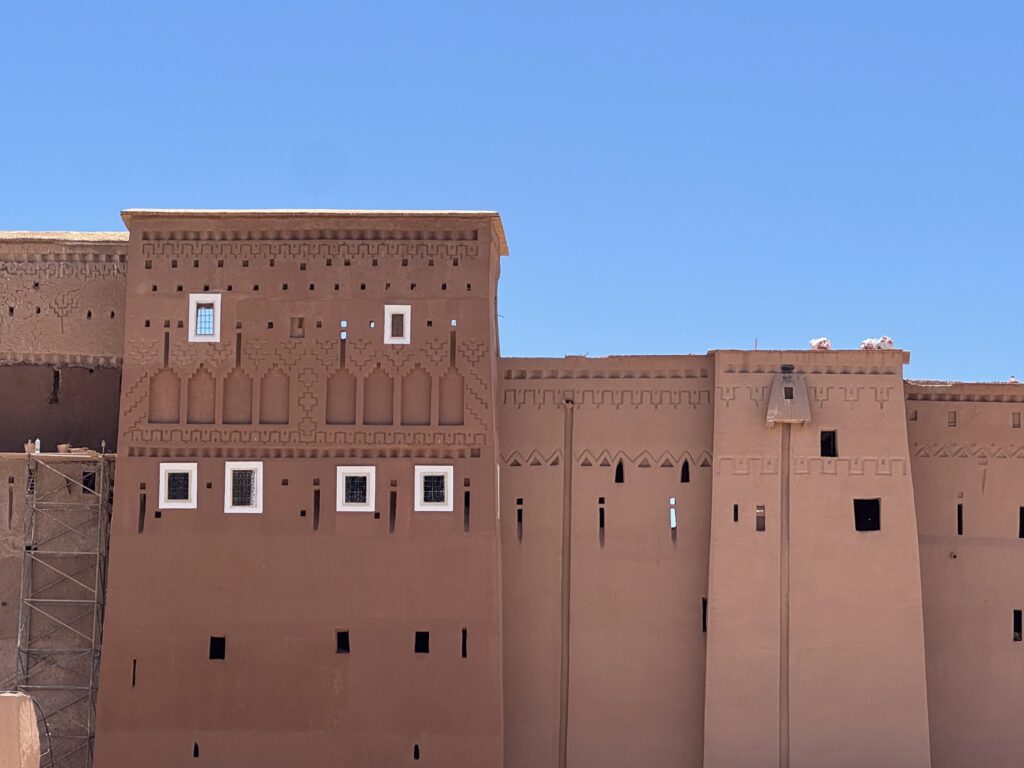
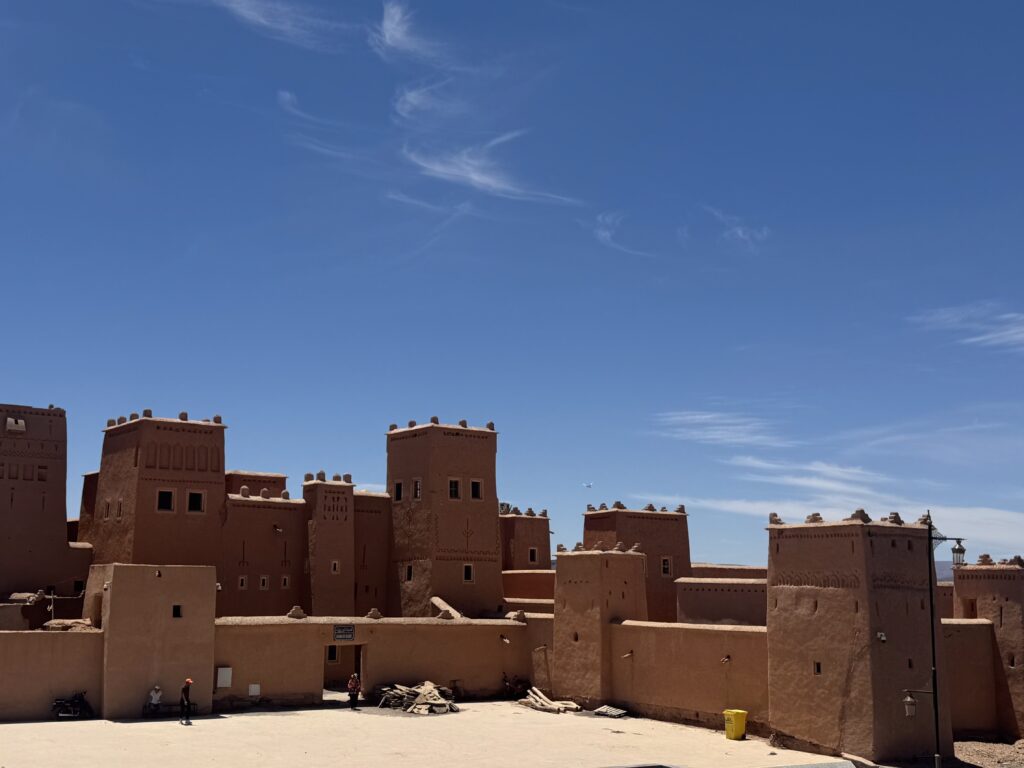
Across the road was an 18th century Kasbah under renovation, previously inhabited by a favourite wife, 3 other wives, and a collection of concubines. What IS the collective noun for concubines…?
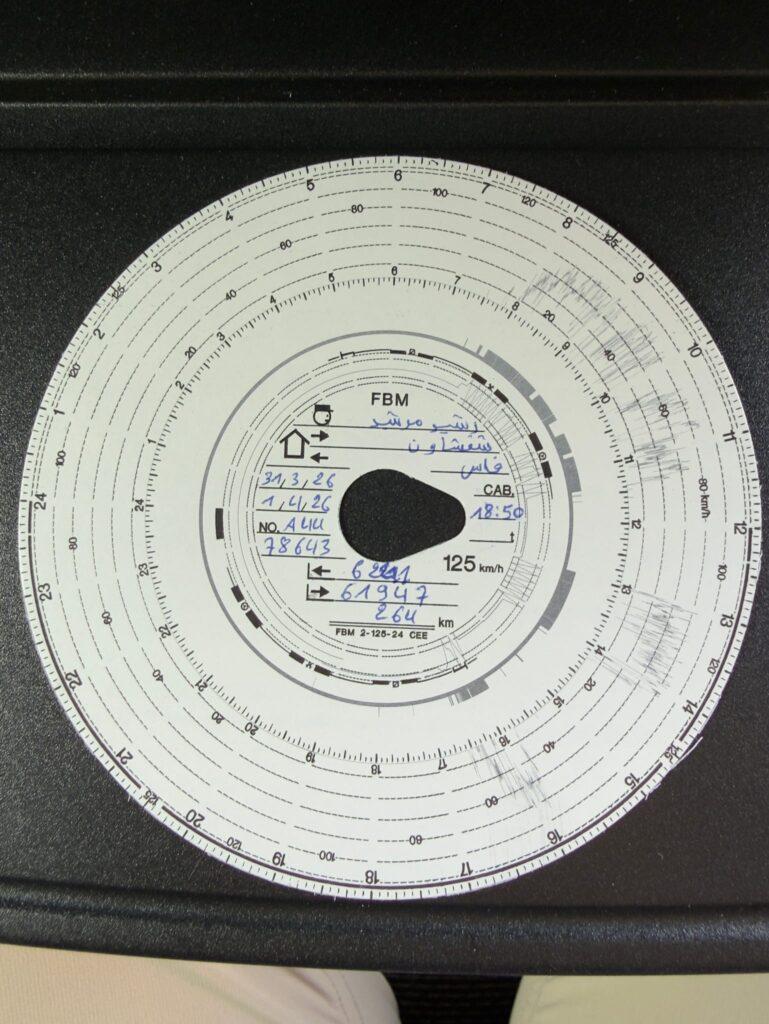
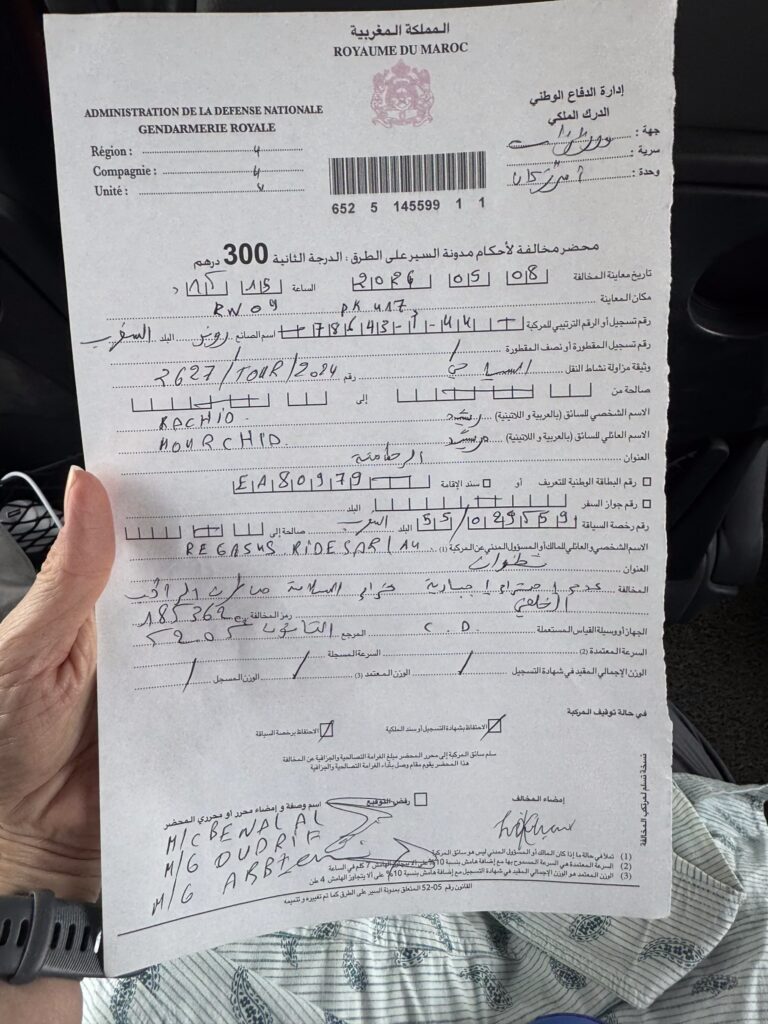
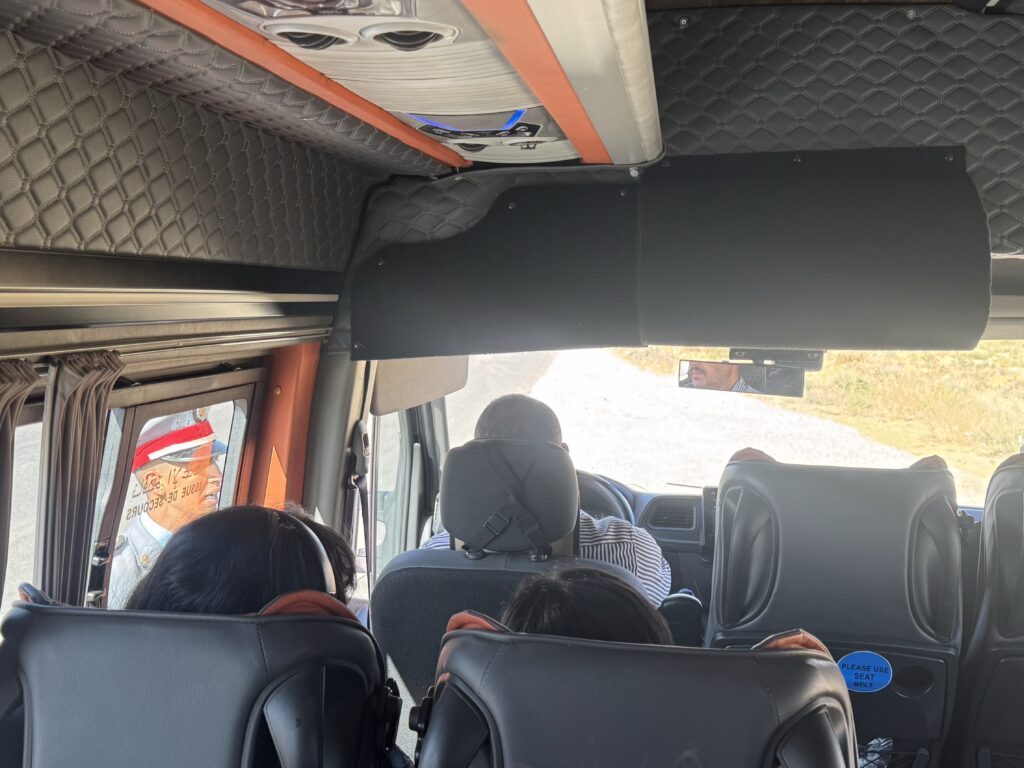
One of the interesting features of the trip is the amount of times we’ve been stopped by police along the way – at least once a day. It’s no reflection on our driver who has been amazingly considerate and safe, just a part of the Moroccan approach to road safety.
Each time the driver extracts a disk that contains an automated record of his driving and his breaks – it’s a simple system that seems to work. The police also scan the bus for evidence of people not wearing seatbelts, and on this occasion one of our fellow travellers had lapsed. They handled the police interaction and 300 DH ($45) fine exceptionally well and now have a unique souvenir to take home – a form like no other!
The day ended in Ait Zineb, a town with one of the oldest Kasbah’s in Morocco at Ait Ben Haddou.Three families still live in this area, with one being particularly savvy in offering his site for access and various movies with conditions and costs. Some of the movies and shows made in this area include Gladiator II, Outer Banks season 4 and Game of Thrones season 3. I’m sure there are people who deliberately travel the world for GoT sites – we seem to have picked up a few without intention.
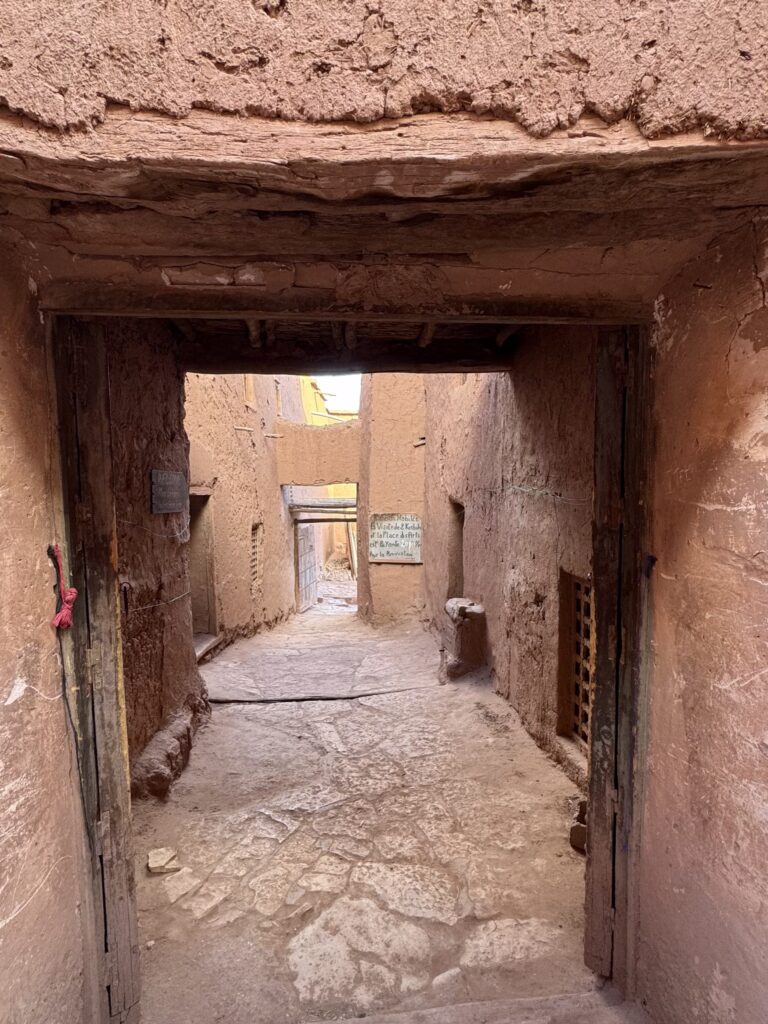
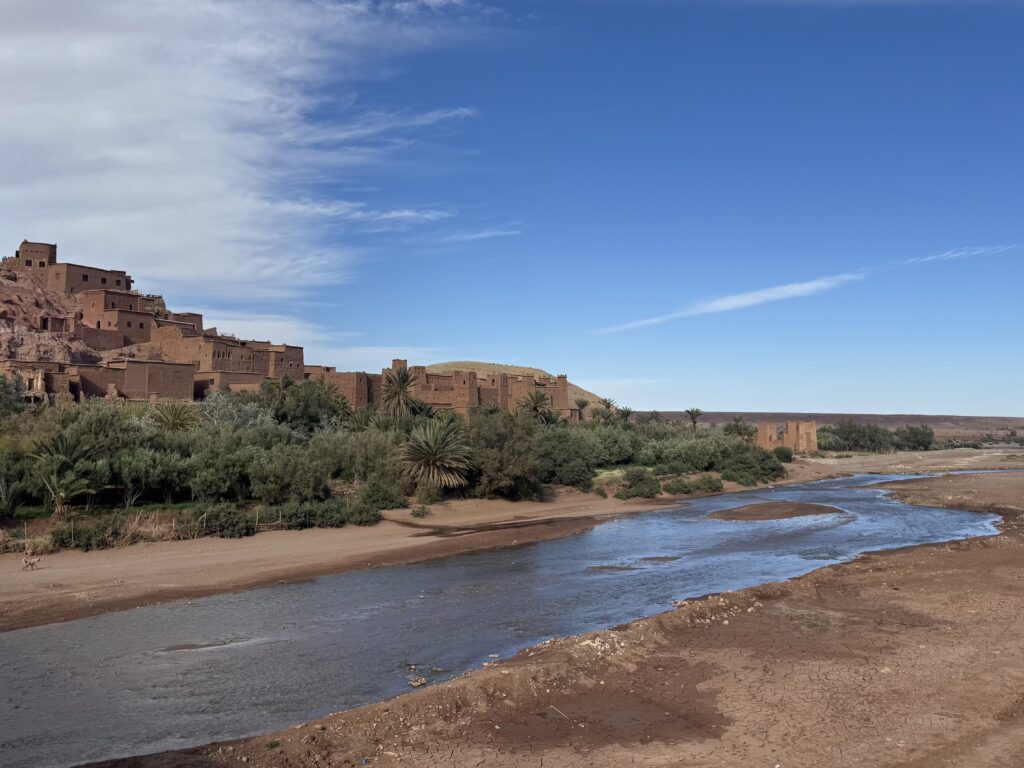
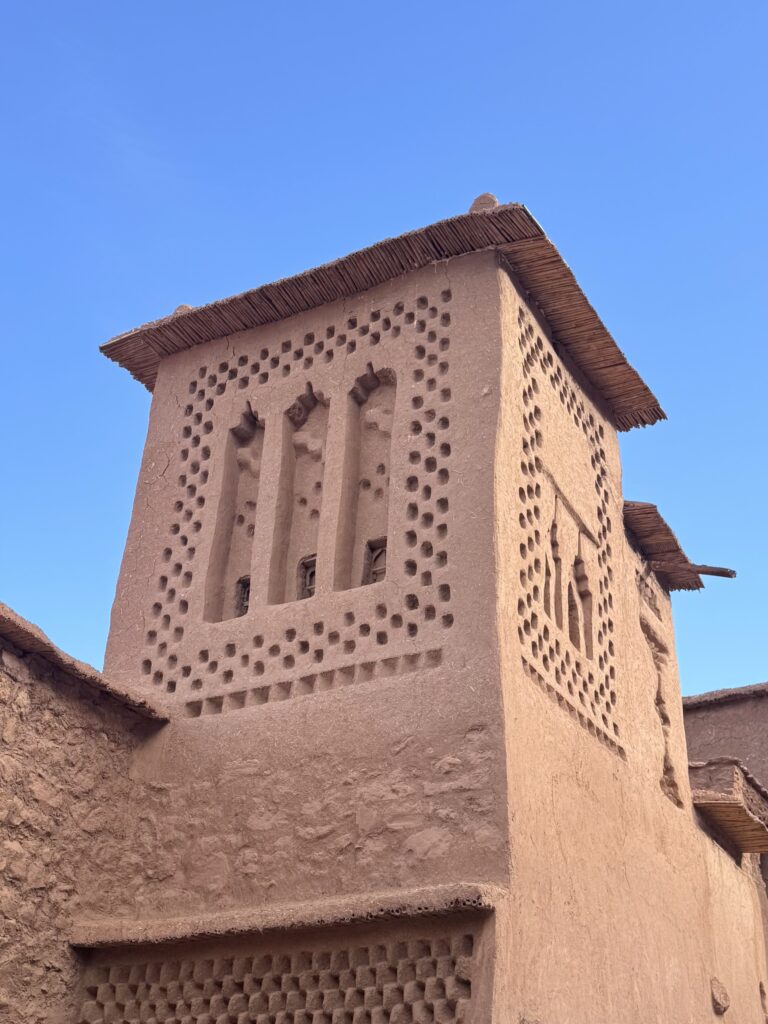
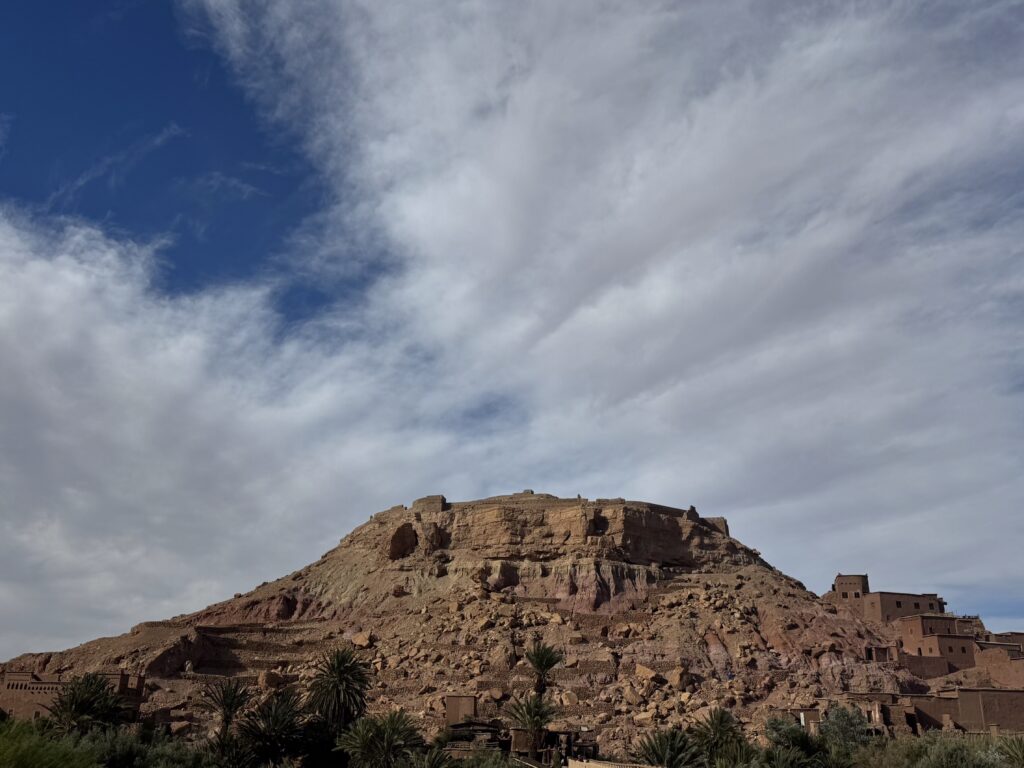
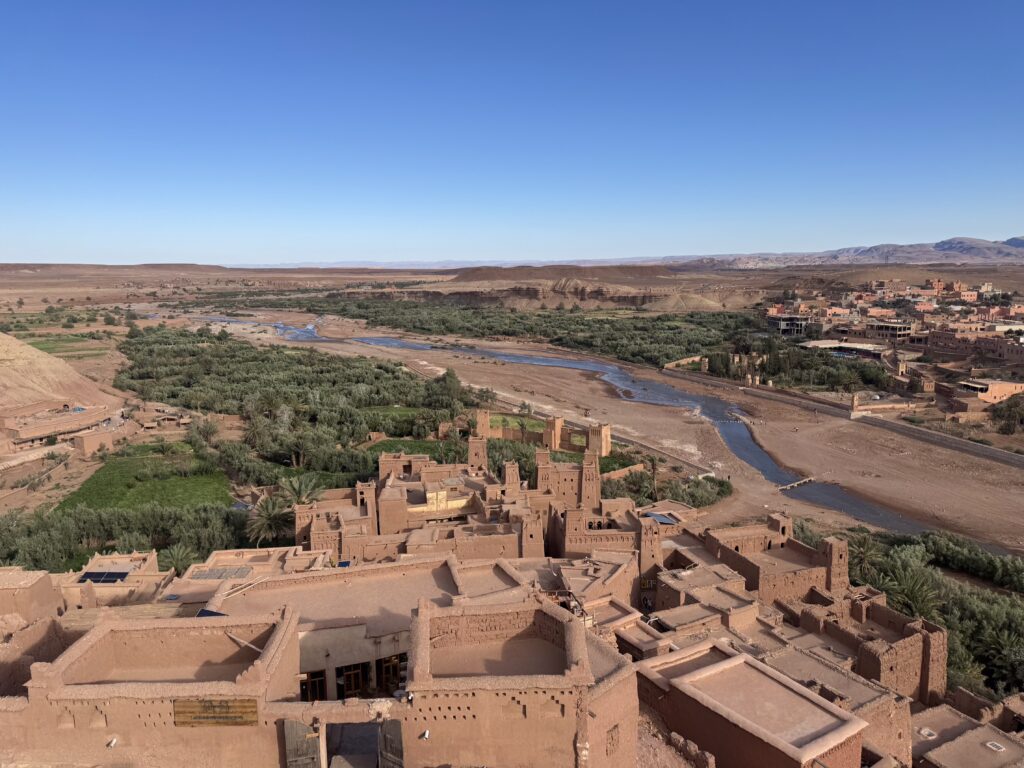
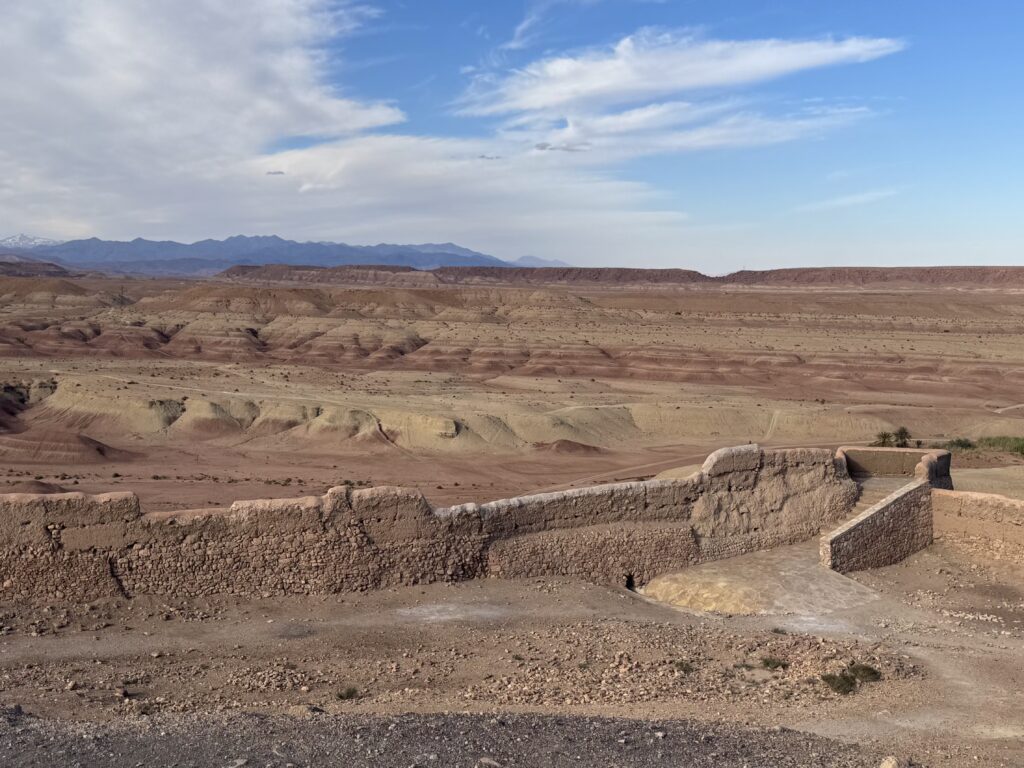
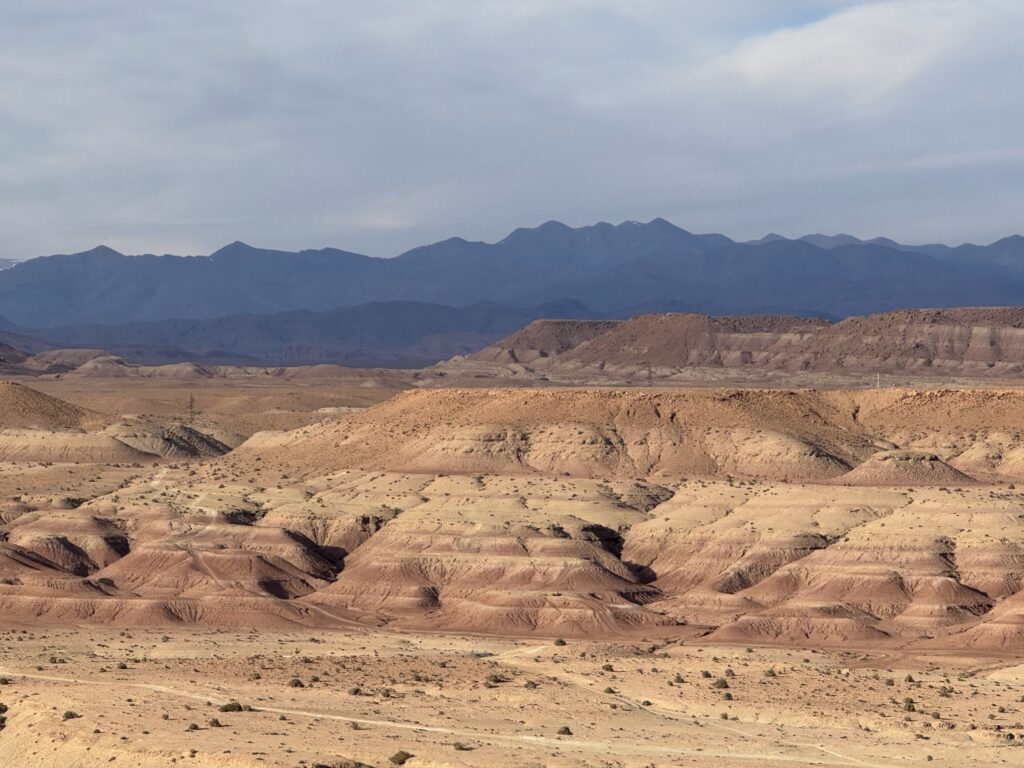
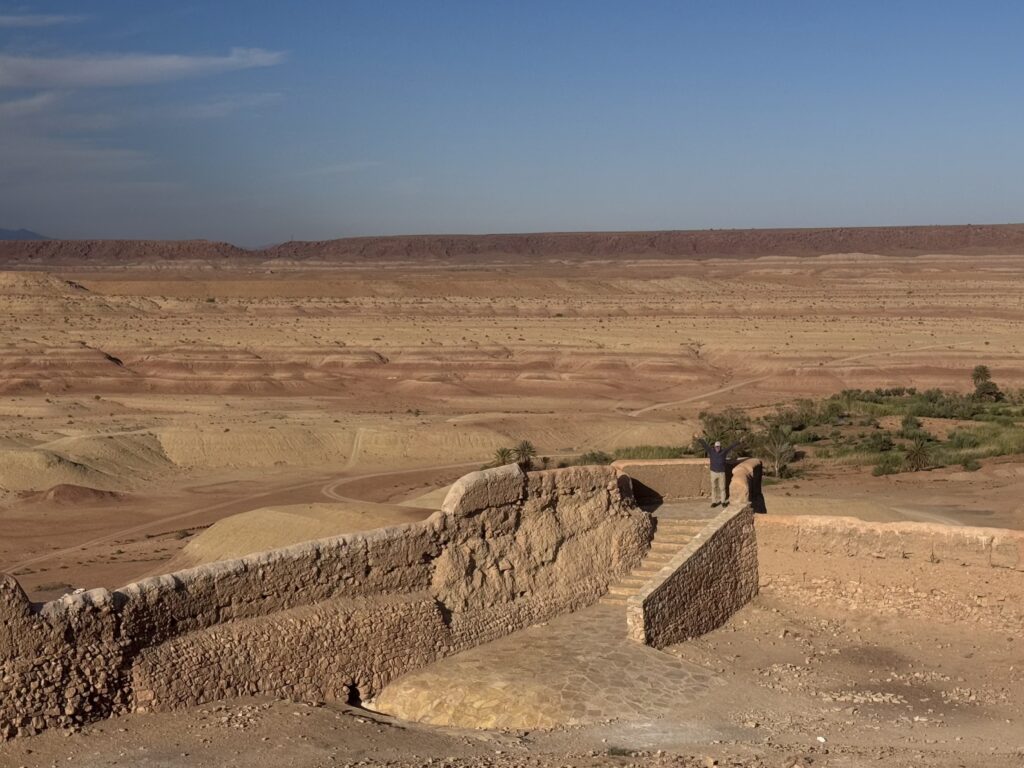
From the top of the Kasbah we had 360 degree views of the mountains, valleys and town. Once again… vast.
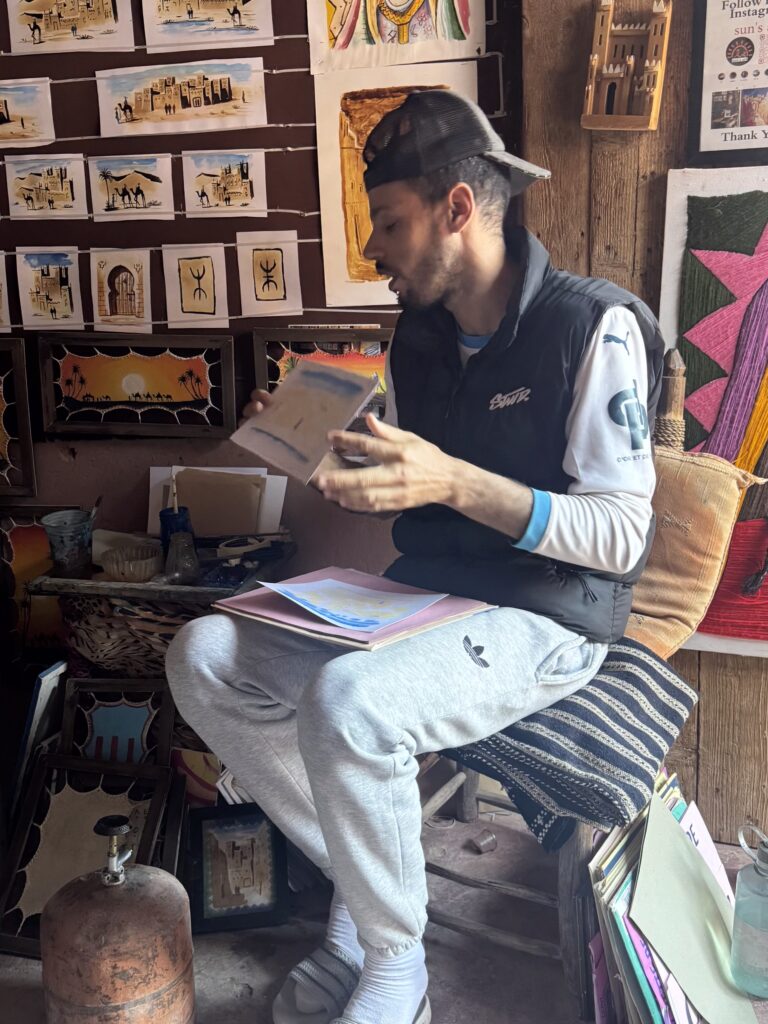
We’ve had the opportunity to connect with a lot of artisans and producers along this tour… weaving, leather, pottery, stonemasonry, dates, roses and more. This evening it was both a local artist who uses saffron, sugary tea and indigo which is then warmed over an open flame to bring out the colour (a similar concept to roasting a marshmallow) before heading to a local carpet making collaborative. Women invest months to create pieces, chipping away at a couple of hours a day without a pattern or modern tools. It’s amazing dedication to their art and community.
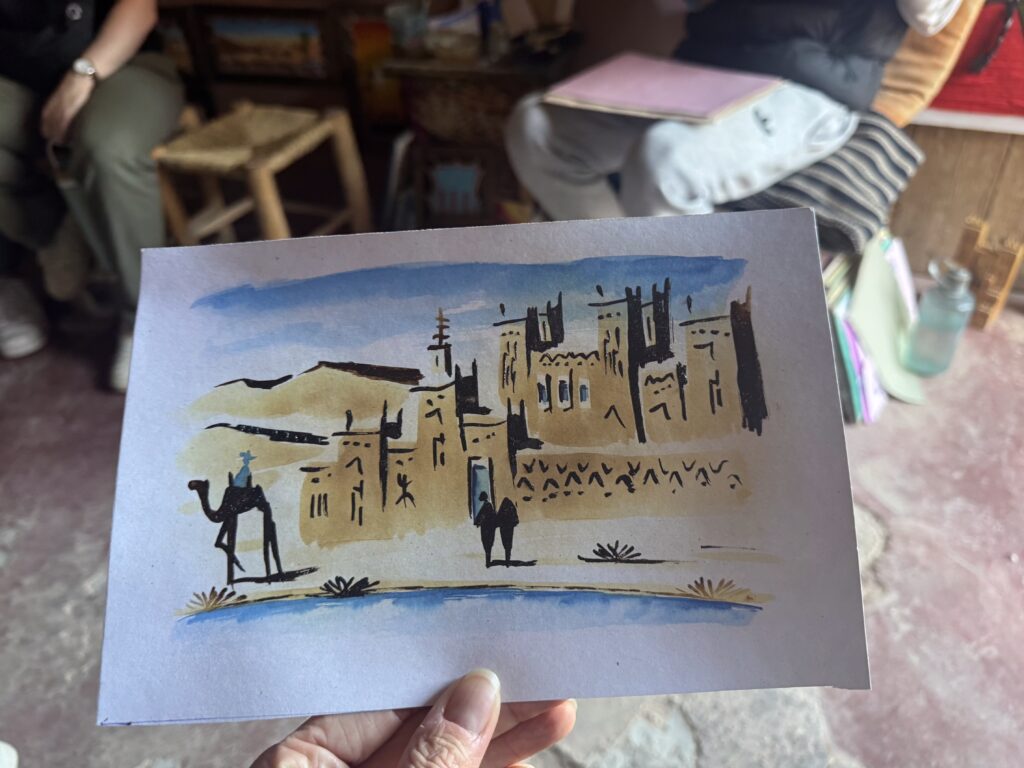
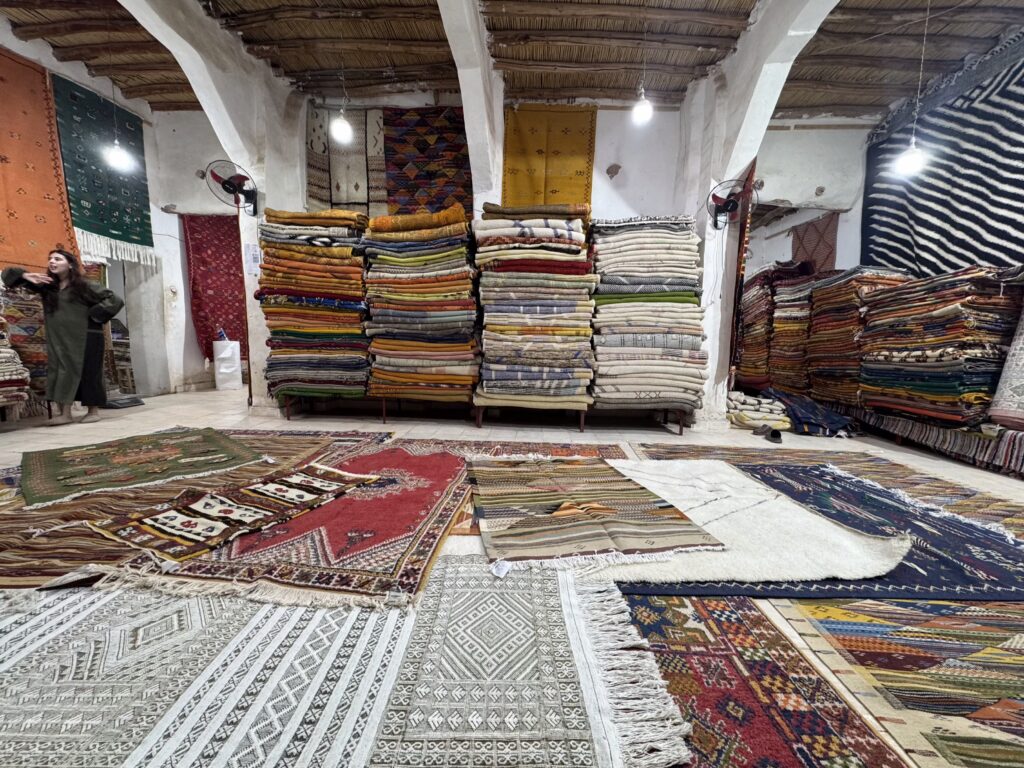
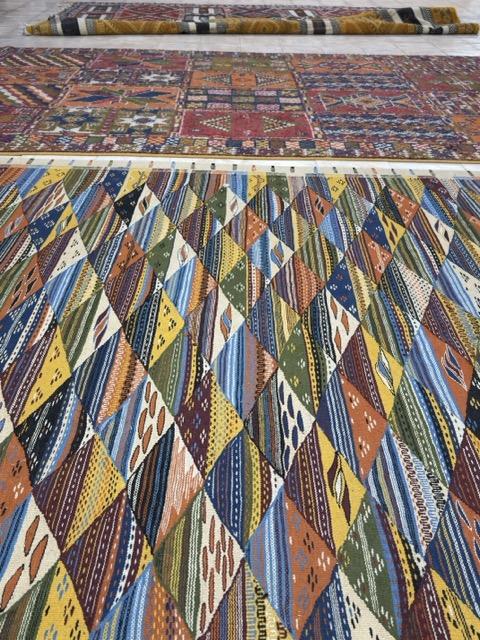
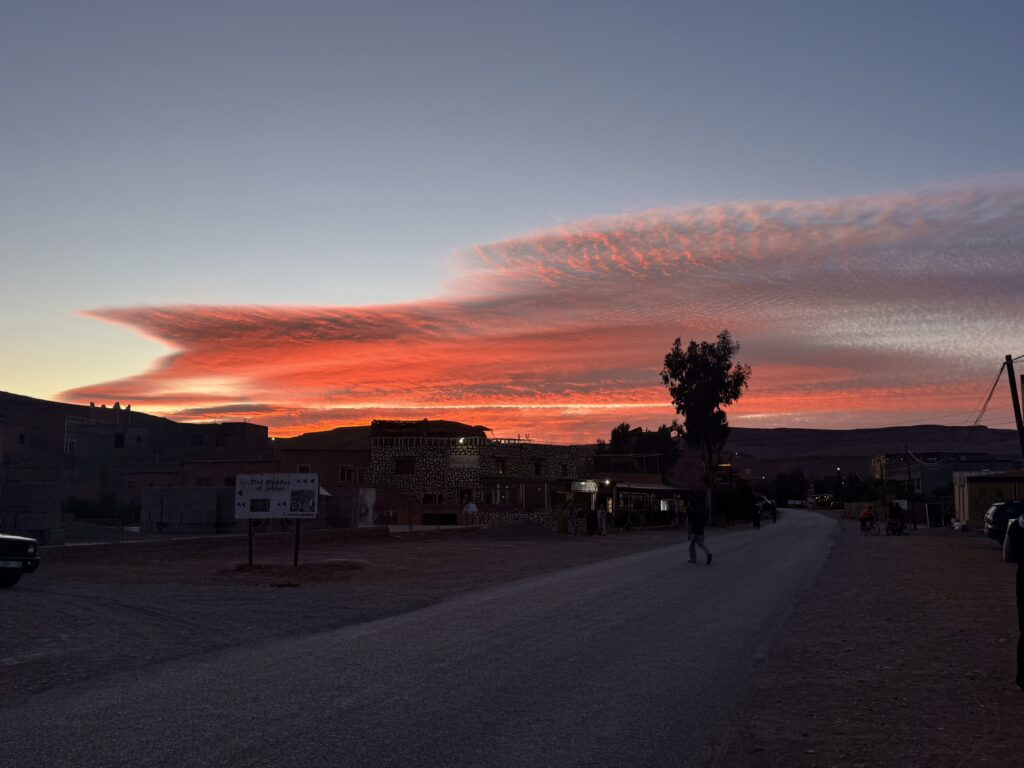
The view across the town to the distant mountains and valleys was stunning and as we walked back to the hotel we were gifted one of the best sunsets of our trip.
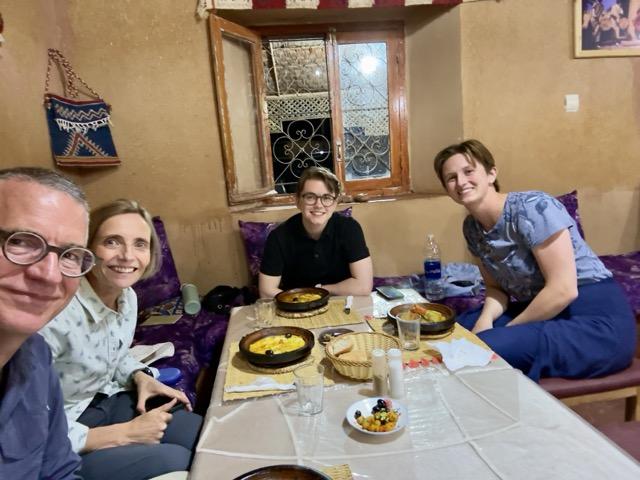
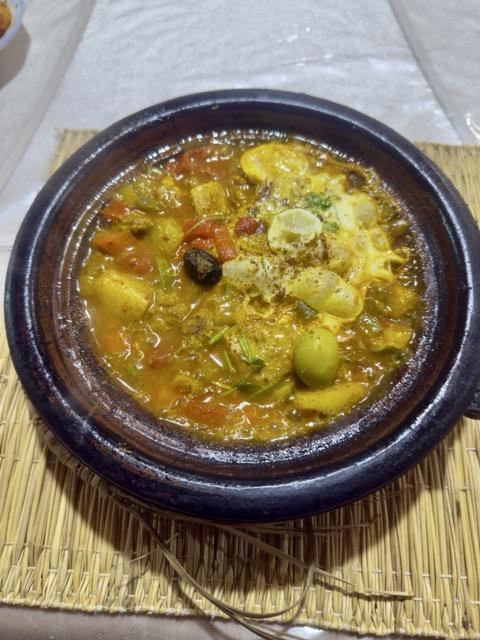
Dinner at a little local restaurant was a great find of the two young Americans on our trip – Grace and Austen. For 279 DH ($42) we managed great tagines, a Berber omelette and drinks for four. As we’ve found throughout the trip, Moroccans are so warm and welcoming to tourists and deserve every $ we’re bringing to their communities.
The evening provided one of the highlights of the trip for me. I was searching for decent wifi (blog was VERY behind) when I came across all the young (by age!) people on our tour sitting under the stars on the rooftop terrace, sharing stories of past travel adventures and plans for the future. It filled my cup as I could just imagine Rachel being in a similar spot 30-ish years ago, fuelling her lifelong passion for travel.
THIS is what life is about.
Love M & A x
Comments are closed