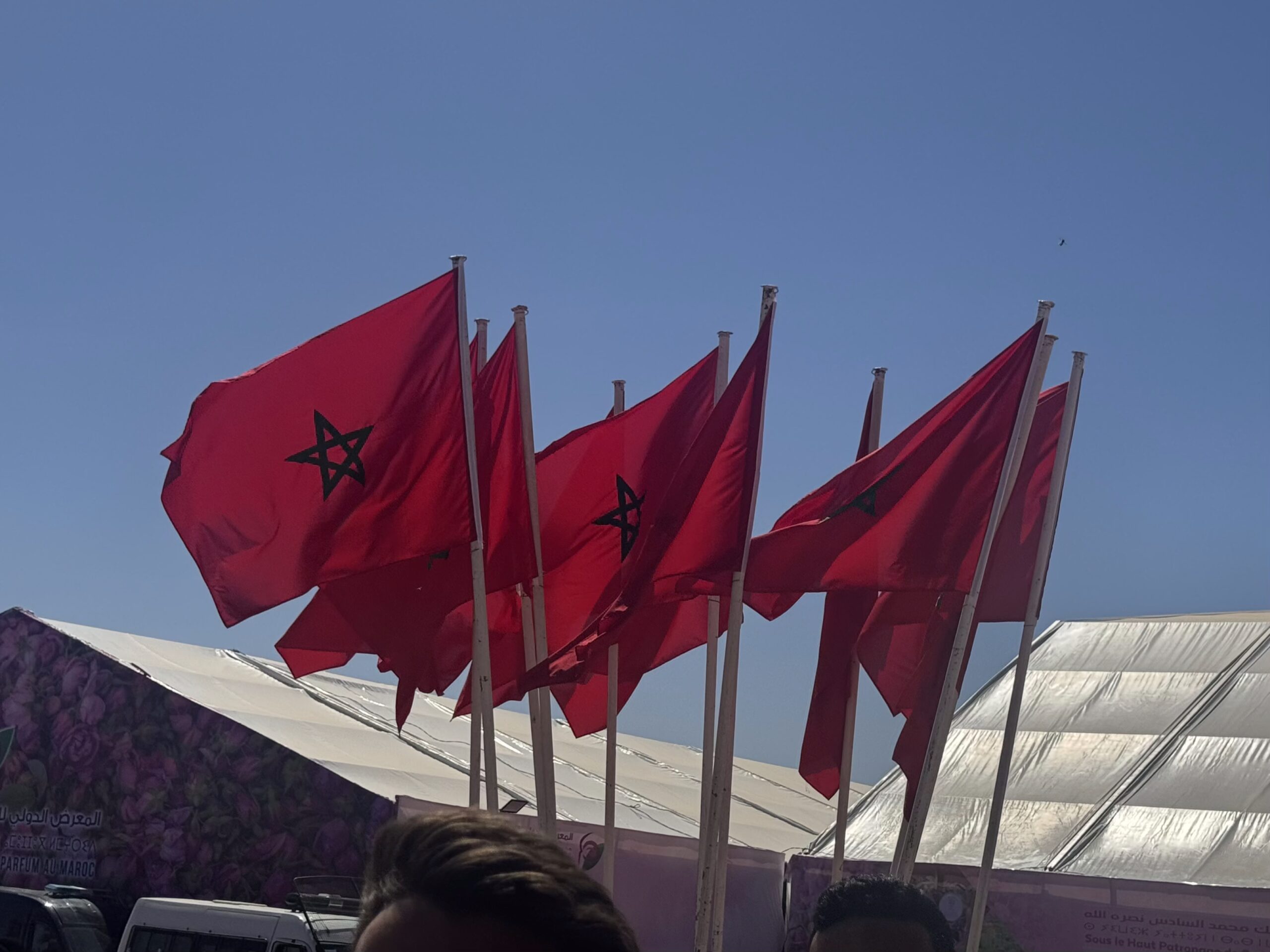
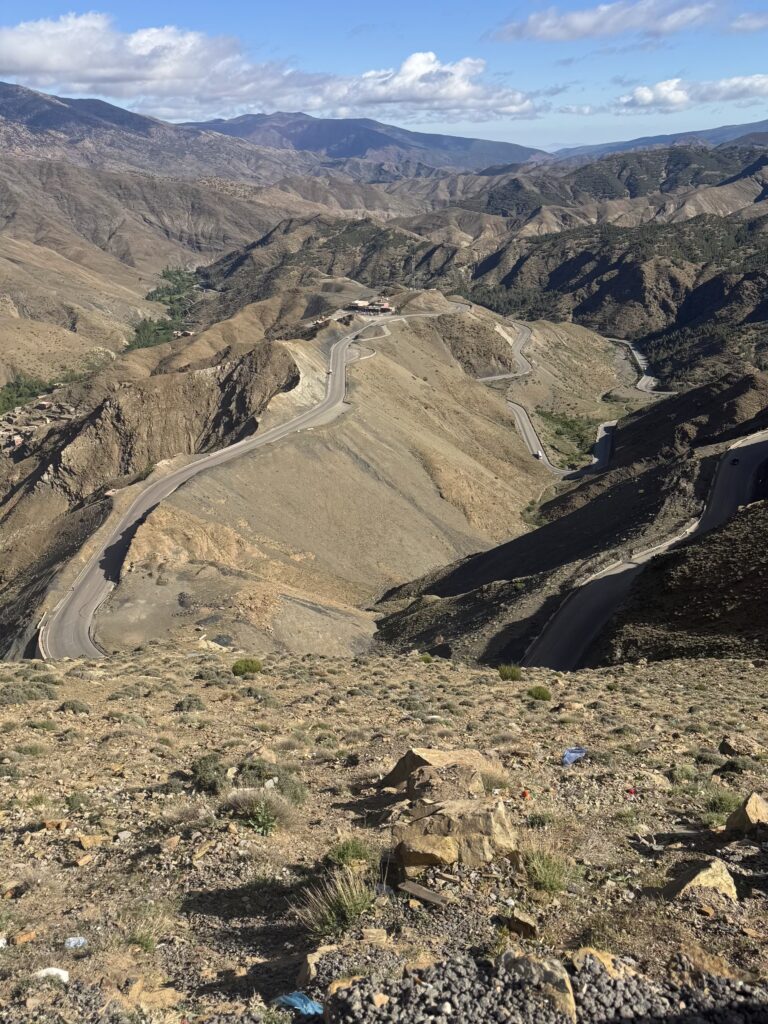
The road from Ait Zahib to Marrakech goes up and over the Atlas Mountains, with the highest pass at Col du Tichka reaching 2260 metres. We definitely weren’t expecting the cold and wind that we were greeted with. At last! A chance to use our warm clothing… that was packed away in our cases. We’ve had the BEST weather so have no complaints about unused puffer jackets and raincoats!
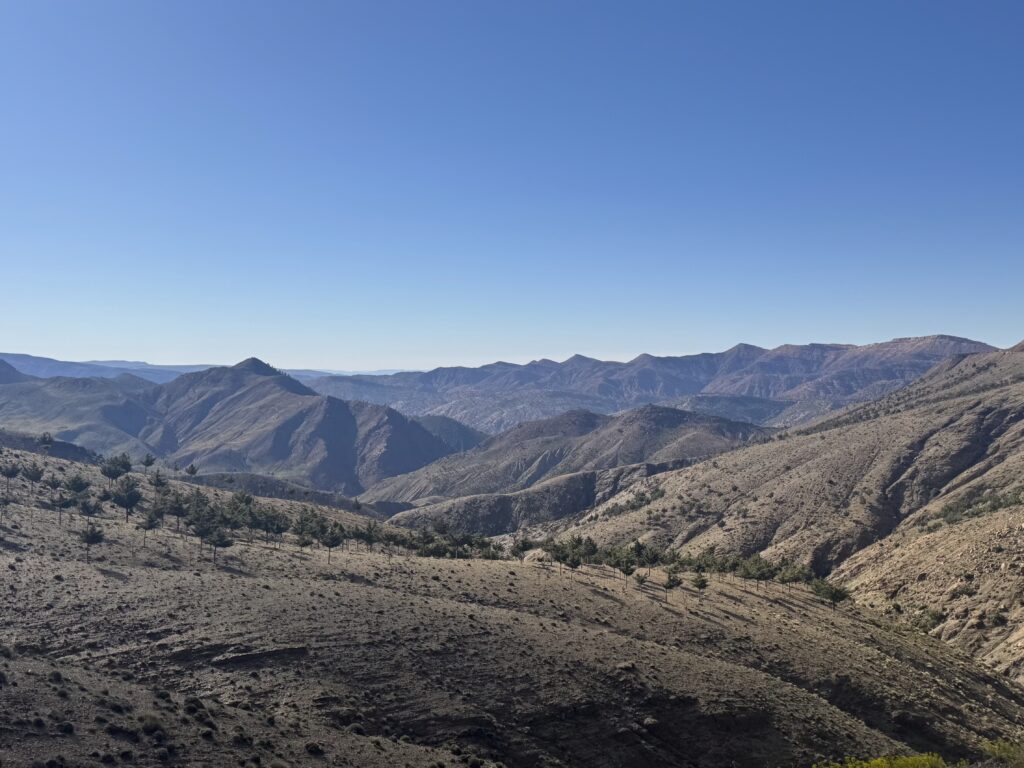
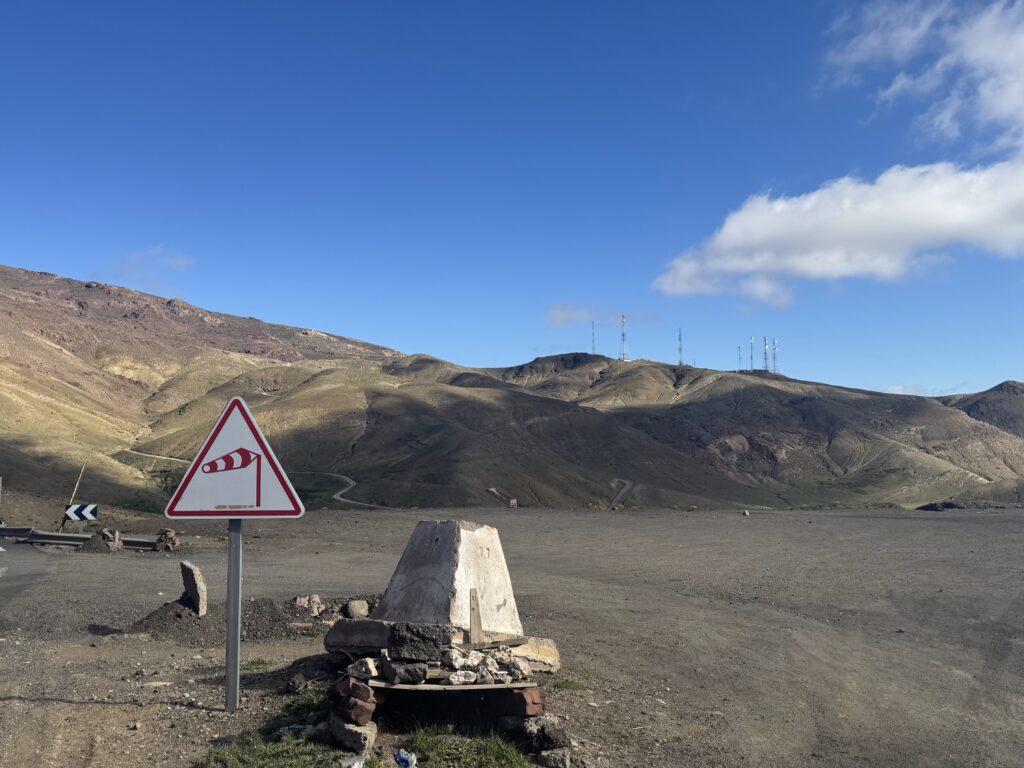
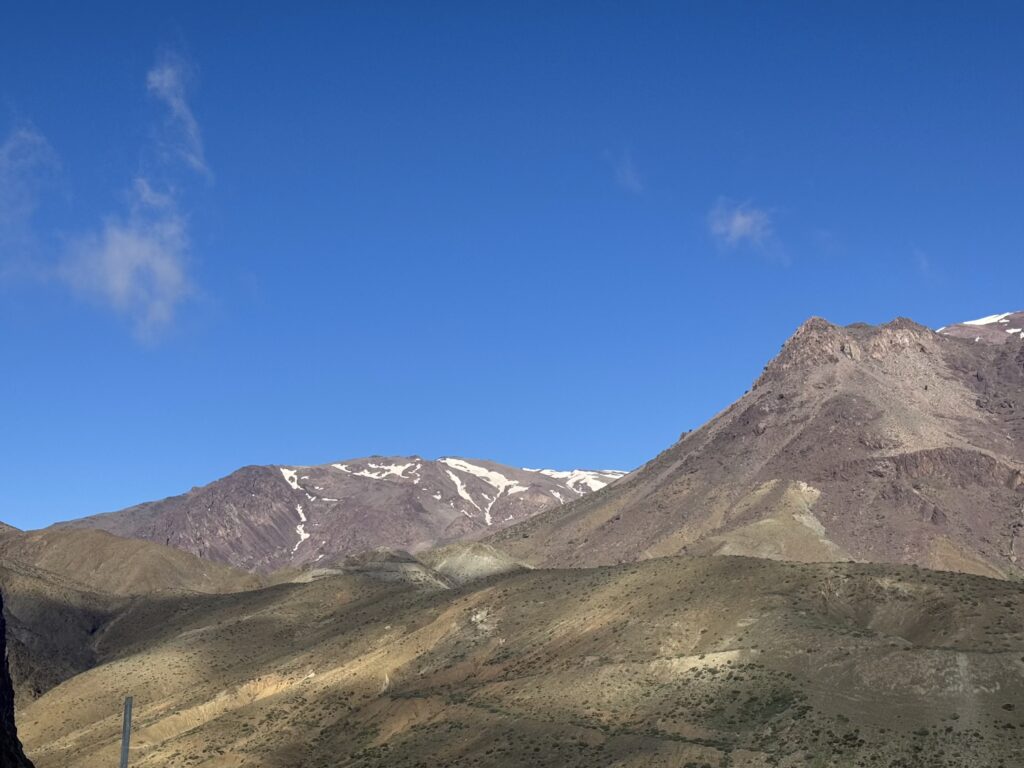
On the other side, the ‘Tishkar snake route’ is a great piece of road that winds down the mountain. It was single lane and incredibly dangerous until it was upgraded to two lanes during Covid. It’s been used by Ferrari to showcase their cars – very cool. At the top roadside stalls seem to be permanently stationed, a smart move when cars and tourist vans can be stuck there for hours in cold weather.
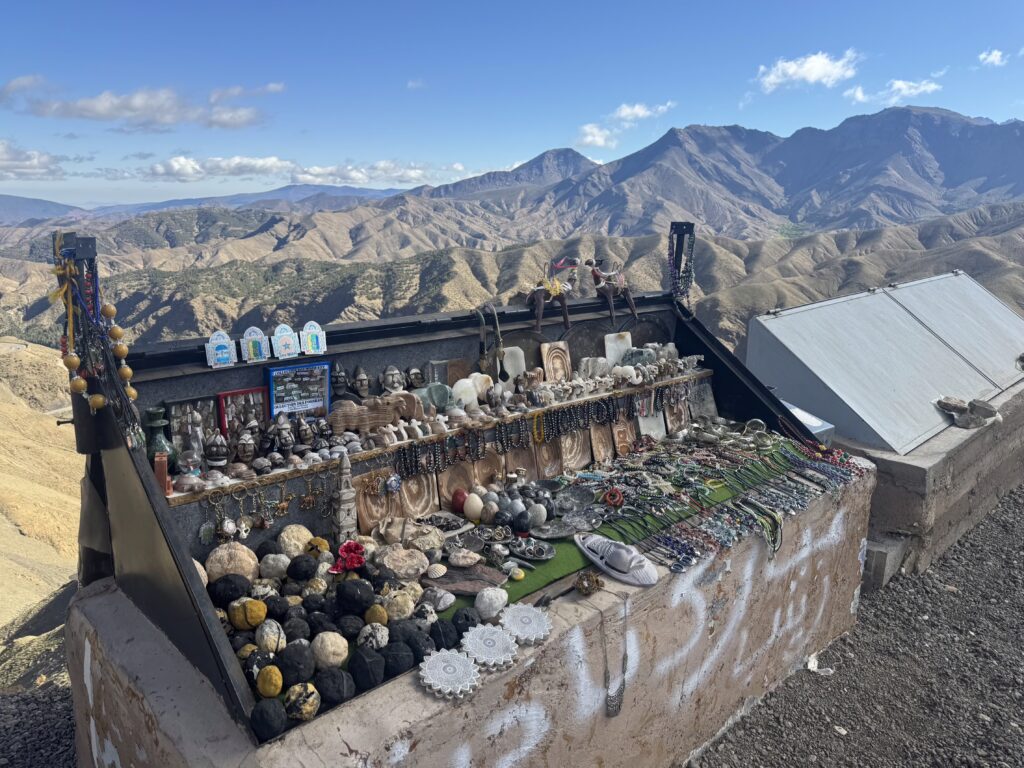
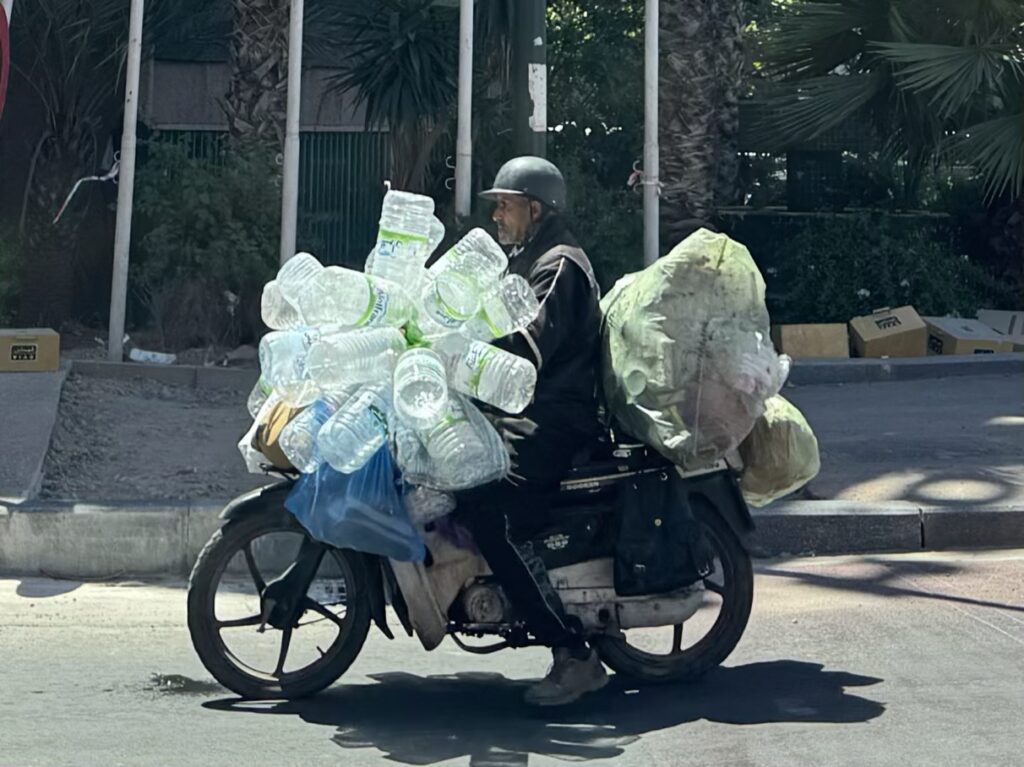
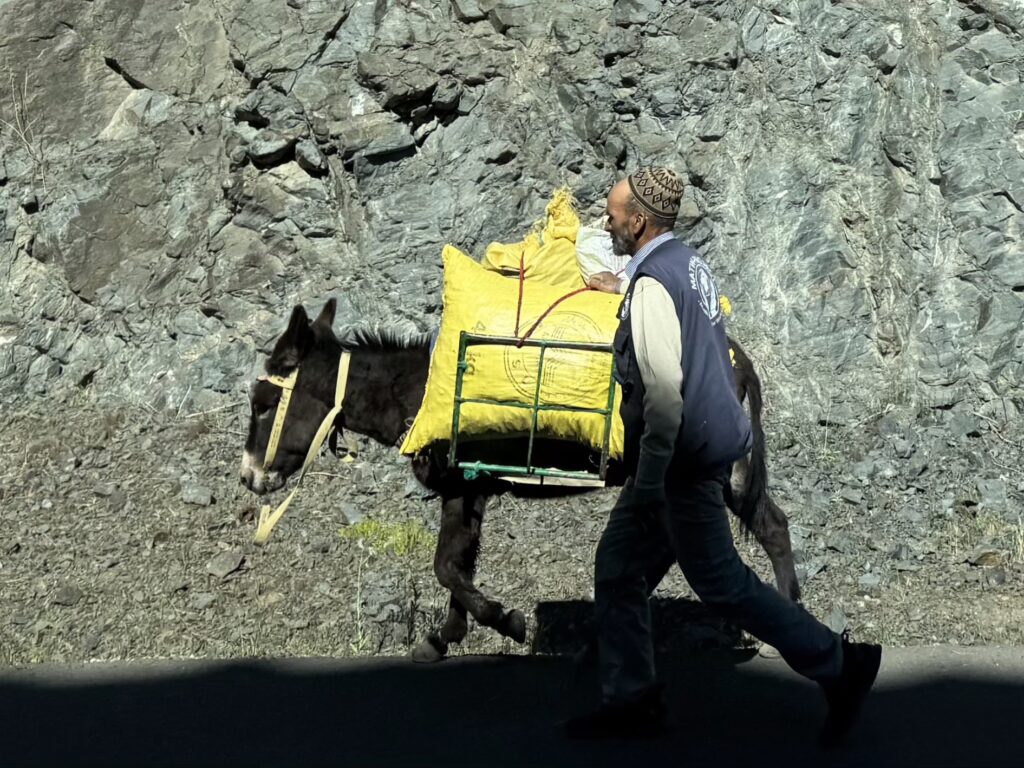
We’ve seen so much along the roadside – interesting vehicles, signs and infrastructure that brings the country to life. Every so often you manage to capture something out of a bus window… resourcefulness at its best.
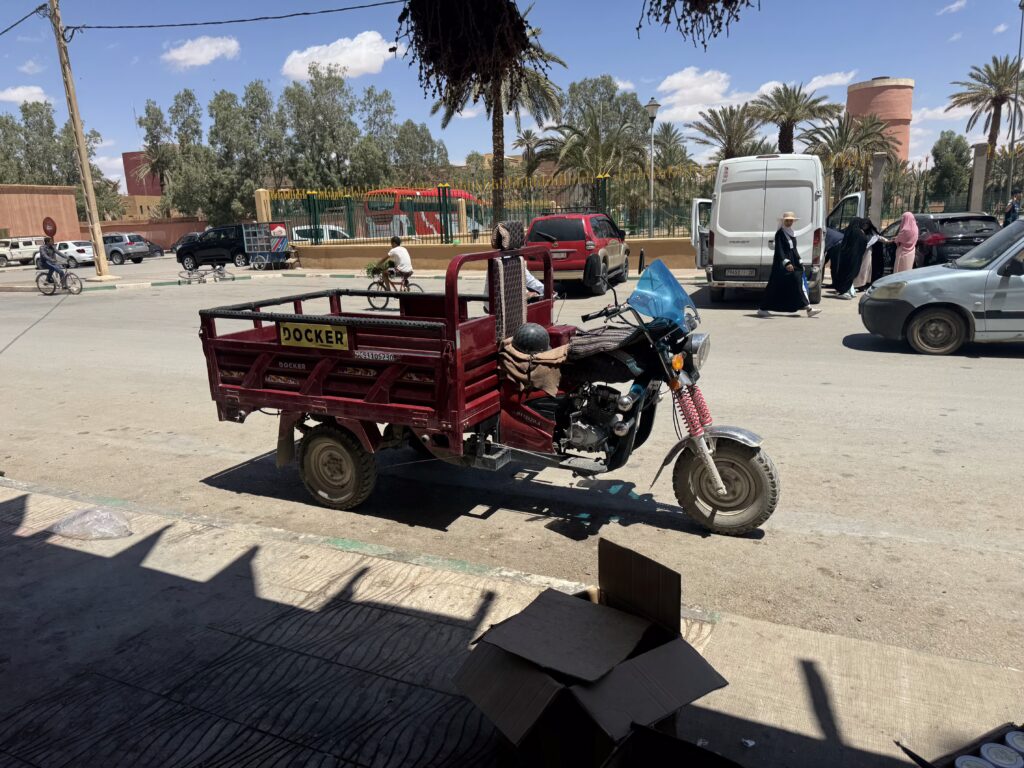
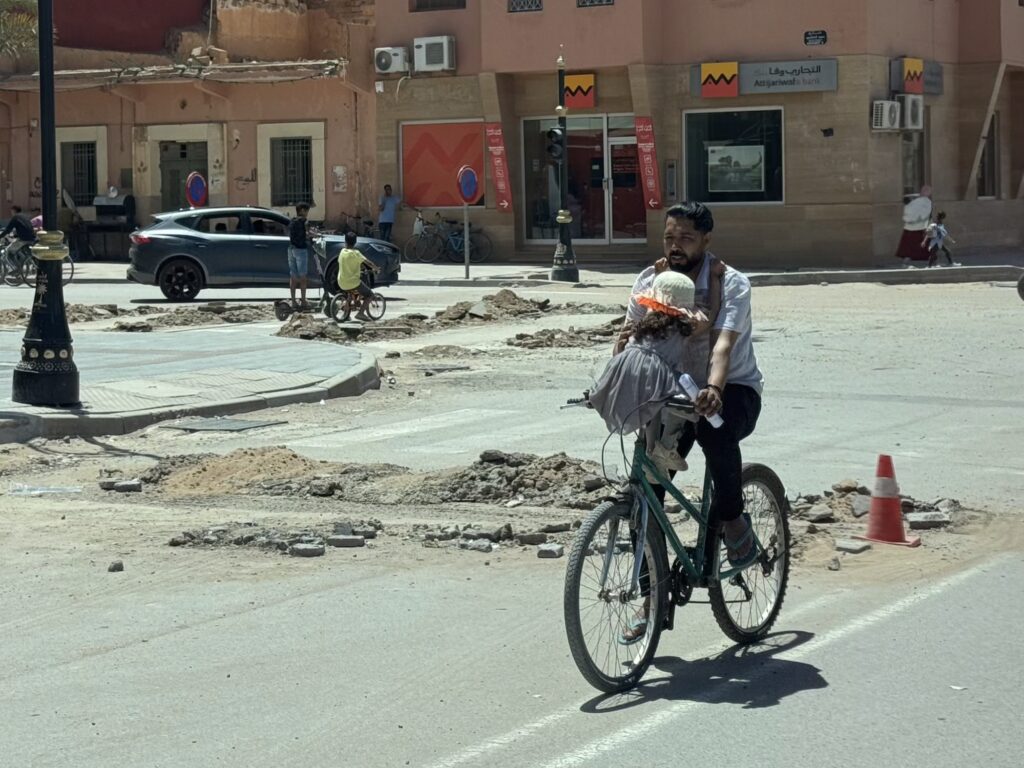
And of course, it wouldn’t be my travel blog without some random signs that caught my attention. Lights, language, understatement and overkill!
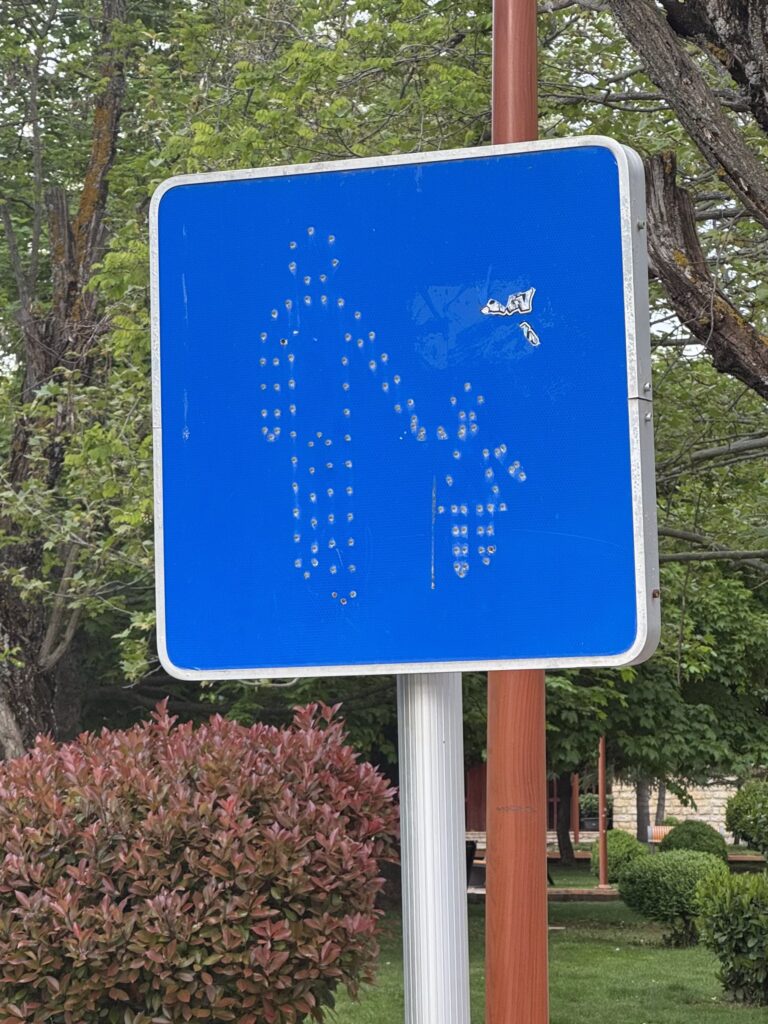
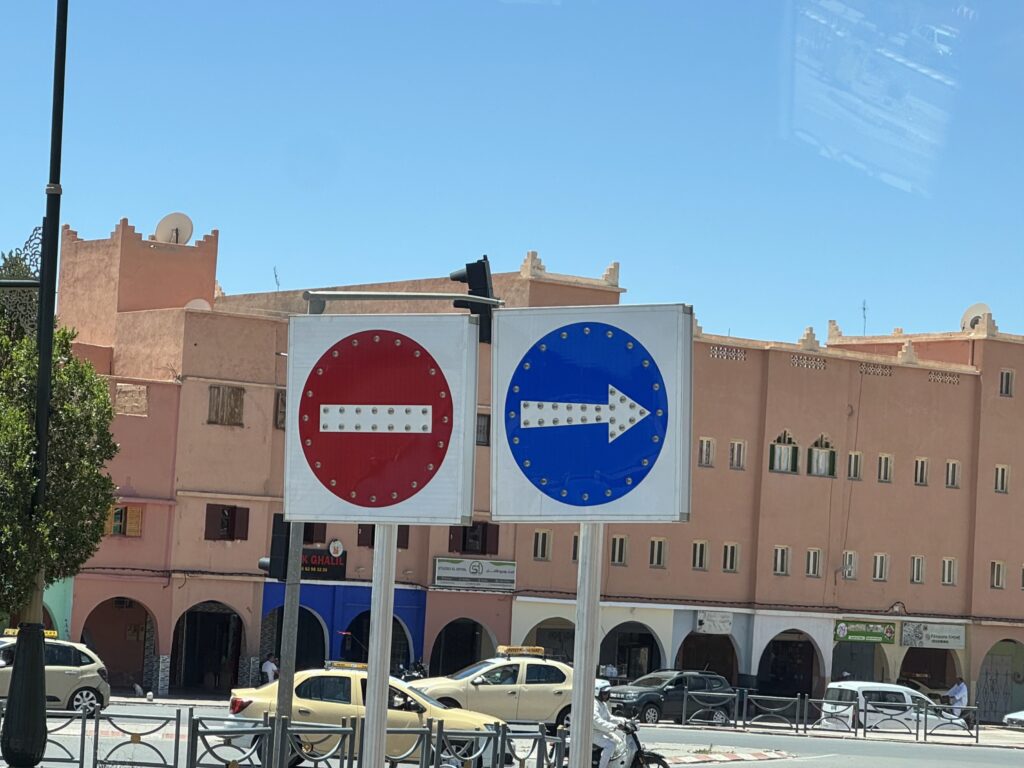
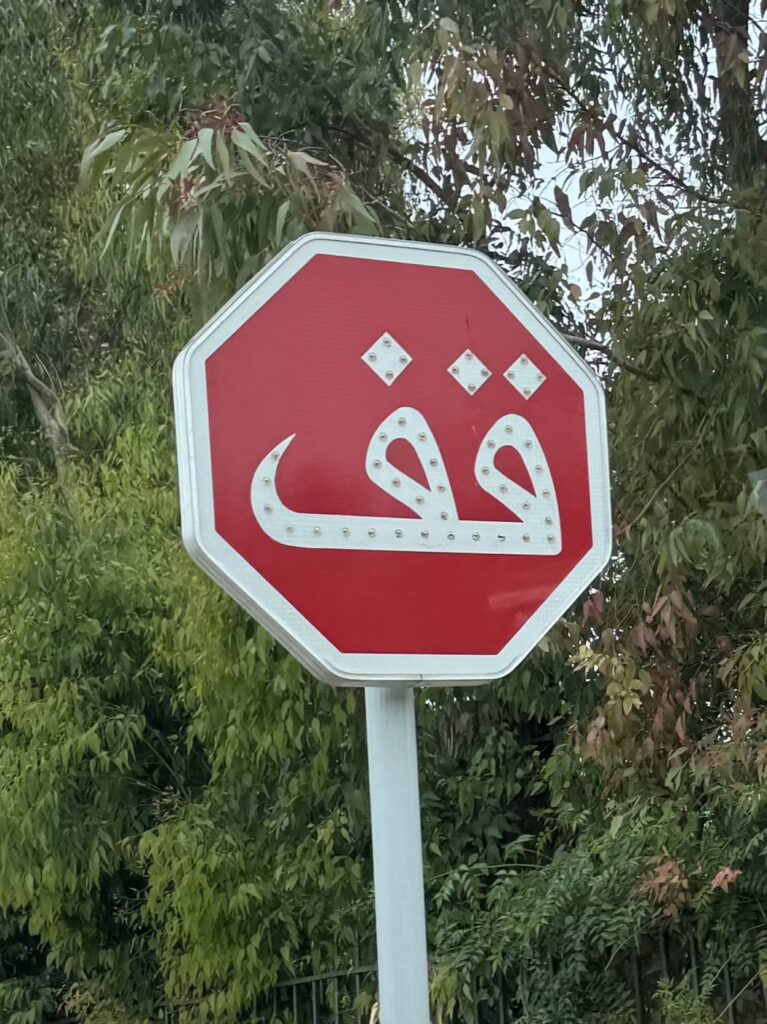
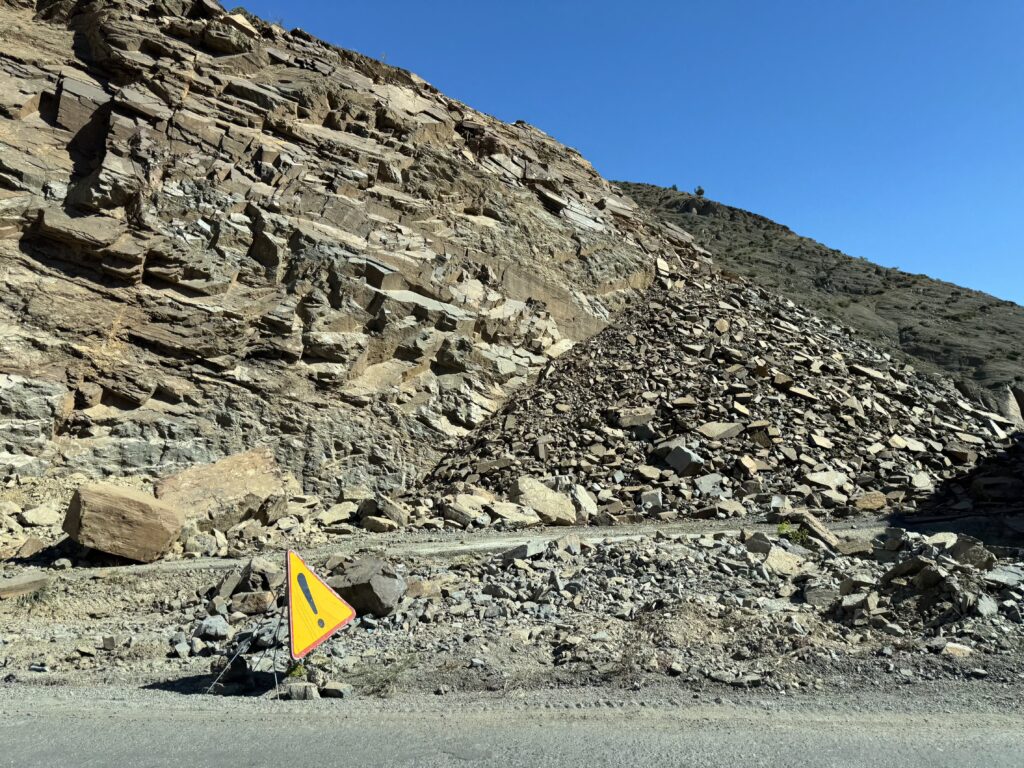
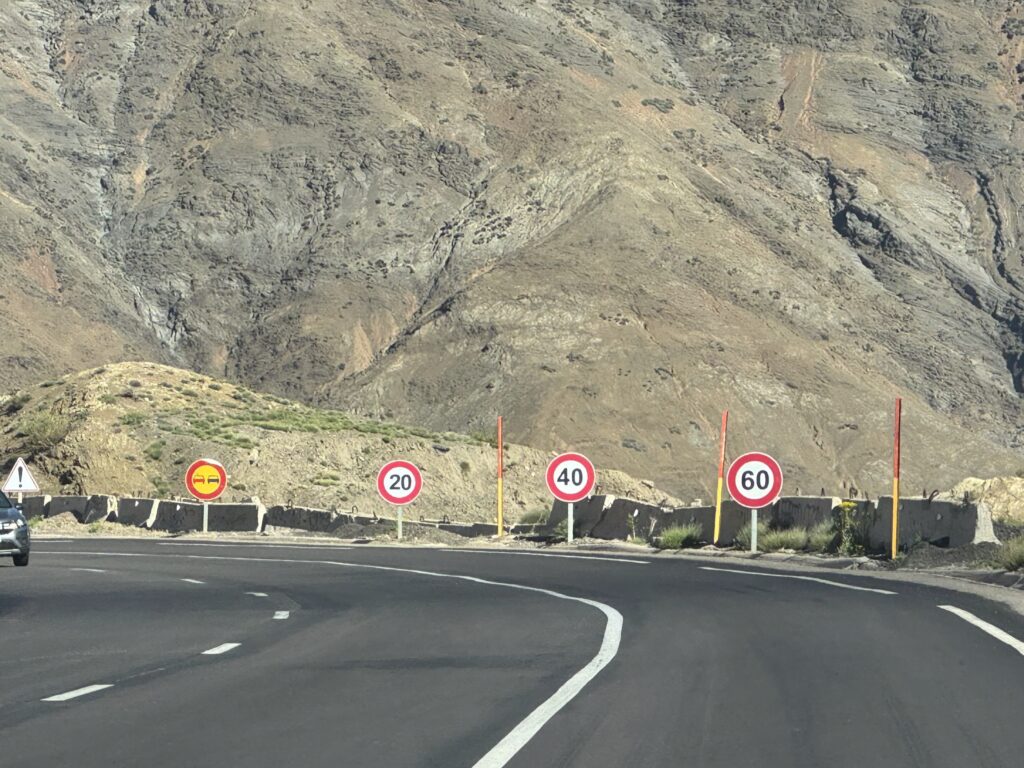
The city vibes and traffic of Marrakech seemed to emerge all of a sudden. There are about 1.4million residents, and 90% of tourists to Morocco visit the city. It was the second capital of the country in the 11th century, and has held the title twice more in the 12th and 16thcenturies. Marrakech is a Berber phrase meaning ‘Land of God’. It was nice to see the Jacarandas reappear against the red buildings.
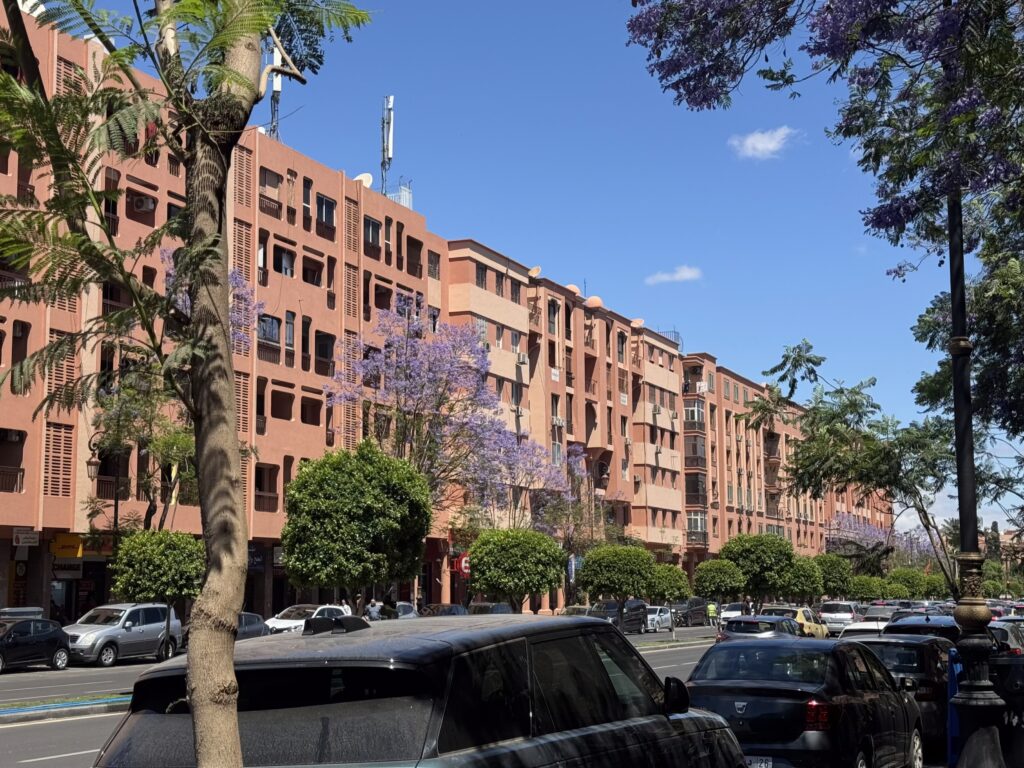
Our guide for the afternoon was a Marrakech local who had just finished a 15-day GAdventures trip. We’ve seen a few of the ‘CEO’s (Chief Experience Officers) along the way – they work so hard to adapt to the size, dynamic, and limitations of every group.
The mosque is the foundation of the city, built by the first family in the 12th century and is slightly mis-oriented, meaning it doesn’t quite face towards Mecca. They had come through the Atlas mountains, and were not aligned with the Berbers of that area. The mosque is known as the Kutubiyya mosque in recognition of the book sellers in the market.
The minaret is five floors high and built in a plain and simple Berber style. Today it’s a ‘green mosque’ with solar panels and other energy saving features. In the square outside a small white mausoleum is a shrine for a saint, a woman, Zorah, who dared to say no to being a concubine. It’s believed she now flies across the city at night.
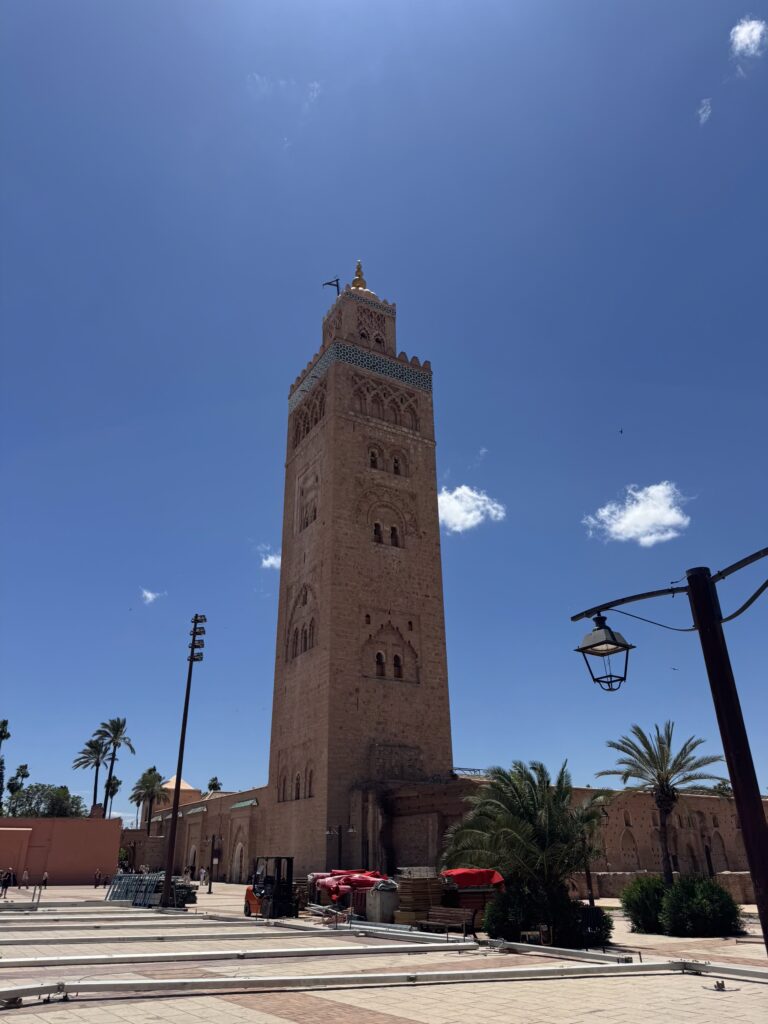
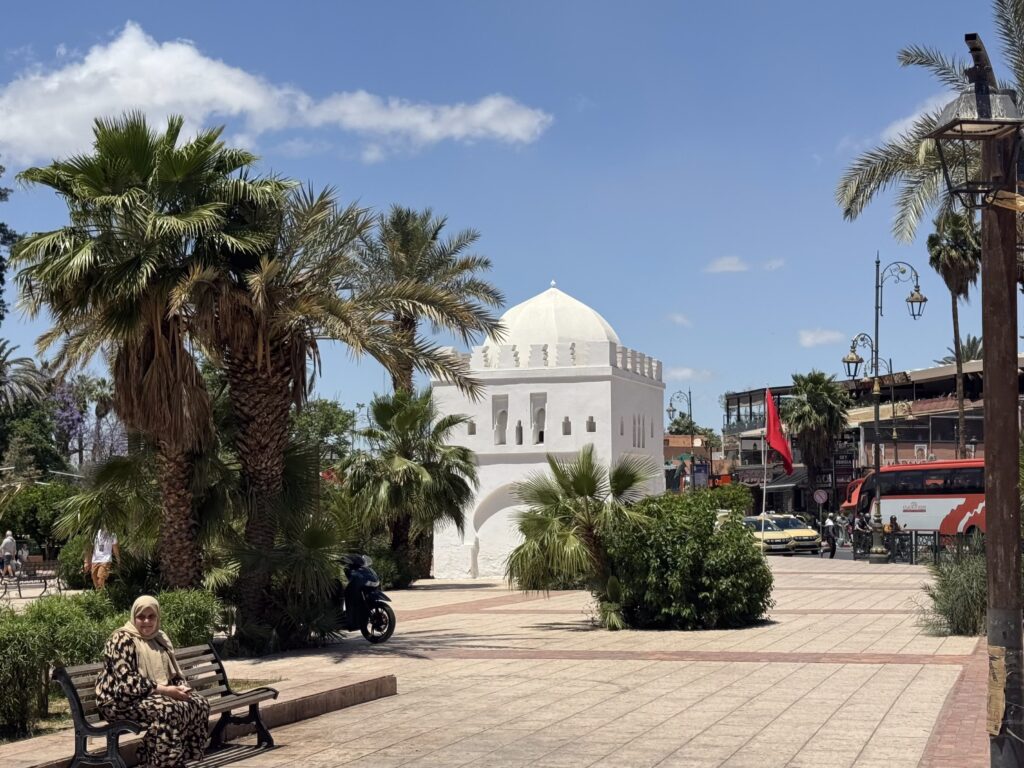
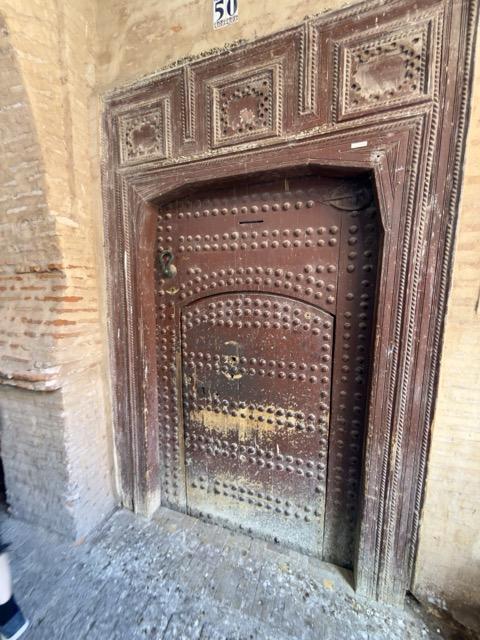
The old city features the Laksor palaces where the wealthy and the poor lived side by side, without judgement. Each of the 75 sections of the city had two gates – in and out – that could be blocked off in the event of conflict, and were self contained with a Mosque, fountain, bakery, hammam and koranic school. We learned that all the doors have 2 knockers – one for women and one for men – whose different sounds determine who should open the door.
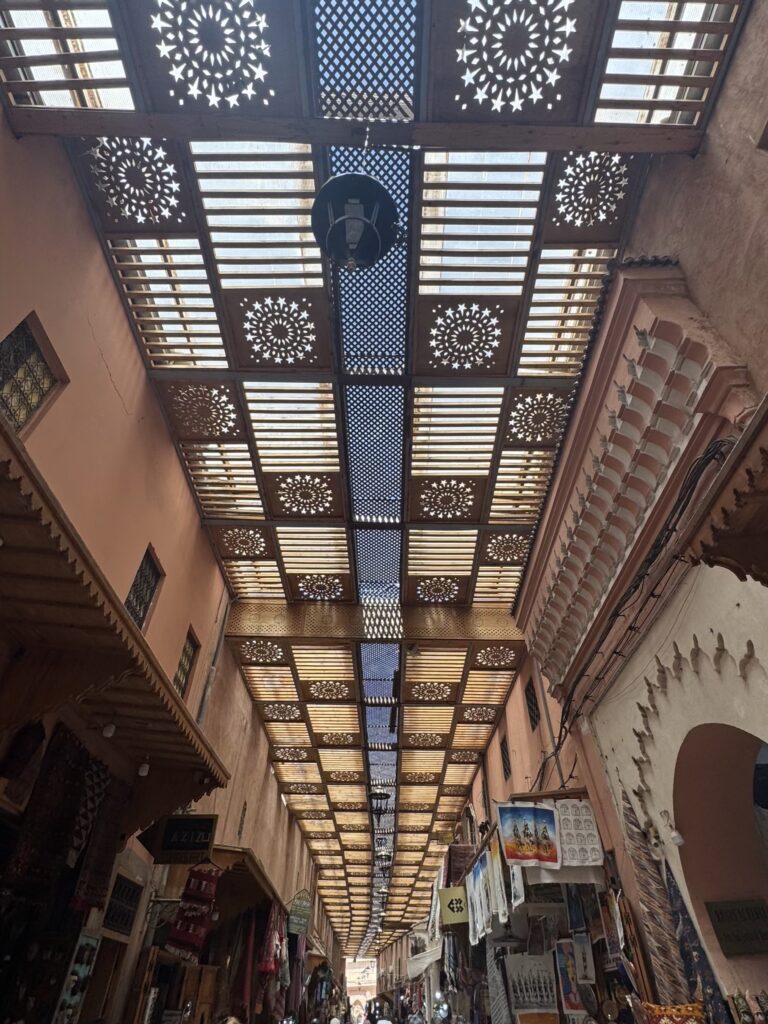
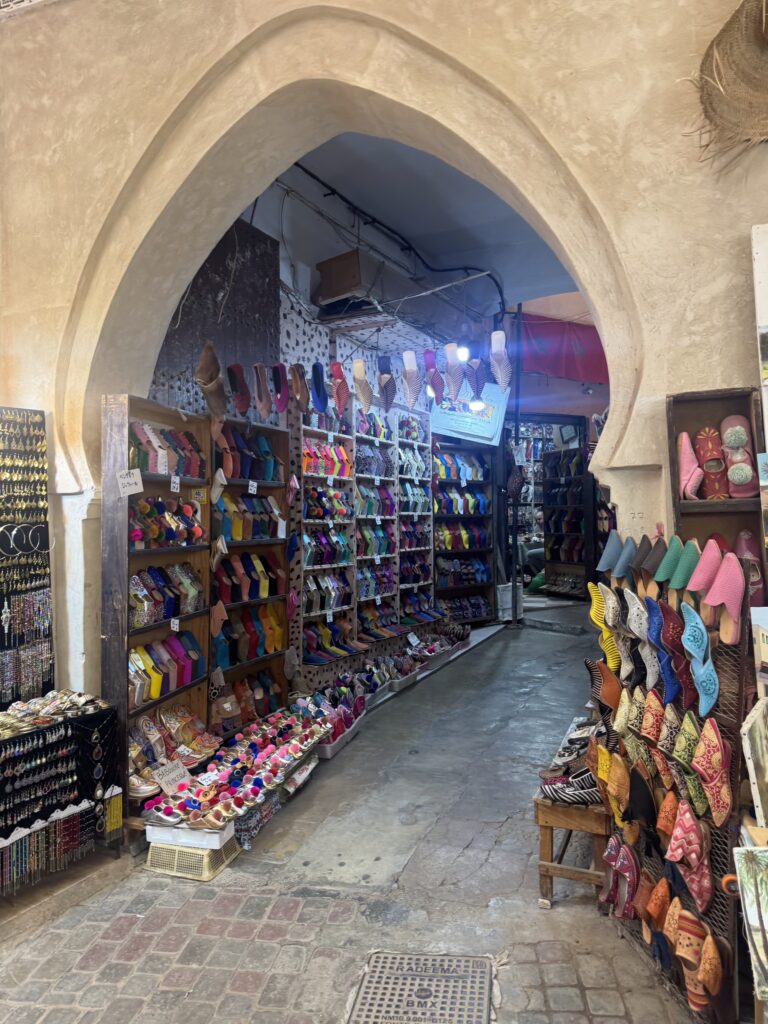
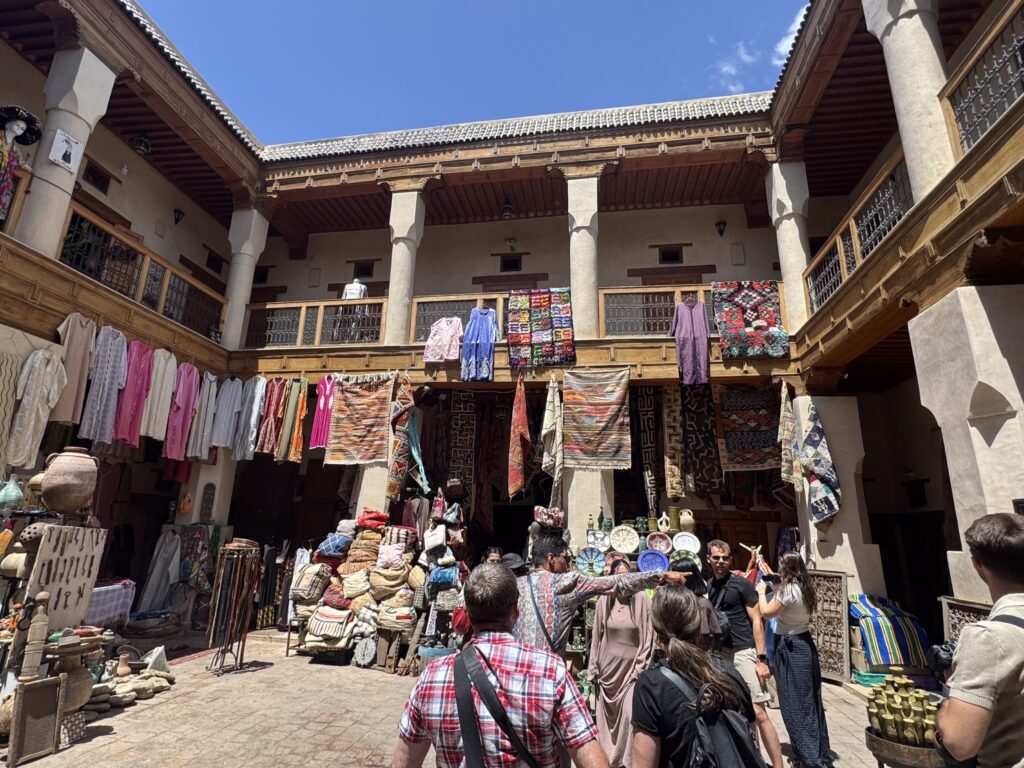
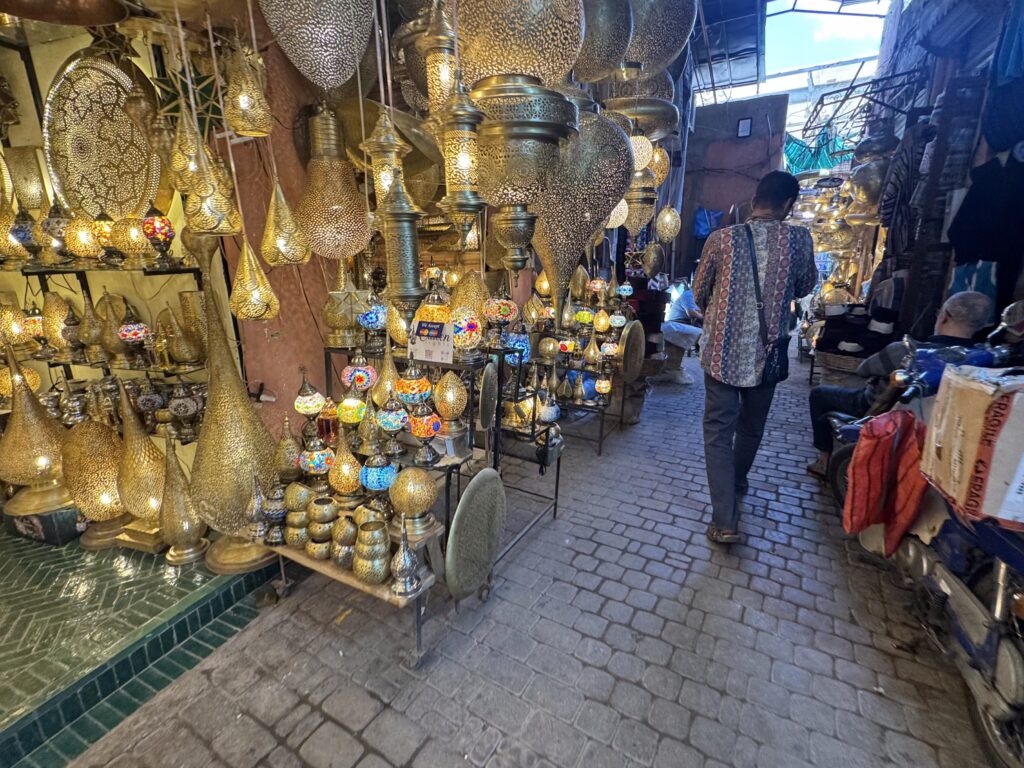
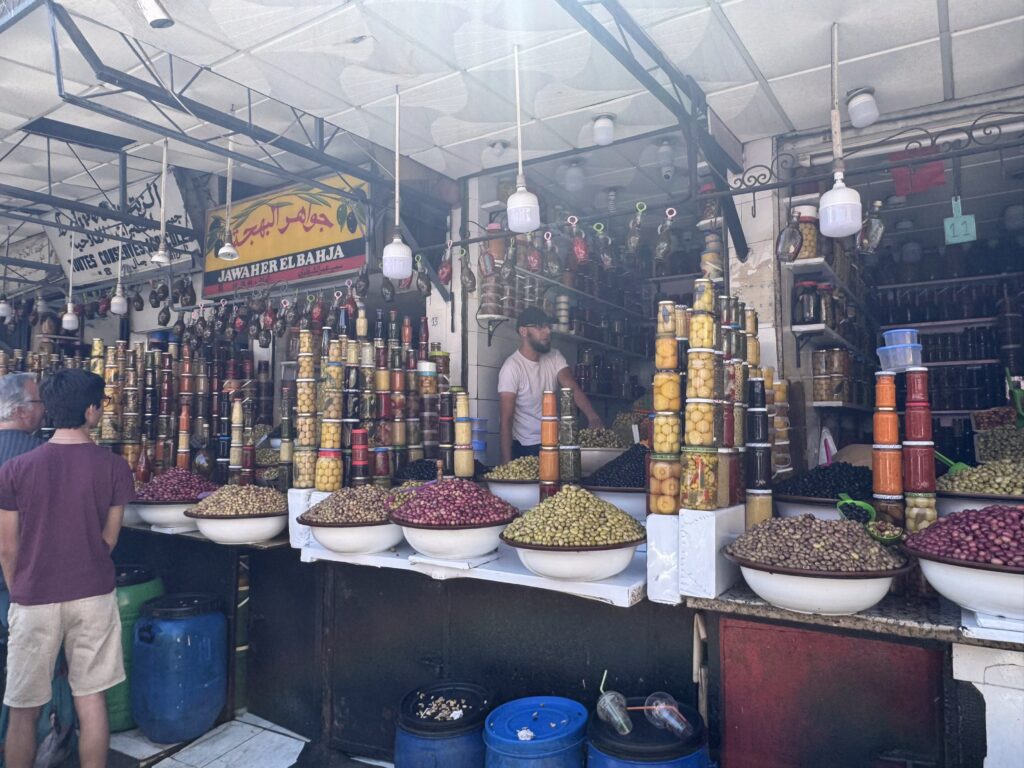
The Marrakech medina seems to be a lot less cramped than Fes, and many of the spaces have been turned into standalone shops. There are souks for all the core crafts – leather, iron, metalwork, wood work, dying, food… I’d love to understand the balance of local v tourist trade for these people in both Marrakech and Fes.
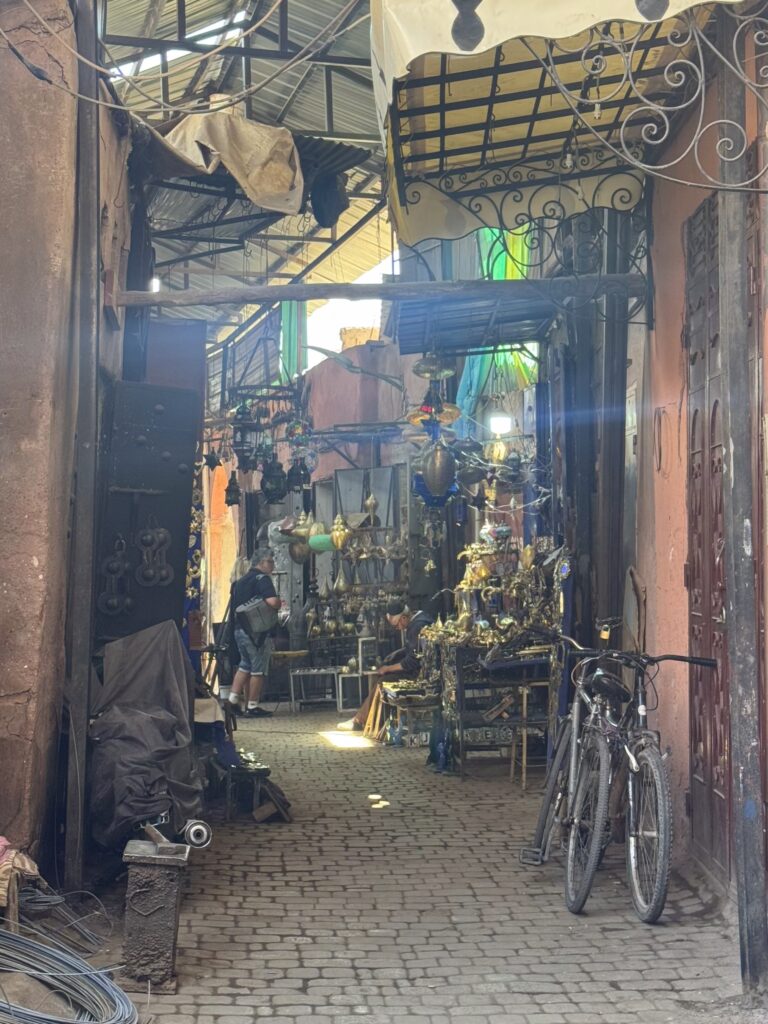
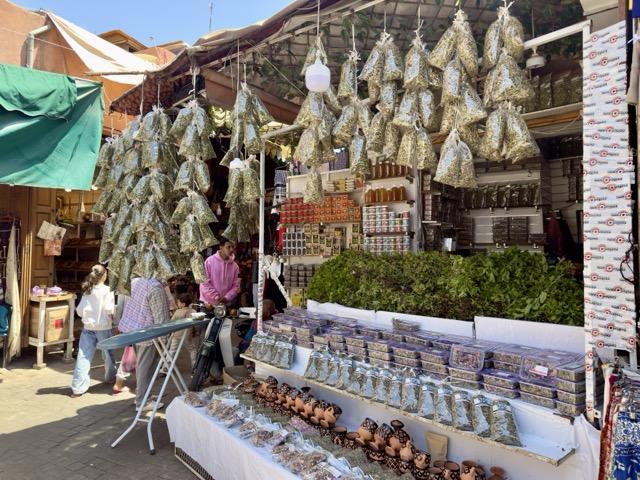
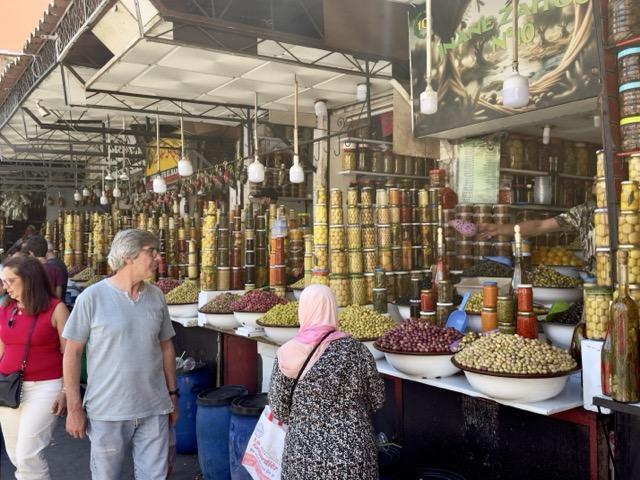
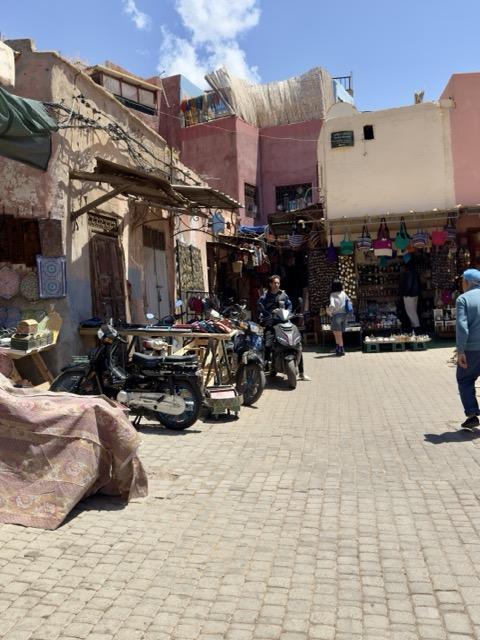
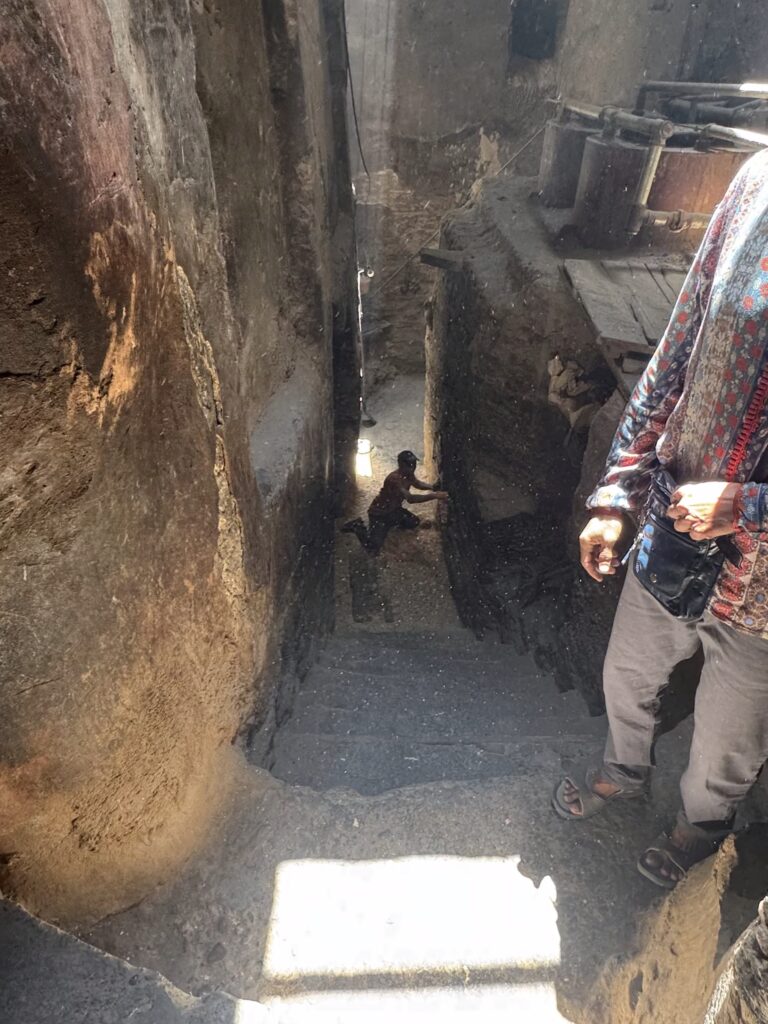
One of the oldest Hammam’s still operates in the city, complete with a person who shovels sawdust into the furnace at regular intervals. You can also get him to pop a Tangier (type of cooking pot) deep into the ashes to collect a few hours later.
As we entered the large Jmaa el-Fnaa market square we were given clear instructions – no photos of the snake charmers, no photos of the macaque monkeys, and no henna tattoos. Apparently an interaction with the snake charmers is worth than the snake itself. Our guides have obviously had to rescue people when things go unexpectedly wrong!
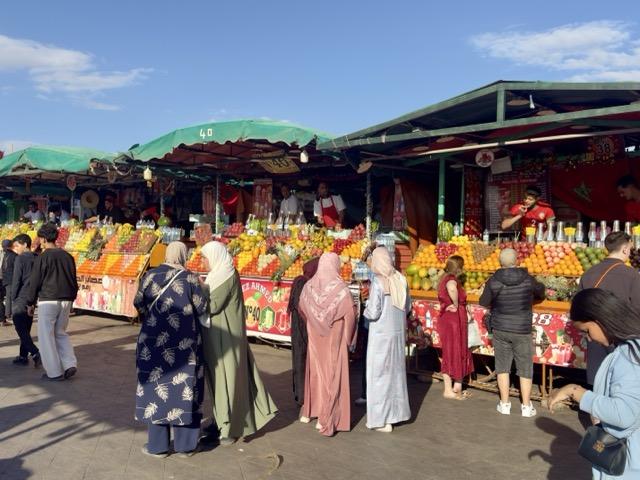
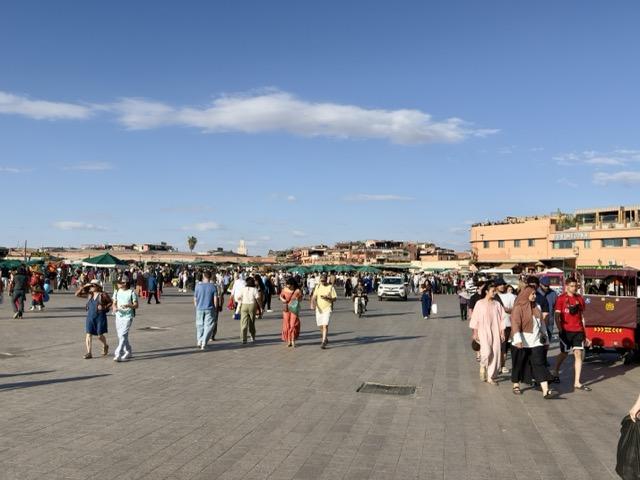
A stop for lunch and a visit to an argan oil store marked the end of our tour. It’s been a whirlwind week, where we’ve seen so much and barely scratched the surface of Morocco. There are so many places I would have liked to spend longer, and nowhere that I’d take off the itinerary… impossible.
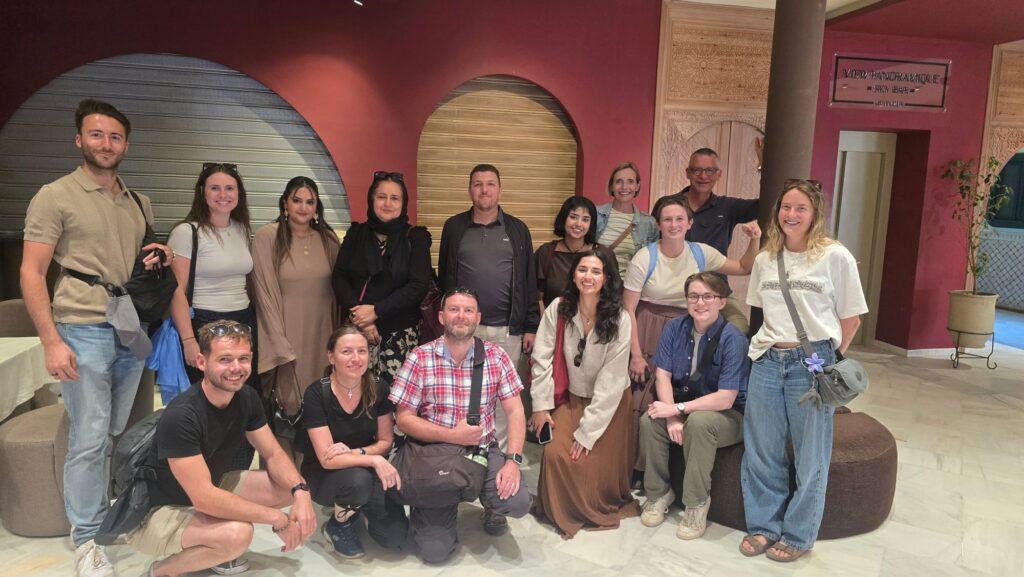
Our tour group has been amazing – we truly couldn’t have asked for better. Expertly led by Mohamed, young people of all ages who have inspired us with their perspective on current events, spirit of adventure and openness. I’ve loved hearing stories of everyone’s journey through study, work and the world so far, and their plans for the future. We’ve shared plenty of laughs, the terror of being lost in Fes, admiration for the master-negotiator Amina, drug stashes and a couple of colds along the way. I’m hoping our WhatsApp group with Ashton & Grace (US), Amina, Arhum, Shifa & Duaa (Canada), Katelyn & Allie (Brisbane in London), George & Daniel, Tony & Ildi (Scotland) will continue to be filled with adventures, the next lost luggage or fine, and pictures that mean ‘vacation’ for many years to come.
What will stick with me for Morocco? Diverse landscapes, artisans in all their forms, and the value of an oasis. For centuries people have embraced these features to make the most of life, and now they’ll be using their resourcefulness to move ahead.
This also marks the end of our Spain & Morocco trip. We’re currently somewhere over India having flown from Marrakech to Gatwick, getting a blast of winter while we transferred to Heathrow, before heading to Singapore and on to Brisbane – 36+ hours door-to-door. The blog fell a long way behind in the last few days due to poor reception and wifi… oh the things we take for granted nowadays.
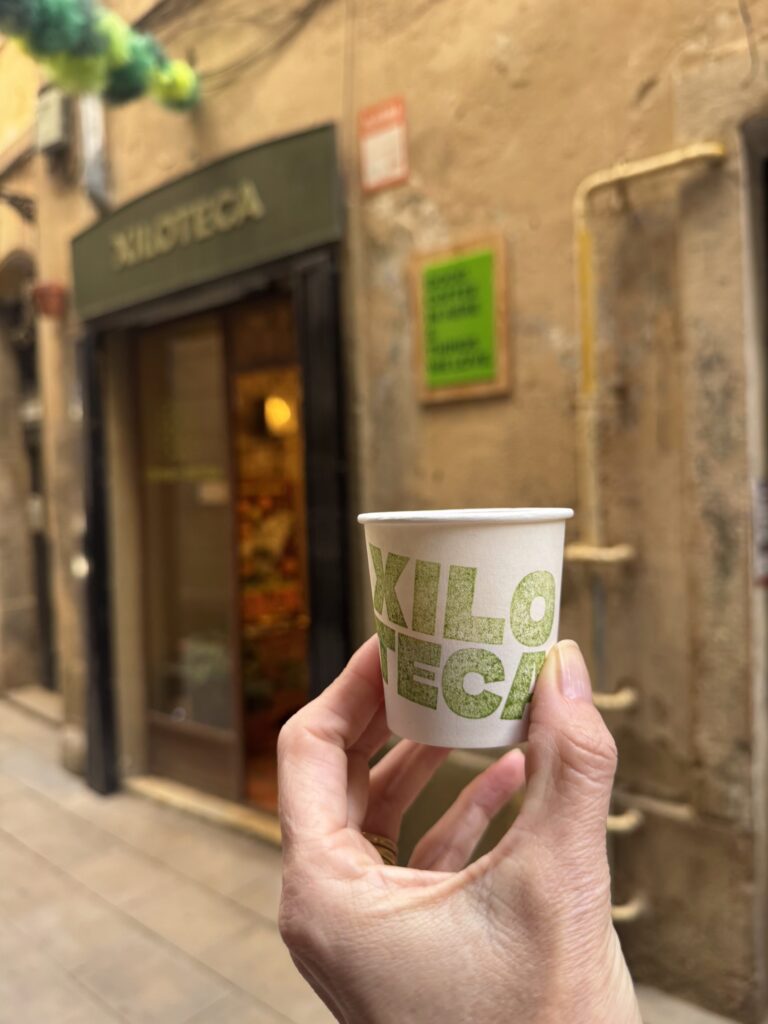
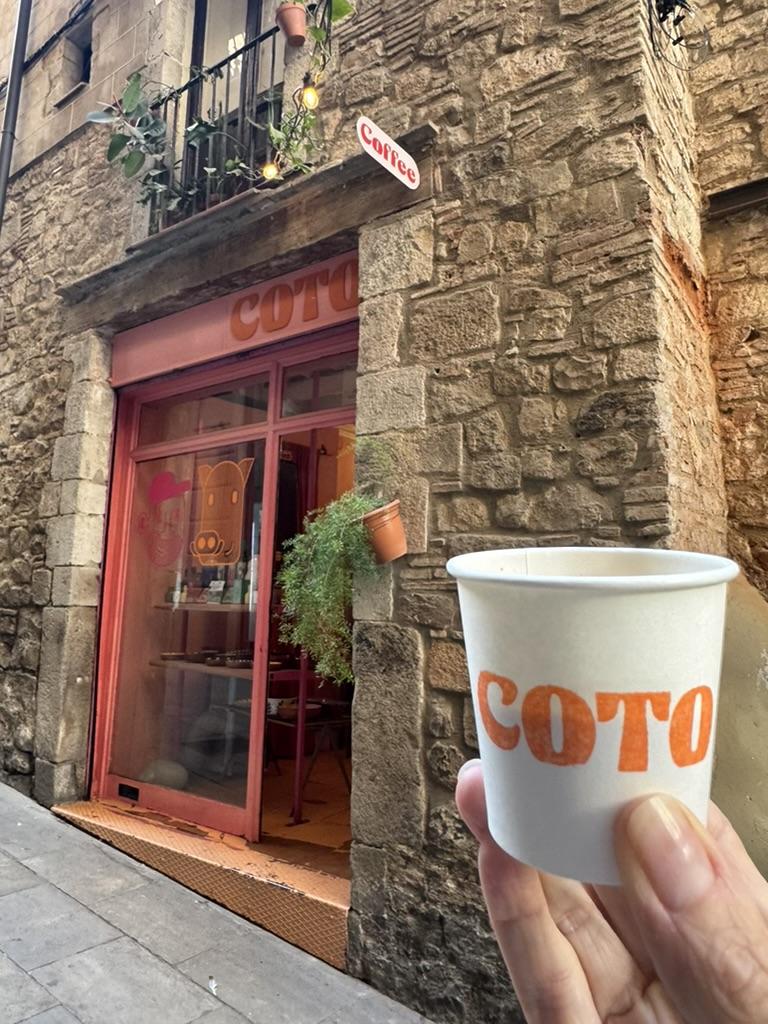
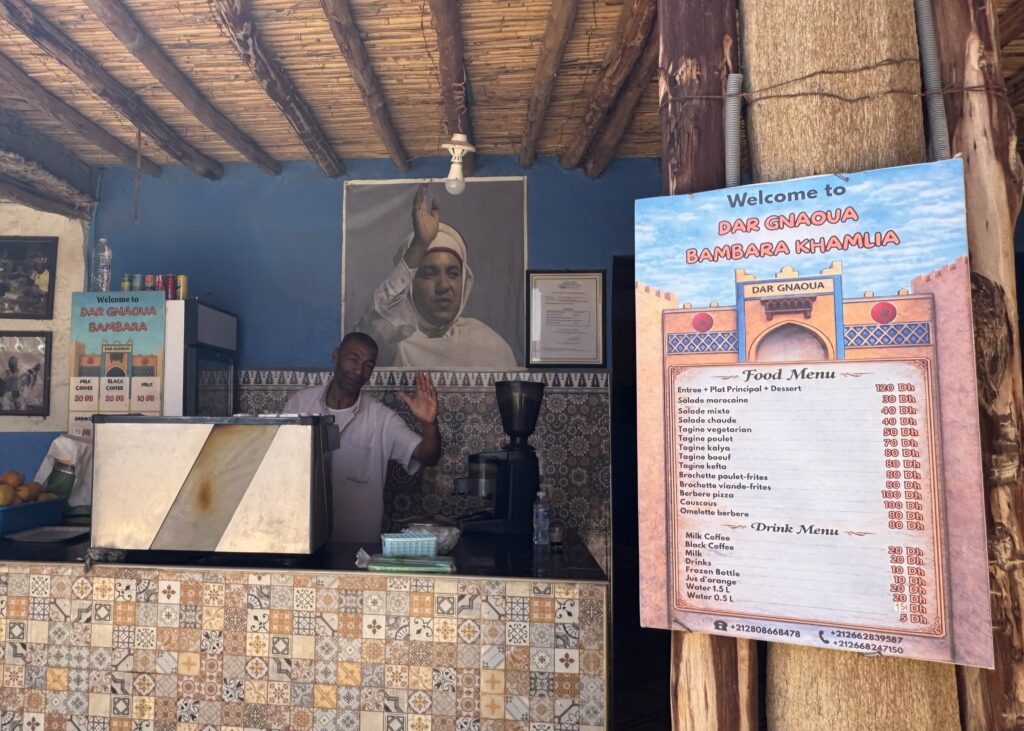
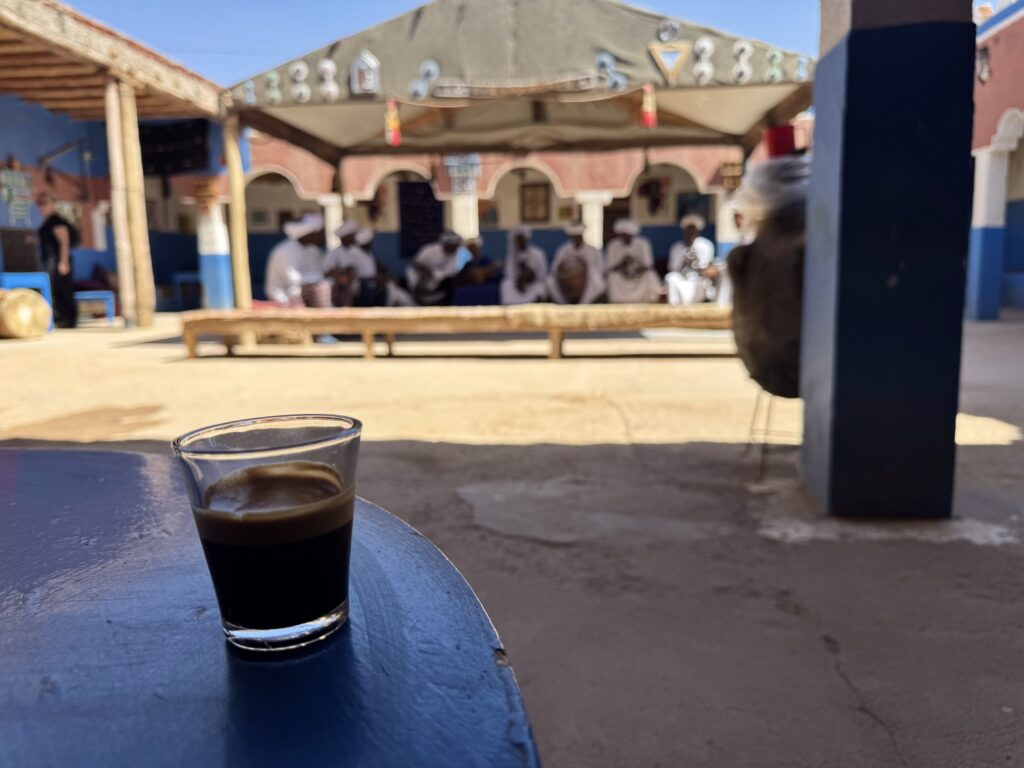
I’m looking forward to broccolini, a functioning shower, and some humidity. You’ll note that ‘good coffee’ is not on that list – between the La Marzocco theory through Spain, and generally high standards for low prices in Morocco I’m feeling very fortunate in the coffee stakes… cheers to that!
What a trip!
Love M & A x
Comments are closed